1.2 – The Market
1.2.1 - Demand
Demand The amount of goods or services that a consumer is willing and
able to buy at a given price over a period of tme
Substtute goods Products the act as an alternatve to another good, therefore
creatng competton
Complementary goods Goods that are bought alongside each other as they
complement each other
Consumer income The level of income lef from an individual’s pay afer taaes have
been deducted and living eapenses paid
Advertsing A promotonal method that involves the use of media to
communicate with eaistng and potental consumers
Branding A promotonal method that involves the creaton of an identty
for the business that distnguishes the rm and its products
from other rms
Demographics Demography is the study of human populatons and
demographic factors are those that infuence these populatons
Eaternal shocks Uneapected events that are outside of the businesses control
but have a direct impact on the level of demand or ability to
supply
Seasonality A market that eaperiences peaks and troughs in terms of sales
volume based upon the tme of year
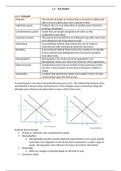
A normal good is one where demand falls when price rises. The relatonship between price
and demand is shown using a demand curve. Price changes cause a movement along the
demand curve whereas non-price factors cause a shif of the curve.
Eaternal factors include:
Change in substtute and complementary goods
Demographics
o Demographical factors include statstcal characteristcs such as age, gender
and ethnic mia. Migraton to the UK has led to demand for a wider range of
goods. Demographics also infuence the types of products demanded.
Seasonality
o Refers to changes in demand based on the tme of year
Consumer tastes
1.2.1 - Demand
Demand The amount of goods or services that a consumer is willing and
able to buy at a given price over a period of tme
Substtute goods Products the act as an alternatve to another good, therefore
creatng competton
Complementary goods Goods that are bought alongside each other as they
complement each other
Consumer income The level of income lef from an individual’s pay afer taaes have
been deducted and living eapenses paid
Advertsing A promotonal method that involves the use of media to
communicate with eaistng and potental consumers
Branding A promotonal method that involves the creaton of an identty
for the business that distnguishes the rm and its products
from other rms
Demographics Demography is the study of human populatons and
demographic factors are those that infuence these populatons
Eaternal shocks Uneapected events that are outside of the businesses control
but have a direct impact on the level of demand or ability to
supply
Seasonality A market that eaperiences peaks and troughs in terms of sales
volume based upon the tme of year
A normal good is one where demand falls when price rises. The relatonship between price
and demand is shown using a demand curve. Price changes cause a movement along the
demand curve whereas non-price factors cause a shif of the curve.
Eaternal factors include:
Change in substtute and complementary goods
Demographics
o Demographical factors include statstcal characteristcs such as age, gender
and ethnic mia. Migraton to the UK has led to demand for a wider range of
goods. Demographics also infuence the types of products demanded.
Seasonality
o Refers to changes in demand based on the tme of year
Consumer tastes