Summary Machine Learning
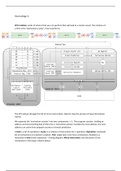
Ar ficial Intelligence is a feature of machines/computers that are able to perceive the environment
(learning) and take ac ons to achieve a human-set goal (problem solving).
Machine learning = umbrella term for methods to select models for predic ng some outcome (not
only forecas ng). Different from standard econometrics, which is concerned with es ma ng specific
parameters and hypotheses tes ng.
Algorithm / Machine Learning:
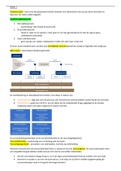
Func on of f(x) is not (completely) known, have to es mate it. Our es mator is
, Model selec on criteria:
These models add a penalty to the model for including many explanatory variables. Machine
learning methods do something more: they add penalty for “large” coefficient es mates.
- The idea is that large es mates lead to high variance of out-of-sample predic ons.
- Penalizing large coefficients “regularizes” the model and makes out-of-sample predic ons
more stable.
Ar ficial Intelligence is a feature of machines/computers that are able to perceive the environment
(learning) and take ac ons to achieve a human-set goal (problem solving).
Machine learning = umbrella term for methods to select models for predic ng some outcome (not
only forecas ng). Different from standard econometrics, which is concerned with es ma ng specific
parameters and hypotheses tes ng.
Algorithm / Machine Learning:
Func on of f(x) is not (completely) known, have to es mate it. Our es mator is
, Model selec on criteria:
These models add a penalty to the model for including many explanatory variables. Machine
learning methods do something more: they add penalty for “large” coefficient es mates.
- The idea is that large es mates lead to high variance of out-of-sample predic ons.
- Penalizing large coefficients “regularizes” the model and makes out-of-sample predic ons
more stable.