PSY/IPN1023 Body and Behavior
TASK 7 – THIRST AND HUNGER
Sources: Breedlove and Carlson
Physiological regulatory mechanisms
A regulatory mechanism contains four essential
features; the system variable (the characteristic to
be regulated), a set point (the optimal value of the
system variable), a detector that monitors the value
of the system variable, and a correctional
mechanism that restores the system variable to the
set point.
Drinking and eating are correctional mechanisms that replenish the body’s depleted stores of
water or nutrients. Because of the delay between ingestion and this replenishment, ingestive
behaviors are controlled by satiety mechanisms, as well as by detectors. Satiety mechanisms
are brain-based mechanisms that reduce hunger or thirst related to behaviors that result in
adequate intake of nutrients or water.
Two types of thirst
Approximately two-thirds of the body’s water is contained in the intracellular fluid, the fluid
portion of the cytoplasm of cells. The rest is extracellular fluid, which includes the
intravascular fluid (the blood plasma), the cerebrospinal fluid, and the interstitial fluid
(fluid that bathes our cells).
For our bodies to function properly, the volume of two fluid compartments (intracellular and
intravascular) must be regulated. These fluids are monitored by two different sets of
receptors. A single set of receptors would not work because it is possible for one of these
fluid compartments to be changed without affecting the other (e.g., a loss of blood reduces the
volume of the intravascular fluid, but it has no effect on the volume of the intracellular fluid).
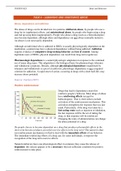
Osmotic thirst is triggered when the total volume of water is constant, but an increase in
solute concentration in the extracellular compartment (e.g. salty meal) exerts osmotic pressure
that pulls water out of the intracellular compartment. Hypovolemic thirst is triggered by the
loss of significant volume of blood or body fluids (e.g. diarrhea, vomiting). See figure on next
page.
,PSY/IPN1023 Body and Behavior
Osmometric thirst
Thus, osmometric thirst occurs when the solute concentration of the interstitial fluid
increases. Solutes are substances dissolved in a solution. The term osmometric refers to the
fact that the detector cells are actually responding to changes in the concentration.
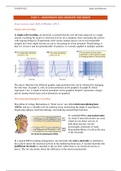
There are osmosensory neurons (figure) in several brain regions.. Osmosensory neurons
have some unusual features that help them detect the concentration of extracellular fluid.
Most cells in the body and brain maintain a constant size, but osmosensory neurons balloon or
shrink as the concentration of the extracellular fluid changes. The stretching and shrinking
physically opens and closes mechanically gated ion channels, causing changes in cell
membrane potentials that track changes in extracellular concentration.
The osmoreceptors responsible for osmometric thirst are located in the lamina terminalis. The
lamina terminalis contains two specialized circumventricular organs; the organum
vasculosum of the lamina terminalis (OVLT) and the subfornical organ (SFO), which are
located outside the blood-brain barrier. That means that substances dissolved in the blood pass
easily into the interstitial fluid within these organs.
, PSY/IPN1023 Body and Behavior
Functional-imaging studies, in which intravenous injections of salty solutions were
administered, showed strong activation of several brain regions, including the lamina
terminalis and the anterior cingulate cortex (ACC). When the participants were permitted to
drink, they almost immediately reported that their thirst had been satisfied, and the activity of
the ACC returned to baseline values.
However, the activity of the lamina terminalis
remains high, which implies that the activity of the
ACC reflected the participants’ thirst, which was
relieved after drinking water. The continued
activity of the lamina terminalis reflected the fact
that the blood plasma still contained high
concentration of solutes.
Volumetric thirst
Volumetric thirst occurs when the
volume of the blood plasma - the
intravascular volume - decreases.
When we lose water through
evaporation, we lose it from all three
fluid compartments; intracellular,
interstitial, and intravascular. Thus,
evaporation produces both
volumetric thirst and osmometric
thirst.
TASK 7 – THIRST AND HUNGER
Sources: Breedlove and Carlson
Physiological regulatory mechanisms
A regulatory mechanism contains four essential
features; the system variable (the characteristic to
be regulated), a set point (the optimal value of the
system variable), a detector that monitors the value
of the system variable, and a correctional
mechanism that restores the system variable to the
set point.
Drinking and eating are correctional mechanisms that replenish the body’s depleted stores of
water or nutrients. Because of the delay between ingestion and this replenishment, ingestive
behaviors are controlled by satiety mechanisms, as well as by detectors. Satiety mechanisms
are brain-based mechanisms that reduce hunger or thirst related to behaviors that result in
adequate intake of nutrients or water.
Two types of thirst
Approximately two-thirds of the body’s water is contained in the intracellular fluid, the fluid
portion of the cytoplasm of cells. The rest is extracellular fluid, which includes the
intravascular fluid (the blood plasma), the cerebrospinal fluid, and the interstitial fluid
(fluid that bathes our cells).
For our bodies to function properly, the volume of two fluid compartments (intracellular and
intravascular) must be regulated. These fluids are monitored by two different sets of
receptors. A single set of receptors would not work because it is possible for one of these
fluid compartments to be changed without affecting the other (e.g., a loss of blood reduces the
volume of the intravascular fluid, but it has no effect on the volume of the intracellular fluid).
Osmotic thirst is triggered when the total volume of water is constant, but an increase in
solute concentration in the extracellular compartment (e.g. salty meal) exerts osmotic pressure
that pulls water out of the intracellular compartment. Hypovolemic thirst is triggered by the
loss of significant volume of blood or body fluids (e.g. diarrhea, vomiting). See figure on next
page.
,PSY/IPN1023 Body and Behavior
Osmometric thirst
Thus, osmometric thirst occurs when the solute concentration of the interstitial fluid
increases. Solutes are substances dissolved in a solution. The term osmometric refers to the
fact that the detector cells are actually responding to changes in the concentration.
There are osmosensory neurons (figure) in several brain regions.. Osmosensory neurons
have some unusual features that help them detect the concentration of extracellular fluid.
Most cells in the body and brain maintain a constant size, but osmosensory neurons balloon or
shrink as the concentration of the extracellular fluid changes. The stretching and shrinking
physically opens and closes mechanically gated ion channels, causing changes in cell
membrane potentials that track changes in extracellular concentration.
The osmoreceptors responsible for osmometric thirst are located in the lamina terminalis. The
lamina terminalis contains two specialized circumventricular organs; the organum
vasculosum of the lamina terminalis (OVLT) and the subfornical organ (SFO), which are
located outside the blood-brain barrier. That means that substances dissolved in the blood pass
easily into the interstitial fluid within these organs.
, PSY/IPN1023 Body and Behavior
Functional-imaging studies, in which intravenous injections of salty solutions were
administered, showed strong activation of several brain regions, including the lamina
terminalis and the anterior cingulate cortex (ACC). When the participants were permitted to
drink, they almost immediately reported that their thirst had been satisfied, and the activity of
the ACC returned to baseline values.
However, the activity of the lamina terminalis
remains high, which implies that the activity of the
ACC reflected the participants’ thirst, which was
relieved after drinking water. The continued
activity of the lamina terminalis reflected the fact
that the blood plasma still contained high
concentration of solutes.
Volumetric thirst
Volumetric thirst occurs when the
volume of the blood plasma - the
intravascular volume - decreases.
When we lose water through
evaporation, we lose it from all three
fluid compartments; intracellular,
interstitial, and intravascular. Thus,
evaporation produces both
volumetric thirst and osmometric
thirst.