Pathophysiology Exam – Porth- 5th
edition
"Trigger Events" of an Autoimmune Disease - -Infections
-Environmental
-May be genetic
4 stages of fever - 1. Prodrome - nonspecific complaints
2. Chill - during which temperature rises - cold, shaking
3. Flush - cutaneous vasodilation makes skin warm, red
4. Defervescence - sweating
Not all have to be present.
4 Tissue Types - - Epithelial - 3 distinct surfaces, closely joined by cell adhesion
molecules, and are attached firmly to a basement membrane.
- Connective - most abundant tissue in the body, holds tissues together.
- Muscle - responsible for movement and changes in size and shape of internal organs
- Nervous - integrated communication system
4 types of virulence factors - 1) Toxins (endotoxins and exotoxins)
2) Adhesions Factors- ability to attach to host
3) Evasion Factors- ability to evade host's immune defenses
4) Invasion Factors- ability to penetrate barriers of host
5 Stages of disease - 1) Incubation Period
2) Prodromal Stage
3) Acute Stage
4) Convalescent Stage
5) Resolution Stage
6 Major causes of Hypercalcemia - - Hyperparathyroidism
- Phosphate retention in renal failure
- Increase release of calcium from bone as in immobilization
- Paget's disease - disorder that involves abnormal bone destruction and regrowth
- Cancer with metastatic bone lesions
- Vitamin D intoxication
Active transport - Any type of transport across the cell membrane that REQUIRES
energy as it moves material against the concentration gradient.
Acute Stage - -Host experiences maximum impact of the infectious process
, -Corresponding to rapid proliferation and dissemination of the pathogen
-Toxic by-products of microbial metabolism, cell lysis, and the immune response
mounted by the host
-Production of tissue damage and inflammation
Adaptive immunity - Involves humoral and cell-mediated immune responses that react
to a unique antigen, can distinguish self from non-self, and develop immunologic
memory, allowing a prompt and heightened response on subsequent encounters with
the same antigen
Apoptosis - Programmed cell death. Highly selective process that eliminates injured and
aged cells, thereby controlling tissue regeneration.
Apoptosis vs. Necrosis - Necrosis differs from apoptosis in that it involves unregulated
enzymatic digestion of cell components, loss of cell membrane integrity with
uncontrolled release of the products of cell death into the extracellular space, and
imitation of the inflammatory response. Necrosis interferes with cell replacement and
tissue regeneration.
Atelectasis - Refers to an incomplete expansion of the lung or portion of the lung.
Atrophy - -Change in size (decrease)
-Decreased work demands or adverse environmental conditions
-Lower more efficient level of functioning compatible with survival
B cells differentiate into what? - Plasma cells, but need a first exposure
Cardinal Signs of Inflammation - 1. Rubor or redness
2. Tumor or swelling
3. Calor or heat
4. Dolor or pain
5. Functio laesa or loss of function
Systemic manifestations ,such as fever, that may occur as chemical mediators,
cytokines, produced at the site of inflammation lead to increased levels in the plasma.
Cell-Derived Mediators - Released from cells that are present at sites of inflammation
-Histamine and Serotonin
-Arachidonic Acid Metabolites
-Omega-3 Polyunsaturated Fatty Acids
-Platelet-Activating Factor
-Cytokines and Chemokines
-Nitric Oxide
-Reactive Oxygen Species
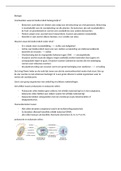
Cell-mediated Immunity - Third line of defense:
edition
"Trigger Events" of an Autoimmune Disease - -Infections
-Environmental
-May be genetic
4 stages of fever - 1. Prodrome - nonspecific complaints
2. Chill - during which temperature rises - cold, shaking
3. Flush - cutaneous vasodilation makes skin warm, red
4. Defervescence - sweating
Not all have to be present.
4 Tissue Types - - Epithelial - 3 distinct surfaces, closely joined by cell adhesion
molecules, and are attached firmly to a basement membrane.
- Connective - most abundant tissue in the body, holds tissues together.
- Muscle - responsible for movement and changes in size and shape of internal organs
- Nervous - integrated communication system
4 types of virulence factors - 1) Toxins (endotoxins and exotoxins)
2) Adhesions Factors- ability to attach to host
3) Evasion Factors- ability to evade host's immune defenses
4) Invasion Factors- ability to penetrate barriers of host
5 Stages of disease - 1) Incubation Period
2) Prodromal Stage
3) Acute Stage
4) Convalescent Stage
5) Resolution Stage
6 Major causes of Hypercalcemia - - Hyperparathyroidism
- Phosphate retention in renal failure
- Increase release of calcium from bone as in immobilization
- Paget's disease - disorder that involves abnormal bone destruction and regrowth
- Cancer with metastatic bone lesions
- Vitamin D intoxication
Active transport - Any type of transport across the cell membrane that REQUIRES
energy as it moves material against the concentration gradient.
Acute Stage - -Host experiences maximum impact of the infectious process
, -Corresponding to rapid proliferation and dissemination of the pathogen
-Toxic by-products of microbial metabolism, cell lysis, and the immune response
mounted by the host
-Production of tissue damage and inflammation
Adaptive immunity - Involves humoral and cell-mediated immune responses that react
to a unique antigen, can distinguish self from non-self, and develop immunologic
memory, allowing a prompt and heightened response on subsequent encounters with
the same antigen
Apoptosis - Programmed cell death. Highly selective process that eliminates injured and
aged cells, thereby controlling tissue regeneration.
Apoptosis vs. Necrosis - Necrosis differs from apoptosis in that it involves unregulated
enzymatic digestion of cell components, loss of cell membrane integrity with
uncontrolled release of the products of cell death into the extracellular space, and
imitation of the inflammatory response. Necrosis interferes with cell replacement and
tissue regeneration.
Atelectasis - Refers to an incomplete expansion of the lung or portion of the lung.
Atrophy - -Change in size (decrease)
-Decreased work demands or adverse environmental conditions
-Lower more efficient level of functioning compatible with survival
B cells differentiate into what? - Plasma cells, but need a first exposure
Cardinal Signs of Inflammation - 1. Rubor or redness
2. Tumor or swelling
3. Calor or heat
4. Dolor or pain
5. Functio laesa or loss of function
Systemic manifestations ,such as fever, that may occur as chemical mediators,
cytokines, produced at the site of inflammation lead to increased levels in the plasma.
Cell-Derived Mediators - Released from cells that are present at sites of inflammation
-Histamine and Serotonin
-Arachidonic Acid Metabolites
-Omega-3 Polyunsaturated Fatty Acids
-Platelet-Activating Factor
-Cytokines and Chemokines
-Nitric Oxide
-Reactive Oxygen Species
Cell-mediated Immunity - Third line of defense: