NATCO STNA REVIEW
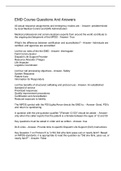
NATCO STNA REVIEW A confused client tries to get out of bed despite requests from staff to remain on bedrest. The nursing assistant knows that the nurse will most likely apply a. a bed alarm b. four point restraint c. wrist restraints d. a vest restraint - a The bed alarm is the least invasive and will keep the client safe. All restraints require a physician's order. Which of the following would NOT be an appropriate food item for a 3-year-old patient? a. sandwich cut up into bite-size pieces b. hotdog cut into bite-size pieces c. pretzel sticks d. apple slices - b The hotdog cut up into bite-size pieces could easily plug the child's airway and cause them to choke. The sandwich would most likely fall apart before this could happen. An elderly, unstable patient wants to use the bathroom by himself and is frustrated when the nursing assistant tells him to call her for assistance. "Leave me alone!" he says. "I want to go without telling you!" What is the nursing assistant's best response? a. "I'll get you a urinal to use" b. "I'm sorrry, dir, but that's just not possible" c. All right. I guess we were just trying to be extra careful" d. "Do you want to fall?" - a Using a urinal is the best way to promote the patient's independence while still maintaining safety. In preparing a client for a hot Sitz bath, the nurse assistant should check the temperature of the water. The ideal water temperature is a. Between 95°F and 110°F b. Between 65°F and 80°F c. Between 105°F and 120°F d. Between 80°F and 93°F - a The ideal temperature of the water for a hot Sitz bath is between 95°F and 110°F. Water that is too hot will burn the client, and water that is too cold will cause the muscles to tighten up rather than relax. A hot Sitz bath will provide relaxation and relieve muscle spasms, soften exudates, hasten the suppuration process, hasten healing (in cases of perianal surgeries), reduce congestion, and provide comfort in the perineal area A nurse obtains an order from a physician to restrain a client by using a jacket restraint and delegates a nursing assistant to assist in the restraining of the client. Which of the following observations indicates inappropriate application of the restraint by the nursing assistant? a. restraint straps that are safely secured to the side rails b. a safety knot in the restraint straps c. jacket restraint secured so that two fingers can slide easily between the restraint and the client's skin d. jacket restraint straps that do not tighten when force is applied against them - a The restraint straps should be secured to the bed frame and never to the side rail to avoid accidental injury in the event that the side rail is released. A half-bow or safety knot should be used for applying a restraint because it does not tighten when force is applied against it and allows quick and easy removal of the restraint in case of emergency. The jacket restraint should be secured, and one to two fingers should slide easily between the restraint and the client's skin. A typical blood pressure around the upper arm should NOT be taken when the patient: a. has heart failure b. complains that "this is the fifth time today" c. had lymph nodes removed around the axilla of the left arm d. has IV catheters in both the left and right arm - c If the patient has IV catheters in both arms, a blood pressure cuff will impede their intravenous flow. A nursing assistant enters a client's room and finds a fire burning in a trashcan. The nursing assistant's first action is to: a. call the nurse for help b. try to put out the fire c. remove the patient d. pull the fire alarm - c The acronym "RACE" is used for fire situations- Rescue, alarm, contain, extinguish. First you must rescue the client to prevent harm. Before shaving a resident, the nursing assistant checks for which of the following items in the resident's care plan? a. shaving instructions related to problems or issues clotting
Written for
- Institution
- NATCO STNA
- Course
- NATCO STNA
Document information
- Uploaded on
- March 21, 2024
- Number of pages
- 32
- Written in
- 2023/2024
- Type
- Exam (elaborations)
- Contains
- Questions & answers