Project Management Summary Book +
Articles
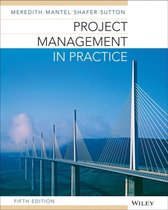
“Project Management in practice” summary
Chapter 1. The world of project
management
What is a project?
Where each work activity is unique with a specific deliverable aimed at meeting a specifc
need or purpose.
Project Management vs. General Management
Dimension Project General
Management Management
Type of work activity Unique Routine
Management Ability to adapt to change Manage by exception
approach
Planning Critical Important
Budgeting Start from scratch, multiple Modify budget from
budget periods previous budget period
Sequence of Must be determined Often predetermined
activities
Location of work Crosses organisational Within an organisational
units unit
Managerial Informal Well defined
Hierarchy
Three goals of a project
1. Time: Is the project on time?
2. Budget: Is the project on or under budget?
3. Satisfaction: Does the project deliver the agreed-upon specification to the
satisfaction of the customer?
4. Risks: Minimize the risks
The project life cycle
The project usually has 3 phases:
1 a slow start
2 a quick momentum
3 a slow finish
Another project life cycle could be with a slow start and a rapid fnish.
Project selection
Project selection is the process of evaluating individual projects or groups of projects and
then choosing to implement a set of them so that the objectives of the parent
organisation are achieved.
,The project portfolio process (PPP)
The PPP attempts to link the organisation’s projects directly to the goals and strategy of
the organisation.
The process consists of the following steps:
1. Establish a Project Council
2. Identify Project Categories and Criteria
3. Collect Project Data
4. Assess Resource Availability
5. Reduce the Project and Criteria Set
6. Prioritize the Projects within Categories
7. Select the Projects to be Funded and Held in Reserve
8. Implement the Process.
Chapter 2. The Manager, the Organisation
and the Team
The PM job is to make sure that the project is properly planned, implemented and
completed.
The PM’s roles
Facilitator
The PM must ensure that those who work on the project have the appropriate knowledge
and resources, including that most precious resource, time, to accomplish their assigned
responsibilities.
Adopt to the systems approach
Communicator
The PM must be a person who can handle responsibility. The PM is responsible to the
project team, to senior management, to the client and to anyone else who may have a
stake in the project’s performance / outcomes.
Virtual Project Manager
More and more often project teams are geographically dispersed.
The PM’s responsibilities
Three overriding responsibilities:
1. Acquisition of resources and personnel.
2. Dealing with obstacles that arise during the course of the project
3. Exercising the leadership needed to bring the project to a successful conclusion
(and making the trade-ofs necessary to do so).
- Making trade-ofs between budget, schedule and scope that are needed to ensure
project success.
The selection of a project manager
Find someone who is a “closer”. Someone who complete the tasks they are given.
Furthermore, select someone who meets the following criteria:
- Credibility: which means that the PM is believable.
, - Sensitivity: the PM needs a finely tuned set of political antennae as well as an
equally sensitive sensor of interpersonal confict between team members, etc.
- Leadership: Keep team members working towards the completion of the whole
project (rather than its parts).
- Ethics: direct the project in an ethical manner.
The project team
Efective team members have some characteristics in common, which are:
1. They must be technically competent. This is so obvious that often this is the only
criterion applied.
2. Senior members of the project team must be politically sensitive. It is rarely
possible to complete a project of reasonable size and complexity without incurring
problems that require aid from the upper echelons of executive row.
3. Members of the project team need a strong problem orientation. The team’s
members should be concerned about solving any problems posed by the project
(not merely about those personal subproblems)
4. Members need a strong goal orientation. Projects are uncomfortable environments
for people with a 9-to-5 view of work.
5. Project workers need high self-esteem. Project members who hide mistakes and
failure are disasters waiting to happen.
Multidisciplinary teams – balancing pleasure and pain
Interface coordination: Managing the ways in which diferent groups interact during
planning and implementation of projects.
Integration management: Integrating the work of these groups.
Design structure matrix:
Useful when information from project activities is needed to complete other project
activities.
Chapter 3. Project Activity and Risk
Planning
The basis of a project plan: the “Project Charter”
The project charter becomes the basis for the follow-on full project plan.
All elements that should be included in the project charter fall into one of the following 8
categories:
1. Purpose: This describes the business case for the project. The business case
includes the strategic reasons for the project, its expected profitability and
competitive efects, as well as the desired scope and any other technical results.
2. Objectives: This is a more detailed description of the project’s scope, its
deliverables and outcomes.
3. Overview: This contains a brief description of the project and its deliverables,
together with a list of the major milestones or significant events in the project
schedule and any constraints on the project scope.
4. Schedules: A summary of schedules and milestones. The major tasks in the project
are listed in a project Work Breakdown Schedule (see further below).
5. Resource requirements: Estimates of project expenses, both capital and operating.
6. Personnel and stakeholders: This includes the stakeholders, sponsor, project
manager and possibly some members of the project team.
7. Risk management: This section is an attempt to remedy the condition of the
widely ignored adage “Learn from experience”.
Articles
“Project Management in practice” summary
Chapter 1. The world of project
management
What is a project?
Where each work activity is unique with a specific deliverable aimed at meeting a specifc
need or purpose.
Project Management vs. General Management
Dimension Project General
Management Management
Type of work activity Unique Routine
Management Ability to adapt to change Manage by exception
approach
Planning Critical Important
Budgeting Start from scratch, multiple Modify budget from
budget periods previous budget period
Sequence of Must be determined Often predetermined
activities
Location of work Crosses organisational Within an organisational
units unit
Managerial Informal Well defined
Hierarchy
Three goals of a project
1. Time: Is the project on time?
2. Budget: Is the project on or under budget?
3. Satisfaction: Does the project deliver the agreed-upon specification to the
satisfaction of the customer?
4. Risks: Minimize the risks
The project life cycle
The project usually has 3 phases:
1 a slow start
2 a quick momentum
3 a slow finish
Another project life cycle could be with a slow start and a rapid fnish.
Project selection
Project selection is the process of evaluating individual projects or groups of projects and
then choosing to implement a set of them so that the objectives of the parent
organisation are achieved.
,The project portfolio process (PPP)
The PPP attempts to link the organisation’s projects directly to the goals and strategy of
the organisation.
The process consists of the following steps:
1. Establish a Project Council
2. Identify Project Categories and Criteria
3. Collect Project Data
4. Assess Resource Availability
5. Reduce the Project and Criteria Set
6. Prioritize the Projects within Categories
7. Select the Projects to be Funded and Held in Reserve
8. Implement the Process.
Chapter 2. The Manager, the Organisation
and the Team
The PM job is to make sure that the project is properly planned, implemented and
completed.
The PM’s roles
Facilitator
The PM must ensure that those who work on the project have the appropriate knowledge
and resources, including that most precious resource, time, to accomplish their assigned
responsibilities.
Adopt to the systems approach
Communicator
The PM must be a person who can handle responsibility. The PM is responsible to the
project team, to senior management, to the client and to anyone else who may have a
stake in the project’s performance / outcomes.
Virtual Project Manager
More and more often project teams are geographically dispersed.
The PM’s responsibilities
Three overriding responsibilities:
1. Acquisition of resources and personnel.
2. Dealing with obstacles that arise during the course of the project
3. Exercising the leadership needed to bring the project to a successful conclusion
(and making the trade-ofs necessary to do so).
- Making trade-ofs between budget, schedule and scope that are needed to ensure
project success.
The selection of a project manager
Find someone who is a “closer”. Someone who complete the tasks they are given.
Furthermore, select someone who meets the following criteria:
- Credibility: which means that the PM is believable.
, - Sensitivity: the PM needs a finely tuned set of political antennae as well as an
equally sensitive sensor of interpersonal confict between team members, etc.
- Leadership: Keep team members working towards the completion of the whole
project (rather than its parts).
- Ethics: direct the project in an ethical manner.
The project team
Efective team members have some characteristics in common, which are:
1. They must be technically competent. This is so obvious that often this is the only
criterion applied.
2. Senior members of the project team must be politically sensitive. It is rarely
possible to complete a project of reasonable size and complexity without incurring
problems that require aid from the upper echelons of executive row.
3. Members of the project team need a strong problem orientation. The team’s
members should be concerned about solving any problems posed by the project
(not merely about those personal subproblems)
4. Members need a strong goal orientation. Projects are uncomfortable environments
for people with a 9-to-5 view of work.
5. Project workers need high self-esteem. Project members who hide mistakes and
failure are disasters waiting to happen.
Multidisciplinary teams – balancing pleasure and pain
Interface coordination: Managing the ways in which diferent groups interact during
planning and implementation of projects.
Integration management: Integrating the work of these groups.
Design structure matrix:
Useful when information from project activities is needed to complete other project
activities.
Chapter 3. Project Activity and Risk
Planning
The basis of a project plan: the “Project Charter”
The project charter becomes the basis for the follow-on full project plan.
All elements that should be included in the project charter fall into one of the following 8
categories:
1. Purpose: This describes the business case for the project. The business case
includes the strategic reasons for the project, its expected profitability and
competitive efects, as well as the desired scope and any other technical results.
2. Objectives: This is a more detailed description of the project’s scope, its
deliverables and outcomes.
3. Overview: This contains a brief description of the project and its deliverables,
together with a list of the major milestones or significant events in the project
schedule and any constraints on the project scope.
4. Schedules: A summary of schedules and milestones. The major tasks in the project
are listed in a project Work Breakdown Schedule (see further below).
5. Resource requirements: Estimates of project expenses, both capital and operating.
6. Personnel and stakeholders: This includes the stakeholders, sponsor, project
manager and possibly some members of the project team.
7. Risk management: This section is an attempt to remedy the condition of the
widely ignored adage “Learn from experience”.