chetes 11
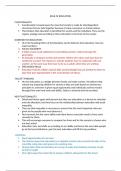
1 Define and differentiate initial, average and instantaneous rate of reaction
2 Relate rate of reaction to the rate of change for any reactant or product
bB C
RATE OF CHANGE
aA -
(i)
+
>
-
RATE change of quantity/period of time
:
(includes /-sign
+
REACTION BATE Speed of chM UX Rale of
-
>
-
:
[mol S
. .
=
reaction
- -
Reactants consumed Products amulated
Initial rate of reaction rate at t 0 (immediately after the uxn has begun
:
&
·.
=~
=
Average rate of reaction change in concentration ratio to the time interval
:
⑧
Instantuneous Vate at any given time (stope
:
the tangeline y
⑧
time
3 Relate physical state, temperature, concentration and catalysis to reaction rates
FACTORS AFFECTING REACTION RATE
Reactant concentration Emperatur CATALyST
*
* Q ***
-
Rate Law ④ Temp - Rate
.
>
-
they lower ACTIVATION E . Care
⑦ Reactants >
- Faster Ran & Collision (Rule of thumb : For each 100 ,
Rate not consumed)
THEORY Of rxn + 2)
*:
4 Determine a rate law from experimental evidence -
Rate law describes the relationship btwn
:
5 Use the rate law to solve for any missing variable rate of rxn a concentration of reactants
-
>
-
determined experimentally
-
, 1. Select two sets of experimental rate data that
differ in the
concentration of only one reactant
2. Set up a ratio of the two rates and the two rate
laws.
3. After canceling terms that are equal, we are left
with an equation that contains only one unknown
4. We then solve this equation for the order.
1 Define and differentiate initial, average and instantaneous rate of reaction
2 Relate rate of reaction to the rate of change for any reactant or product
bB C
RATE OF CHANGE
aA -
(i)
+
>
-
RATE change of quantity/period of time
:
(includes /-sign
+
REACTION BATE Speed of chM UX Rale of
-
>
-
:
[mol S
. .
=
reaction
- -
Reactants consumed Products amulated
Initial rate of reaction rate at t 0 (immediately after the uxn has begun
:
&
·.
=~
=
Average rate of reaction change in concentration ratio to the time interval
:
⑧
Instantuneous Vate at any given time (stope
:
the tangeline y
⑧
time
3 Relate physical state, temperature, concentration and catalysis to reaction rates
FACTORS AFFECTING REACTION RATE
Reactant concentration Emperatur CATALyST
*
* Q ***
-
Rate Law ④ Temp - Rate
.
>
-
they lower ACTIVATION E . Care
⑦ Reactants >
- Faster Ran & Collision (Rule of thumb : For each 100 ,
Rate not consumed)
THEORY Of rxn + 2)
*:
4 Determine a rate law from experimental evidence -
Rate law describes the relationship btwn
:
5 Use the rate law to solve for any missing variable rate of rxn a concentration of reactants
-
>
-
determined experimentally
-
, 1. Select two sets of experimental rate data that
differ in the
concentration of only one reactant
2. Set up a ratio of the two rates and the two rate
laws.
3. After canceling terms that are equal, we are left
with an equation that contains only one unknown
4. We then solve this equation for the order.