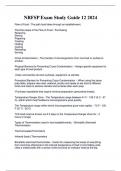
NRFSP Exam Study Guide 12 2024
Flow of Food - The path food takes through an establishment. The Nine steps of the Flow of Food - Purchasing Receiving Storing Preparing Cooking Holding Cooling Reheating Serving Cross-Contamination - The transfer of microorganisms from one food or surface to another. Physical Barriers for Preventing Cross-Contamination - -Assign specific equipment to each type of food product. -Clean and sanitize all work surfaces, equipment, & utensils. Procedural Barriers for Preventing Cross-Contamination - -When using the same prep table, prepare raw meat, seafood, poultry and ready-to-eat food at different times and clean & sanitize utensils and surfaces after each prep. -Purchase ingredients that require minimal preparation (precooked meats). Temperature Danger Zone - The Temperature range between 41 F - 135 F (5 C - 57 C), within which most foodborne microorganisms grow quickly. The Temperature range within which microorganisms grow most rapidly. - 70 F - 125 F (21 C - 52 C) TCS food most be thrown out if it stays in the Temperature Danger Zone for - 4 hours or longer Types of Thermometers used in food establishments. - Bimetallic Stemmed Thermometers Thermocouples/Thermistors Infrared (laser) Thermometers Bimetallic stemmed thermometer - Useful for measuring the temps of everything from incoming shipments to the internal temperature of food in hot-holding units. Uses a metal probe with a sensor at the end and an indicator head at the top. Thermocouple and Thermistor - Measure temperatures through a metal probe or sensing area and display results on a digital readout. Basic Types of Thermometer Probes - Immersion Surface Penetration Air temperature
Written for
- Institution
-
Chamberlain College Of Nursing
- Course
-
Nrfsp
Document information
- Uploaded on
- March 17, 2024
- Number of pages
- 3
- Written in
- 2023/2024
- Type
- OTHER
- Person
- Unknown
Subjects
-
nrfsp exam study guide 12 2024

Also available in package deal