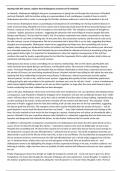
Starting with this extract, explore how Shakespeare presents evil in Macbeth.
In Macbeth, Shakespeare highlights the grave consequences of giving into evil through the characters of Macbeth
and Lady Macbeth, with the witches acting as a representation of evil, and Banquo a model of how to resist it.
Shakespeare does this in order to encourage his Christian Jacobean audience to resist the temptation to do evil.
In the extract, Shakespeare shows us psychological consequences of committing evil. Having murdered Duncan in
order to become king, Macbeth is far from content and is instead paranoid about the threat posed by Banquo and
Fleance, crying out to his wife ‘O full of scorpions is my mind dear wife!’ The metaphor compares his thoughts to
scorpions - deadly, poisonous creatures - suggesting his obsession with more killing of innocent people (this time
Banquo and Fleance). The fact that his mind is ‘full’ of scorpions emphasises how utterly consumed he is by these
thoughts, like he can think of nothing else. At the same time, the exclamatory sentence and the way he calls out to
his wife conveys a sense of desperation, like he is tormented and is almost like a cry for help, suggesting that these
thoughts are not enjoyable. Shakespeare seems to be suggesting two things here: that committing evil can be a
slippery slope, making you hardened to further evil actions; but also that committing evil can destroy your mind and
be a miserable experience. Given that Macbeth has just committed the ultimate evil crime of murdering a King and
going against divine right, it is important for Shakespeare to show the negative consequences of this and thus
reinforce the need for loyalty, especially given the fact that the Gunpowder Plot in which plotters tried to blow up
parliament and King James I was in recent memory.
Shakespeare also shows us how committing evil can destroy relationships. We see this when Lady Macbeth asks
what should be done about Banquo and Fleance, and Macbeth replies, ‘Be innocent of the knowledge, dearest
chuck.’ Previously Macbeth and Lady Macbeth had an intimate relationship in which they co-planned and executed
the murder of Duncan, yet now having murdered Duncan, Macbeth refrains from telling his wife about the next plan,
implying that they relationship has become more distant. Furthermore, where he previously used the epithet
‘dearest partner’ to refer to her, with the word ‘partner’ suggesting the equality of their relationship (particularly
striking giving the play was written in the patriarchal, Jacobean era), now he calls her ‘chuck’ – a term of endearment
which seems slightly belittling. Indeed, we do not see them together on stage after the scene with Banquo’s ghost,
further reinforcing how their relationship has been damaged.
Later in the play, Shakespeare shows how even those who seem hardened to evil, can experience devastating mental
consequences. Lady Macbeth is initially the instigator of her husband’s evil acts who confidently declares that ‘a little
water’ will clear them of their crime, yet by Act 5 she is mentally ill and has taken to sleep-walking, repeatedly acting
out the washing of her hands: ‘all the perfumes of Arabia will not sweeten this little hand’. The metaphor ‘all the
perfumes of Arabia’ suggests how she feels that nothing at all can take away the sin she has committed, suggesting
the intense guilt that she feels. The metaphor echoes that used by Macbeth after the murder of Duncan – ‘will all
great Neptune’s ocean wash this blood clean from my hands?’ – since Lady Macbeth dismissed such feelings at the
time, the echo reminds us how much she has changed as a person, showing how evil action can dramatically alter a
person. Macbeth’s line was a question whereas Lady Macbeth’s is a statement suggesting that she feels even more
hopeless and desperate that Macbeth felt before, an idea further reinforced by her suicide at the end.
In addition to showing the consequences of giving into evil, Shakespeare also shows that the supernatural can be a
source of evil. He does this through the witches – malevolent creatures who seem to deliberately set out to lure
Macbeth into committing evil. He shows their capacity for evil early on when they discuss how to enact revenge on
the husband of a woman who has offended them: ‘I will drain him dry as hay’. The simile emphasises how they are
determined to suck all of the life out of the man’s life, as hay is dry and lifeless. The fact that they are prepared to do
this to someone innocent, merely because his wife had offended them over a trivial matter suggests how evil they
are. In Jacobean times, witches were seen as real and agents of the devil, who we should be wary of – and
Shakespeare seems to be highlighting the dangers of these supernatural beings in his play. A modern audience, not
believing in witches, might see them more as symbolic of other external evil influences and even our inner capacity
for evil.
Finally, Shakespeare shows how though we might be tempted to commit evil – we do not have to give in to these
temptations. He shows this through the character of Banquo who also experiences ‘cursed thoughts’ in relation to
the witches’ prophecies but responds by asking the ‘merciful powers’ to ‘restrain’ these thoughts in him. The fact
In Macbeth, Shakespeare highlights the grave consequences of giving into evil through the characters of Macbeth
and Lady Macbeth, with the witches acting as a representation of evil, and Banquo a model of how to resist it.
Shakespeare does this in order to encourage his Christian Jacobean audience to resist the temptation to do evil.
In the extract, Shakespeare shows us psychological consequences of committing evil. Having murdered Duncan in
order to become king, Macbeth is far from content and is instead paranoid about the threat posed by Banquo and
Fleance, crying out to his wife ‘O full of scorpions is my mind dear wife!’ The metaphor compares his thoughts to
scorpions - deadly, poisonous creatures - suggesting his obsession with more killing of innocent people (this time
Banquo and Fleance). The fact that his mind is ‘full’ of scorpions emphasises how utterly consumed he is by these
thoughts, like he can think of nothing else. At the same time, the exclamatory sentence and the way he calls out to
his wife conveys a sense of desperation, like he is tormented and is almost like a cry for help, suggesting that these
thoughts are not enjoyable. Shakespeare seems to be suggesting two things here: that committing evil can be a
slippery slope, making you hardened to further evil actions; but also that committing evil can destroy your mind and
be a miserable experience. Given that Macbeth has just committed the ultimate evil crime of murdering a King and
going against divine right, it is important for Shakespeare to show the negative consequences of this and thus
reinforce the need for loyalty, especially given the fact that the Gunpowder Plot in which plotters tried to blow up
parliament and King James I was in recent memory.
Shakespeare also shows us how committing evil can destroy relationships. We see this when Lady Macbeth asks
what should be done about Banquo and Fleance, and Macbeth replies, ‘Be innocent of the knowledge, dearest
chuck.’ Previously Macbeth and Lady Macbeth had an intimate relationship in which they co-planned and executed
the murder of Duncan, yet now having murdered Duncan, Macbeth refrains from telling his wife about the next plan,
implying that they relationship has become more distant. Furthermore, where he previously used the epithet
‘dearest partner’ to refer to her, with the word ‘partner’ suggesting the equality of their relationship (particularly
striking giving the play was written in the patriarchal, Jacobean era), now he calls her ‘chuck’ – a term of endearment
which seems slightly belittling. Indeed, we do not see them together on stage after the scene with Banquo’s ghost,
further reinforcing how their relationship has been damaged.
Later in the play, Shakespeare shows how even those who seem hardened to evil, can experience devastating mental
consequences. Lady Macbeth is initially the instigator of her husband’s evil acts who confidently declares that ‘a little
water’ will clear them of their crime, yet by Act 5 she is mentally ill and has taken to sleep-walking, repeatedly acting
out the washing of her hands: ‘all the perfumes of Arabia will not sweeten this little hand’. The metaphor ‘all the
perfumes of Arabia’ suggests how she feels that nothing at all can take away the sin she has committed, suggesting
the intense guilt that she feels. The metaphor echoes that used by Macbeth after the murder of Duncan – ‘will all
great Neptune’s ocean wash this blood clean from my hands?’ – since Lady Macbeth dismissed such feelings at the
time, the echo reminds us how much she has changed as a person, showing how evil action can dramatically alter a
person. Macbeth’s line was a question whereas Lady Macbeth’s is a statement suggesting that she feels even more
hopeless and desperate that Macbeth felt before, an idea further reinforced by her suicide at the end.
In addition to showing the consequences of giving into evil, Shakespeare also shows that the supernatural can be a
source of evil. He does this through the witches – malevolent creatures who seem to deliberately set out to lure
Macbeth into committing evil. He shows their capacity for evil early on when they discuss how to enact revenge on
the husband of a woman who has offended them: ‘I will drain him dry as hay’. The simile emphasises how they are
determined to suck all of the life out of the man’s life, as hay is dry and lifeless. The fact that they are prepared to do
this to someone innocent, merely because his wife had offended them over a trivial matter suggests how evil they
are. In Jacobean times, witches were seen as real and agents of the devil, who we should be wary of – and
Shakespeare seems to be highlighting the dangers of these supernatural beings in his play. A modern audience, not
believing in witches, might see them more as symbolic of other external evil influences and even our inner capacity
for evil.
Finally, Shakespeare shows how though we might be tempted to commit evil – we do not have to give in to these
temptations. He shows this through the character of Banquo who also experiences ‘cursed thoughts’ in relation to
the witches’ prophecies but responds by asking the ‘merciful powers’ to ‘restrain’ these thoughts in him. The fact