

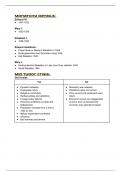
Monarchy details:
Edward VI:
● 1547-1553
Mary I:
● 1553-1558
Elizabeth I:
● 1558-1603
Edward rebellions:
● Prayer Book or Western Rebellion in 1549
● Buckinghamshire and Oxforshire rising 1549
● Kett Rebellion 1549
Mary I:
● Northumberland Rebellion or Lady Jane Grey rebellion 1553
● Wyatt Rebellion 1554
Mid tudor crisis:
Did it exist:
Yes No
● Dynastic instability ● Monarchy was retained
● Inadequate rulers ● Rebellions were not serious
● Religious commotion ● Privy council and parliament were
● Radical parties and rebellions intact
● Foreign policy failures ● Economic issues are exaggerated
● Economic problems e.g debt and as price went up because the
debasement economy was agriculture based
● Population increase from 2.3mil in
1500 to 3mil
● Military expenditure increased
● Influenza
● Bad harvests and famine
, Edward’s reign:
Problems Henry’s reign left:
● Rising food prices and failing wages because of long and costly wars against France and
Scotland
● Expenditure
● Inflation
● Debasement
● Population was rising
● Created a Regency Council by balancing ‘reformists ilke Seymour’ from ‘Catholics like
Norfolk and Gardiner’ which created issues when formulating policy as it was difficult to
reach a conclusion when the two sides didn’t agree on something
Edward’s age:
● Became king at the age of 9 because of Henry VIII’s Third Succession Act
An issue Not an issue
● Wouldn’t be able to lead troops to ● Previous examples of child kings
battle example Henry III who was 9 years
● Wouldn’t appear strong to foreign old in 1216, all had stable reigns
rulers and they could take advantage during their regency period
of Edward ● Henry VIII established a regency
● Could be taken advantage of by council of 16 members in his Third
council members e.g Somerset Succession Act to make decisions
creating instability on Edward’s behalf until he reached
● Made factional struggles more likely adulthood
e.g between Somerset and Warwick
creating civil war which Edward would
be unable to control
Protestant supporters:
● John Hooper- chaplain to Somerset. Was enthusiastic to carry out visitations of priests to
implement reforms and criticised many for not knowing the content of the Lord’s Prayer or
Ten Commandments. Was martyred under Mary I
● Thomas Cranmer- Archbishop of Canterbury. Helped Henry VIII divorce Catherine of
Aragon. Helped write the Books of Common Prayer. After 2yrs in prison he accepted
Catholicism to avoid execution but Mary wanted to make an example out of him so she
burnt him. Before burning Cranmer took back his recantations and refused the Pope and
Catholicism
● Nicholas Ridley- Bishop of London. Helped write the Book of Common Prayer. Arrested and
burnt at the stake for his teachings and supporting Lady Jane Grey under Mary
● John Knox- Scottish clergyman. Was seen as the leader of the Scottish reformation. Also
helped write the Book of Common Prayer but he escaped England to avoid persecution
under Mary
Edward VI:
● 1547-1553
Mary I:
● 1553-1558
Elizabeth I:
● 1558-1603
Edward rebellions:
● Prayer Book or Western Rebellion in 1549
● Buckinghamshire and Oxforshire rising 1549
● Kett Rebellion 1549
Mary I:
● Northumberland Rebellion or Lady Jane Grey rebellion 1553
● Wyatt Rebellion 1554
Mid tudor crisis:
Did it exist:
Yes No
● Dynastic instability ● Monarchy was retained
● Inadequate rulers ● Rebellions were not serious
● Religious commotion ● Privy council and parliament were
● Radical parties and rebellions intact
● Foreign policy failures ● Economic issues are exaggerated
● Economic problems e.g debt and as price went up because the
debasement economy was agriculture based
● Population increase from 2.3mil in
1500 to 3mil
● Military expenditure increased
● Influenza
● Bad harvests and famine
, Edward’s reign:
Problems Henry’s reign left:
● Rising food prices and failing wages because of long and costly wars against France and
Scotland
● Expenditure
● Inflation
● Debasement
● Population was rising
● Created a Regency Council by balancing ‘reformists ilke Seymour’ from ‘Catholics like
Norfolk and Gardiner’ which created issues when formulating policy as it was difficult to
reach a conclusion when the two sides didn’t agree on something
Edward’s age:
● Became king at the age of 9 because of Henry VIII’s Third Succession Act
An issue Not an issue
● Wouldn’t be able to lead troops to ● Previous examples of child kings
battle example Henry III who was 9 years
● Wouldn’t appear strong to foreign old in 1216, all had stable reigns
rulers and they could take advantage during their regency period
of Edward ● Henry VIII established a regency
● Could be taken advantage of by council of 16 members in his Third
council members e.g Somerset Succession Act to make decisions
creating instability on Edward’s behalf until he reached
● Made factional struggles more likely adulthood
e.g between Somerset and Warwick
creating civil war which Edward would
be unable to control
Protestant supporters:
● John Hooper- chaplain to Somerset. Was enthusiastic to carry out visitations of priests to
implement reforms and criticised many for not knowing the content of the Lord’s Prayer or
Ten Commandments. Was martyred under Mary I
● Thomas Cranmer- Archbishop of Canterbury. Helped Henry VIII divorce Catherine of
Aragon. Helped write the Books of Common Prayer. After 2yrs in prison he accepted
Catholicism to avoid execution but Mary wanted to make an example out of him so she
burnt him. Before burning Cranmer took back his recantations and refused the Pope and
Catholicism
● Nicholas Ridley- Bishop of London. Helped write the Book of Common Prayer. Arrested and
burnt at the stake for his teachings and supporting Lady Jane Grey under Mary
● John Knox- Scottish clergyman. Was seen as the leader of the Scottish reformation. Also
helped write the Book of Common Prayer but he escaped England to avoid persecution
under Mary


