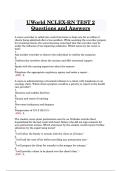
Pharmacology Exam #2 Practice Questions And Answers
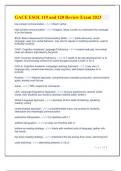
Pharmacology Exam #2 Practice Questions And Answers A patient is taking two prescription medications that both cause bradycardia. The nurse should monitor the patient for which type of effect? A. An increased therapeutic effect B. An increased adverse effect C. A reduced therapeutic effect D. A reduced adverse effect - ANS B. An increased adverse effect Which individual is at the highest risk for a drug-drug interaction? A. A toddler who is prescribed two antibiotics for a serious infection B. An adolescent who takes over-the-counter medications for menstrual cramping C. An adult who takes eight prescription medications for a chronic condition D. An older adult who takes two prescription medications and a dietary supplement for anxiety - ANS C. An adult who takes eight prescription medications for a chronic condition The nurse cares for a patient who is taking a calcium channel blocker for hypertension. The nurse should be most concerned if the patient makes which statement? A. "I take my medication with a glass of water." B. "I eat foods high in fiber to prevent constipation." C. "I drink a glass of grapefruit juice each evening." D. "I avoid foods such as broccoli and cabbage." - ANS C. "I drink a glass of grapefruit juice each evening." A patient is prescribed medication to be taken on an empty stomach. Which statement should the nurse include when providing patient teaching? A. "Take the medication 1 hour before eating." B. "Take the medication with a small glass of water." C. "Take the medication before going to bed at night." D. "Take the medication 1 hour after a meal." - ANS A. "Take the medication 1 hour before eating." Which patient does the nurse identify as being at highest risk for the development of an adverse drug reaction? A. A 1-month-old patient whose mother has allergies to penicillin, aspirin, and codeine B. A 16-year-old patient with multiple traumatic injuries who is taking morphine and an antibiotic C. A 54-year-old patient with multiple sclerosis who has been enrolled in a clinical trial of a new drug D. An 84-year-old patient with diabetes, heart failure, and hypertension who takes seven prescription medications each day - ANS D. An 84-year-old patient with diabetes, heart failure, and hypertension who takes seven prescription medications each day A patient is prescribed a medication that is potentially hepatotoxic. Before administering the medication, it is most important for the nurse to assess what? A. Blood urea nitrogen and serum creatinine B. Aspartate aminotransferase and alanine aminotransferase C. Prolonged QT interval on the electrocardiogram D. Serum potassium, serum sodium, and serum magnesium - ANS B. Aspartate aminotransferase and alanine aminotransferase The healthcare provider writes a medication order that the nurse cannot read. What should the nurse do? A. Consult with the charge nurse to verify the order. B. Discuss the order with the pharmacist. C. Check with the patient to determine the correct medication. D. Contact the prescriber to clarify the order. - ANS D. Contact the prescriber to clarify the order. The nurse reviews a patient's admission orders written by the healthcare provider. Which medication order should the nurse question? A. Cyanocobalamin 100 mcg intramuscularly every month B. Mso4 2.0 mg IV every 2 to 4 hours as needed for pain C. Levothyroxine 75 mcg orally every morning D. Enoxaparin 40 mg subq. every day for 7 days - ANS B. Mso4 2.0 mg IV every 2 to 4 hours as needed for pain
Written for
- Institution
-
Herzing University
- Course
-
PHARMACOLOGY
Document information
- Uploaded on
- March 6, 2024
- Number of pages
- 6
- Written in
- 2023/2024
- Type
- Exam (elaborations)
- Contains
- Questions & answers
Subjects
-
pharmacology exam 2 practice questions

Also available in package deal