BIO 210 CHAPTER 1 EXAM | QUESTIONS & ANSWERS (VERIFIED) | LATEST UPDATE | GRADED A+
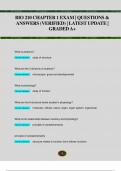
1 BIO 210 CHAPTER 1 EXAM | QUESTIONS & ANSWERS (VERIFIED) | LATEST UPDATE | GRADED A+ What is anatomy? Correct Answer: study of structure What are the 3 divisions of anatomy? Correct Answer: microscopic, gross and developmental What is physiology? Correct Answer: study of function What are the 6 structural levels studied in physiology? Correct Answer: molecular, cellular, tissue, organ, organ system, organismal What is the relationship between anatomy and physiology? Correct Answer: principle of complementarity principle of complementarity Correct Answer: structure relates to function (form follows function) 2 Level where atoms combine to form molecules Correct Answer: molecular Level where molecules combine to form cells Correct Answer: cellular Level where cells combine with similar types of cells Correct Answer: tissue Level where different tissues organize for same purpose Correct Answer: organ Level where different organs work together closely Correct Answer: organ system Level where many organ systems work together Correct Answer: organismal 11 major organ systems in the human body Correct Answer: integumentary, skeletal, muscular, nervous, endocrine, cardiovascular, lymphatic, respiratory, digestive, urinary, reproductive 3 5 survival needs provided by organ systems Correct Answer: nutrients, water, oxygen, proper temperature, proper atmospheric pressure Forms the external body covering; protects deeper tissue from injury; helps regulate body temperature; location of cutaneous nerve receptors; production of vitamin D; prevents dehydration Correct Answer: integumentary system Includes hair, nails and skin Correct Answer: integumentary system Protects and supports body organs; provides muscles attachment for movement; site of blood cell formation; stores minerals; fat storage in long bones (adults) Correct Answer: skeletal system Includes bone, cartilage and connective tissue (ligaments and tendons) Correct Answer: skeletal system Produces movement; maintains posture; produces heat Correct Answer: muscular system Includes skeletal muscle (voluntary muscles) 4 Correct Answer: muscular system Fast-acting control system; responds to internal & external change; activates muscles and glands Correct Answer: nervous system Includes brain, spinal cord & peripheral nerves Correct Answer: nervous system Secretes regulatory hormones for growth, reproduction & metabolism; slow control center Correct Answer: endocrine system Includes pituitary gland, thyroid, adrenal glands, pineal gland, ovaries/testes, hypothalamus, pancreas and thymus Correct Answer: endocrine system Transports materials in body via blood pumped by heart including oxygen, carbon dioxide, nutrients and waste Correct Answer: cardiovascular system Includes arteries, veins, capillaries and heart Correct Answer: cardiovascular system 5 Returns fluids to blood vessels; cleanses the blood; involved in immunity Correct Answer: lymphatic system Includes lymph vessels, lymph nodes, tonsils, and peyer's patches Correct Answer: lymphatic system Keeps blood supplied with oxygen, removes carbon dioxide and maintains pH balance Correct Answer: respiratory system Includes lungs, trachea, brooch, larynx, pharynx, and nasal cavity Correct Answer: respiratory system Breaks down food, allows for nutrient absorption into the blood and eliminates indigestible material Correct Answer: digestive system Includes pharynx, esophagus, small & large intestine, stomach and rectum Correct Answer: digestive system Eliminates nitrogenous wastes, maintains acid-base balance and regulates water & electrolytes Correct Answer: urinary system 6 Includes bladder, kidneys, ureter and urethra Correct Answer: urinary system Produces offspring and secondary sex characteristics Correct Answer: reproductive system Includes gonads and secondary sex organs Correct Answer: reproductive system Two main body cavities Correct Answer: dorsal and ventral Two dorsal cavities Correct Answer: cranial and vertebral Two ventral cavities Correct Answer: thoracic and abdominopelvic Membrane surrounding most organs in ventral cavity Correct Answer: serous membrane Two layers of serous membrane 7 Correct Answer: parietal and visceral Serous membrane attached to organs Correct Answer: visceral Serous membrane on outside Correct Answer: parietal Serous membrane around heart Correct Answer: pericardium Relatively constant internal environment maintained by control mechanisms and organ systems Correct Answer: homeostasis Two communication systems in the body Correct Answer: endocrine (slow) and nervous (fast) Parts of homeostatic control mechanism (6) Correct Answer: variable, receptor, afferent pathway, control center, efferent pathway, effector and feedback Sensory pathway or pathway to arrive at control center 8 Correct Answer: afferent pathway Motor output or pathway exiting the control center Correct Answer: efferent pathway The response of the effector negates or decreases the stimulus minimizing change and the primary mechanism for homeostatic regulation Correct Answer: negative feedback The response of the effector reinforces or increases the stimulus and found in body where the potentially dangerous process must be completed quickly Correct Answer: positive feedback What regulates blood volume as a negative feedback mechanism? Correct Answer: antidiuretic hormone (ADH) What regulates bleeding as a positive feedback mechanism? Correct Answer: platelets Disease and illness cause Correct Answer: homeostatic imbalance
Written for
- Institution
- BIO 210
- Course
- BIO 210
Document information
- Uploaded on
- March 4, 2024
- Number of pages
- 8
- Written in
- 2023/2024
- Type
- Exam (elaborations)
- Contains
- Questions & answers
Subjects
-
bio 210 chapter 1 exam questions answers ver

Also available in package deal