Law of Tort
19th December 2022
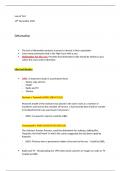
Defamation
The tort of defamation protects a person’s interest in their reputation.
Cases were previously tried in the High Court with a jury.
Defamation Act 2013 s11: Provides that defamation trials should be without a jury
unless the court orders otherwise.
Libel and Slander:
LIBEL: A statement made in a permanent form.
- Statue, sign, picture
- Chalk?
- Radio and TV
- Theatre
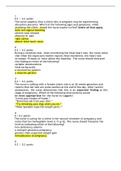
Monson v Tussauds (1894) 1QB 671 (CA)
Waxwork model of the claimant was placed in the same room as a number of
murderers and next to the chamber of horrors. C had recently been tried for murder
in Scotland but the case was found ‘not proven.’
- HELD: A waxwork’s dummy could be LIBEL.
Youssoupoff v MGM (1934) 50 TLR 581 (CA)
The claimant, Russian Princess, sued the defendants for making a talking film ,
‘Rasputin, the Mad Monk’ in which the scenes suggested she had been raped by
Rasputin.
- HELD: Pictures were a permanent matter to be seen by the eye – Could be LIBEL.
Radio and TV – Broadcasting Act 1990 s166 words, pictures or images on radio or TV
treated as LIBEL.
, Theatre – Theatre Act 1968 s4 statements made in a public performance of a play
treated as in a permanent form.
SLANDER: A statement made in a temporary form.
- Records, Tapes, DVDs: Could be seen as permanent, but not communicated until
played.
Libel can also be a crime, if it leads to a breach of the peace.
- For libel, must prove serious harm.
- Originally you could claim without proving harm; under the Defamation Act 2013
S1 need to prove serious harm.
Slander can only be a tort.
- Must prove special damage.
Exceptions to this rule where there is no need to prove special damage:
- Implying that the claimant has committed a crime punishable by imprisonment.
- Implying someone is unfit for any office, profession, calling trade or business. (s2
Defamation Act 1952.)
Jones v Jones [1916]
A statement that the headmaster had sex with the caretaker’s wife.
- HELD: Held no evidence it lowered his status.
Implying unchastity in a woman (abolished by s14 (1) Defamation Act 2013)
Implying someone has a contagious disease. Under s14 (2) Defamation Act 2013 now
need to prove that the person suffers special damage.
Definition of Defamation:
- The publication of an untrue statement which exposes a man to hatred, ridicule
or contempt or causes him to be shunned or avoided by right thinking members
of society.
Defamation Act 2013
- S1 (2) Must cause ‘serious harm’ to C’s reputation.
19th December 2022
Defamation
The tort of defamation protects a person’s interest in their reputation.
Cases were previously tried in the High Court with a jury.
Defamation Act 2013 s11: Provides that defamation trials should be without a jury
unless the court orders otherwise.
Libel and Slander:
LIBEL: A statement made in a permanent form.
- Statue, sign, picture
- Chalk?
- Radio and TV
- Theatre
Monson v Tussauds (1894) 1QB 671 (CA)
Waxwork model of the claimant was placed in the same room as a number of
murderers and next to the chamber of horrors. C had recently been tried for murder
in Scotland but the case was found ‘not proven.’
- HELD: A waxwork’s dummy could be LIBEL.
Youssoupoff v MGM (1934) 50 TLR 581 (CA)
The claimant, Russian Princess, sued the defendants for making a talking film ,
‘Rasputin, the Mad Monk’ in which the scenes suggested she had been raped by
Rasputin.
- HELD: Pictures were a permanent matter to be seen by the eye – Could be LIBEL.
Radio and TV – Broadcasting Act 1990 s166 words, pictures or images on radio or TV
treated as LIBEL.
, Theatre – Theatre Act 1968 s4 statements made in a public performance of a play
treated as in a permanent form.
SLANDER: A statement made in a temporary form.
- Records, Tapes, DVDs: Could be seen as permanent, but not communicated until
played.
Libel can also be a crime, if it leads to a breach of the peace.
- For libel, must prove serious harm.
- Originally you could claim without proving harm; under the Defamation Act 2013
S1 need to prove serious harm.
Slander can only be a tort.
- Must prove special damage.
Exceptions to this rule where there is no need to prove special damage:
- Implying that the claimant has committed a crime punishable by imprisonment.
- Implying someone is unfit for any office, profession, calling trade or business. (s2
Defamation Act 1952.)
Jones v Jones [1916]
A statement that the headmaster had sex with the caretaker’s wife.
- HELD: Held no evidence it lowered his status.
Implying unchastity in a woman (abolished by s14 (1) Defamation Act 2013)
Implying someone has a contagious disease. Under s14 (2) Defamation Act 2013 now
need to prove that the person suffers special damage.
Definition of Defamation:
- The publication of an untrue statement which exposes a man to hatred, ridicule
or contempt or causes him to be shunned or avoided by right thinking members
of society.
Defamation Act 2013
- S1 (2) Must cause ‘serious harm’ to C’s reputation.