
Advanced Med Surg Study Guide Exam 2 Questions And Answers 2024
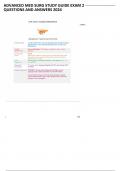
Hyperglycemic- Hyperosmolar State (HHS) Pathophysiology A hyperosmolar state caused by hyperglycemia. Sustained osmotic diuresis leads to extremely high blood glucose levels and severe dehydration. Clinical Manifestations Severe dehydration, CNS changes- confusion to coma, seizures, paralysis. Etiology/ Risk factors DM II Other causes: infection, other stressors, poor fluid intake, MI, sepsis, pancreatitis, stroke, some drug therapy (glucocorticoids, diuretics, phenytoin, betas, CCBs). Tests/ Diagnostics Serum glucose 600, blood osmolarity 320 (285-295), pH 7.4, elevated BUN Therapeutic Management IV regular insulin, hypotonic fluids first 0.45%, then isotonic 0.9% NS fluids Nursing/ Assessment PRIORITY: Restore blood volume with IV fluids, correct hyperglycemia, monitor potassium level with IV insulin. Assess hourly for signs of cerebral edema (changes in mental status, abnormal neuro signs, coma). Monitor neuro status and changes in LOC and pupils. 11/22/23, 7:15 PM EXAM 2 Study Guide about:blank 2/20 Diabetic Ketoacidosis (DKA) Pathophysiology Complication of diabetes characterized by uncontrolled hyperglycemia, metabolic acidosis, and increased production of ketones. Insulin deficiency and an increase in hormone release leads to increased liver and kidney glucose production. Clinical Manifestations Polyuria, polydipsia, polyphagia, fruity breath, vomiting, abd pain, kussmaul respirations, dehydration, weakness, confusion, shock, coma. Etiology/ Risk factors DM I Other causes: Infection, other stressors, inadequate insulin dose. Tests/ Diagnostics Serum glucose 300, ketones in urine, hyperkalemia 5 (causes ST elevation on EKG), low pH 7.35, low HCO3 22 Low lab values: calcium 9, sodium 135, mag 1.5, phos 2, pH 7.35, HCO3 22, Therapeutic Management IV regular insulin, isotonic IV fluid NS 0.9% Nursing/ Assessment PRIORITY: Restore blood volume with fluids, correct hyperglycemia, monitor K level with IV insulin- risk for hypokalemia!! Sxs fatigue, malaise, confusions, muscle weakness, shallow respirations, abdominal distention, paralytic ileus, hypotension, weak pulse. EKG will show ST depression or U wave. Hypokalemia is a common cause of death in the treatment of DKA. Assess airway, level on consciousness, hydration status, electrolytes, and BG. Dehydration: decreased skin turgor, low CVP, cool, clammy skin, weak/ rapid pulse, hypotension. Ensure UOP 30 mL/hr before giving IV K. Assess cardiac, kidney, and mental status to avoid FVO. Monitor for sxs of HF and pulmonary edema, BP, strict I&Os, daily weights. Teach pts and family to check blood sugar levels Q4H- Q6H when 250 and check for ketones 300. Sick day rules: Call HCP when ill, monitor blood sugar Q4H, check urine for ketones, continue to take insulin, drink 8-12 oz QH when awake, continue scheduled meals, rest. Contact HCP if persistent n/v, fever of 101.5 F longer than 24 hr, elevated blood sugar after 2 doses of insulin, and ketones in urine. 11/22/23, 7:15 PM EXAM 2 Study Guide about:blank 3/20 Hypothyroidism Pathophysiology The thyroid fails to secrete sufficient levels of thyroid hormones, T3 and T4. This results in whole-body decreased metabolism from inadequate cellular regulation. Low metabolism causes the hypothalamus and anterior pituitary gland to make TSH in an attempt to trigger thyroid hormone release. Clinical Manifestations Slow metabolism, lethargy, goiter, generalized weakness, anorexia, muscle aches, paresthesia, constipation, cold intolerance, decreased libido, heavy periods or amenorrhea, impotence, infertility. Complication: Myxedema coma- caused by a decreased cardiac output and gas exchange in the brain and other organs. Slowed metabolism worsens. Pt presents with course features, periorbital and facial edema, blank expression, thick tongue. Medical emergency!! Sxs hypercalcemia- bone pain, wide QRS complex (place on tele!!) Etiology/ Risk factors Autoimmune (Hashimoto thyroiditis) surgical or radiation induced thyroid destruction, congenital/ poor thyroid development, cancer, not ingesting enough iodine and tyrosine. Tests/ Diagnostics Low T3 and T4, high serum calcium, high TSH Therapeutic Management Levothyroxine (Synthroid) Warm environment for hypothermia. Nursing/ Assessment PRIORITY: Airway and breathing are 1 priority for myxedema st coma. Monitor for decreased perfusion r/t decreased HR. Teach pts and family that this is lifelong drug therapy. Take Synthroid first thing in the morning on empty stomach, encourage fiber, stool softener to prevent constipation, well-balanced diet with adequate fiber and fluid intake. Teach to monitor for hyperthyroidism with Rx therapy
Document information
- Uploaded on
- March 1, 2024
- Number of pages
- 11
- Written in
- 2023/2024
- Type
- Exam (elaborations)
- Contains
- Questions & answers


