Birds
Week 1
Chris Foster
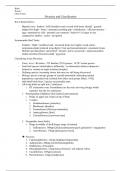
Diversity and Classification
Key Characteristics;
- Bipedal verts / feathers / bills [toothless and covered with horny sheath] / gizzard /
adapted for flight / bones / automatic perching grip / endothermic / efficient muscles /
eggs -reproductive cells / parental care common / brains 6-11x larger in size
compared to reptiles / syrinx / navigation
Synomorphic Bird Traits;
- Feathers / flight / toothless beak / increased brain size/ higher visual acuity /
carpometacarpals [reduced wing digits] / foot and tarsometatarsals / pneumatic bones
- Skeletal specialisations; sternal keel / furcula / pelvic synsacrum / supracoracoideus
tendon insertion [fossorial canal] / pygostyle
Classifying Avian Diversity;
- Class; Aves / 40 orders / 252 families /2359 genera / 10,787 extant species
- Each bird species looks/behaves differently / evolutionarily distinct subspecies /
distinctive variants in single location [morphs]
- Defining species; becoming slower but more are still being discovered
- Biology species concept; groups of actually/potentially inbreeding natural
populations, reproductively isolated from other such groups [Mayr, 1942]
- Individual birds from 2 species occasionally mate
- All living birds are split into 2 subclasses
o KT extinction event; Neornithines are the only surviving lineage which
separates into the two subclasses.
1. Palaeognathae [flightless birds [ratites] and tinamous]
o Hinge on upper jaw rotates at top of beak
o 5 orders;
1. Struthioniformes [ostriches]
2. Rheiformes [rheidae]
3. Tinamiformes [Mexican tinamidae]
4. Apterygiformes [kiwi]
5. Casuraiiformes [cassowary/emu]
2. Neognathae [most birds]
o Hinge in middle of skull [larger range of motion]
1. Galloanseres; 300spp [chickens/pheasants/quail/ guineafowl / megapodess
2. Anseriformes; 178spp [duck/geese/swans]
Neoaves;
1. Caprimulgiformes; 122spp [nightjars/frogmouths]
2. Adipoformes; 480spp [swifts/hummingbirds]
3. Otidiformes; 26 bustards
4. Musophagiformes; 23spp [turaco/louries] / sub-saharan Africa
5. Cuculiformes; 149spp [cuckoos]
6. Pterocliformes; 16spp [sandgrouse]
Week 1
Chris Foster
Diversity and Classification
Key Characteristics;
- Bipedal verts / feathers / bills [toothless and covered with horny sheath] / gizzard /
adapted for flight / bones / automatic perching grip / endothermic / efficient muscles /
eggs -reproductive cells / parental care common / brains 6-11x larger in size
compared to reptiles / syrinx / navigation
Synomorphic Bird Traits;
- Feathers / flight / toothless beak / increased brain size/ higher visual acuity /
carpometacarpals [reduced wing digits] / foot and tarsometatarsals / pneumatic bones
- Skeletal specialisations; sternal keel / furcula / pelvic synsacrum / supracoracoideus
tendon insertion [fossorial canal] / pygostyle
Classifying Avian Diversity;
- Class; Aves / 40 orders / 252 families /2359 genera / 10,787 extant species
- Each bird species looks/behaves differently / evolutionarily distinct subspecies /
distinctive variants in single location [morphs]
- Defining species; becoming slower but more are still being discovered
- Biology species concept; groups of actually/potentially inbreeding natural
populations, reproductively isolated from other such groups [Mayr, 1942]
- Individual birds from 2 species occasionally mate
- All living birds are split into 2 subclasses
o KT extinction event; Neornithines are the only surviving lineage which
separates into the two subclasses.
1. Palaeognathae [flightless birds [ratites] and tinamous]
o Hinge on upper jaw rotates at top of beak
o 5 orders;
1. Struthioniformes [ostriches]
2. Rheiformes [rheidae]
3. Tinamiformes [Mexican tinamidae]
4. Apterygiformes [kiwi]
5. Casuraiiformes [cassowary/emu]
2. Neognathae [most birds]
o Hinge in middle of skull [larger range of motion]
1. Galloanseres; 300spp [chickens/pheasants/quail/ guineafowl / megapodess
2. Anseriformes; 178spp [duck/geese/swans]
Neoaves;
1. Caprimulgiformes; 122spp [nightjars/frogmouths]
2. Adipoformes; 480spp [swifts/hummingbirds]
3. Otidiformes; 26 bustards
4. Musophagiformes; 23spp [turaco/louries] / sub-saharan Africa
5. Cuculiformes; 149spp [cuckoos]
6. Pterocliformes; 16spp [sandgrouse]