7A General Pest Controls: Unit 7. Application and Management Equipment - Test Your Knowledge (Complete Solutions
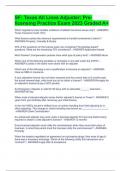
7A General Pest Controls: Unit 7. Application and Management Equipment - Test Your Knowledge (Complete Solutions Name and describe one popular type of compressed-air sprayer. The 1-gallon stainless steel sprayer. This sprayer with a multiple-spray nozzle can apply insecticides accurately into insect harborages. Name three commonly used sprayers in general pest control. Compressed-air sprayers, backpack sprayers, and power sprayers. What parts of a compressed-air sprayer should you inspect regularly? Check the spray tank inside and out. Look for pinholes and stripped threads. Examine the check valve and plunger cup of the pump unit for wear and damage. Inspect the hose for cracks and soft spots. Check the nozzle by using a spray pattern check tray. For what types of applications might you use a pin-stream nozzle? Crack and crevice applications. An injection tool (extension tube) directs and narrows the stream of pesticide. For what types of applications might you use a flat-fan nozzle? For general or spot applications on even surfaces. How often should you clean a compressed-air sprayer? If you use your sprayer daily, clean it weekly. If you use it less often, clean it after each use. To mix insecticide concentrates, what temperature water should you put in the spray tank? Why? Cool. Warm water helps break down pesticides and increases their odor. Never use warm water to mix pesticide sprays. True or False: Backpack sprayers are a good choice to apply pesticides in homes and small businesses. False. Backpack sprayers are designed for continuous spraying of large areas such as commercial food facilities and warehouses. What are some advantages of using bait stations? These devices are small and easy to move and place. They are designed to attract the target pest, not nontarget organisms. The toxin is contained, so that it is not easily accessible to children and pets. Name some factors that determine success in baiting for pests. 1. Know when, where, and how to place baits and bait stations. 2. Choose the baits that you know pests like to eat. 3. If using guns or other injection devices, keep the delivery tube capped when not in use so the bait does not dry out. 4. Do not contaminate baits with spray insecticides that might make the bait less attractive to pests. Name at least three kinds of traps used to monitor, catch, and/or kill pests. 1. Snap (trigger) traps. 2. Live traps. 3. Glue boards. 4. Insect light traps (ILTs). What type of pest would you be most likely to catch with a trigger trap? Where should you place the traps? Rodents (mice and rats). Place traps close to the walls, behind objects in dark corners, and in other areas where rats and mice are active. Place traps so that rats and mice will pass directly over the trigger as they follow their natural course of travel (usually close to a wall). Why is it important to match the size of a trigger trap with the size of the target rodent species? Using a mouse-sized snap trap to catch rats is inappropriate and ineffective. Conversely, using a rat trap to catch mice will lead to many sprung traps with few captures.
Written for
- Institution
- 7A General Pest Controls: Unit 7.
- Course
- 7A General Pest Controls: Unit 7.
Document information
- Uploaded on
- February 23, 2024
- Number of pages
- 9
- Written in
- 2023/2024
- Type
- Exam (elaborations)
- Contains
- Questions & answers
Subjects
-
7a general pest controls unit 7 application and

Also available in package deal