2 ENVIRONMENTAL FACTORS, RESOURCES, BIOMES
BIOMES
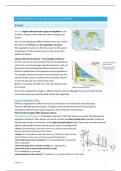
Biomes regions with particular types of vegetation, such
as desert, savanna, and rainforest, which ecologists call
biomes.
How can we distinguish different biomes from each other?
We look at the climate and the vegetation structure.
The vegetation structure is distinctive, but not the species
Figure 1: different biomes of the world
composition. It’s the structure and not the species that
defines the biome.
Climate determines biomes à the triangle of biomes.
On the x-axis we see the average amount of precipitations
and on the y-axis the average annual temperature. We see
that biomes are distributed at different locations with
different combinations of temperature and precipitations.
For example: tropical rain forest in areas that are very hot
and very moist; tundra in cold and very dry places; desert
in very hot but also very cold and dry areas.
Biomes in area that are both very cold and extremely wet
do not exist.
Not only the vegetation changes in different biomes, but also the soil. The soils are deformed by
interactive processes caused by both climate and vegetation.
PLANT FUNCTIONAL TYPES
Different vegetation has different structure, and that as to do with plant functional types.
There are 400.000 species of plants. Ecologists come up with the term functional types to
characterize different plant species based on their functional characteristics.
Plant functional types differ between biomes.
The life forms of Raunkiaer à Raunkiaer realised in 1907 that biomes are mainly characterised by
vegetation structure. Plant species can also be classified by their growth form. Raunkier made this
classification based on the location of the plant's growth-point (bud). These buds must be protected
against unfavourable climatic periods such as frost. He distinguished:
-trees (P- phanerophytes), trees are sensitive to cold temperature because
they are not able to well protect their leaves;
-shrubs (CH- chamaefytes), lower than trees, e.g. blueberry, when it’s very
cold and there’s snow, snow on the group protects the leaves;
-plants with buds on the soil surface (H- hemicryptophytes), are perennial
herbs and grasses;
-plants that grow from a rhizome or bulb (Cry- cryptophytes);
-plants that survive unfavourable periods as seeds
(TH- therophytes), e.g. annuals;
-plants growing on other plants (EP- epiphytes), e.g. orchids and ferns in the tropics.
Lecture 2 1
, Climate is not the only factor that determines the distribution of biomes, but also soil types. So, the
distribution is determinate by the nutrients of the soil.
Another important thing to realize is that biomes only tell us something about the potential vegetation that
you have in a site. Biomes: related to potential vegetation.
Current vegetation can differ because of disturbances.
Vegetation changes over time because of ecological succession. Two types of ecological succession:
• primary succession when in the recent past there was no vegetation. Example are the islands in the
north of the NL.
• secondary succession happens when previously there was vegetation but after of some disturbance
part of this vegetation was destroyed. Example is when there are wildfires that destroy a lot of the
vegetation but not all of it. After wildfire, vegetation will grow again going back to its original state.
ENVIRONMENTAL CONDITIONS AND RESOURCES
Conditions and resources are two distinct environmental factors that influence the distribution of
organisms:
• Conditions are abiotic environmental characteristics of the environment (temperature, humidity,
pH, salinity) that vary over time and in space, to which different organisms respond differently. An
environmental condition is variable (in some places is different than in others), and it’s not
consumable (we cannot eat them). Organisms can modify their immediate environmental
conditions.
• Resources are substances consumed by organisms during their growth and reproduction. They
include sunlight, carbon dioxide, water, and nutrients (e.g., phosphorus and nitrogen for plants),
or prey for predators. A resource is variable and consumable. Unlike conditions, resources are
finite and can lead to competition among organisms for their acquisition.
HOW ORGANISMS RESPOND TO ENVIRONMENTAL CONDITIONS AND RESOURCES
à ENVIRONMENTAL CONDITIONS FOR PLANT AND ANIMALS:
Environmental conditions for plants Environmental conditions for animals
Temperature Temperature
Relative humidity Humidity / relative humidity
pH salinity
Level of harmful substances Level of harmful substances
Light
(For plants light is a resource, for animals light is an environmental condition).
ROLE OF TEMPERATURE: it differs among groups of different organisms.
Plants à when you look at change in temperature, the activity of enzymes is triggered by certain
changes in temperature. Example with seeds in plants: at some point seeds need to germinate, in
the right time (often in summer or end of autumn), if seeds would germinate in winter they would
not survive in the cold climate. After the long period of frost, certain enzymes become active, and
this triggers the germination of the plant.
Animals à two types of animals:
- Ectothermic (cold-blooded) organisms: they cannot regulate their body temperature.
- Endothermic (warm-blooded) animals: they can regulate their own body temperature.
Lecture 2 2
BIOMES
Biomes regions with particular types of vegetation, such
as desert, savanna, and rainforest, which ecologists call
biomes.
How can we distinguish different biomes from each other?
We look at the climate and the vegetation structure.
The vegetation structure is distinctive, but not the species
Figure 1: different biomes of the world
composition. It’s the structure and not the species that
defines the biome.
Climate determines biomes à the triangle of biomes.
On the x-axis we see the average amount of precipitations
and on the y-axis the average annual temperature. We see
that biomes are distributed at different locations with
different combinations of temperature and precipitations.
For example: tropical rain forest in areas that are very hot
and very moist; tundra in cold and very dry places; desert
in very hot but also very cold and dry areas.
Biomes in area that are both very cold and extremely wet
do not exist.
Not only the vegetation changes in different biomes, but also the soil. The soils are deformed by
interactive processes caused by both climate and vegetation.
PLANT FUNCTIONAL TYPES
Different vegetation has different structure, and that as to do with plant functional types.
There are 400.000 species of plants. Ecologists come up with the term functional types to
characterize different plant species based on their functional characteristics.
Plant functional types differ between biomes.
The life forms of Raunkiaer à Raunkiaer realised in 1907 that biomes are mainly characterised by
vegetation structure. Plant species can also be classified by their growth form. Raunkier made this
classification based on the location of the plant's growth-point (bud). These buds must be protected
against unfavourable climatic periods such as frost. He distinguished:
-trees (P- phanerophytes), trees are sensitive to cold temperature because
they are not able to well protect their leaves;
-shrubs (CH- chamaefytes), lower than trees, e.g. blueberry, when it’s very
cold and there’s snow, snow on the group protects the leaves;
-plants with buds on the soil surface (H- hemicryptophytes), are perennial
herbs and grasses;
-plants that grow from a rhizome or bulb (Cry- cryptophytes);
-plants that survive unfavourable periods as seeds
(TH- therophytes), e.g. annuals;
-plants growing on other plants (EP- epiphytes), e.g. orchids and ferns in the tropics.
Lecture 2 1
, Climate is not the only factor that determines the distribution of biomes, but also soil types. So, the
distribution is determinate by the nutrients of the soil.
Another important thing to realize is that biomes only tell us something about the potential vegetation that
you have in a site. Biomes: related to potential vegetation.
Current vegetation can differ because of disturbances.
Vegetation changes over time because of ecological succession. Two types of ecological succession:
• primary succession when in the recent past there was no vegetation. Example are the islands in the
north of the NL.
• secondary succession happens when previously there was vegetation but after of some disturbance
part of this vegetation was destroyed. Example is when there are wildfires that destroy a lot of the
vegetation but not all of it. After wildfire, vegetation will grow again going back to its original state.
ENVIRONMENTAL CONDITIONS AND RESOURCES
Conditions and resources are two distinct environmental factors that influence the distribution of
organisms:
• Conditions are abiotic environmental characteristics of the environment (temperature, humidity,
pH, salinity) that vary over time and in space, to which different organisms respond differently. An
environmental condition is variable (in some places is different than in others), and it’s not
consumable (we cannot eat them). Organisms can modify their immediate environmental
conditions.
• Resources are substances consumed by organisms during their growth and reproduction. They
include sunlight, carbon dioxide, water, and nutrients (e.g., phosphorus and nitrogen for plants),
or prey for predators. A resource is variable and consumable. Unlike conditions, resources are
finite and can lead to competition among organisms for their acquisition.
HOW ORGANISMS RESPOND TO ENVIRONMENTAL CONDITIONS AND RESOURCES
à ENVIRONMENTAL CONDITIONS FOR PLANT AND ANIMALS:
Environmental conditions for plants Environmental conditions for animals
Temperature Temperature
Relative humidity Humidity / relative humidity
pH salinity
Level of harmful substances Level of harmful substances
Light
(For plants light is a resource, for animals light is an environmental condition).
ROLE OF TEMPERATURE: it differs among groups of different organisms.
Plants à when you look at change in temperature, the activity of enzymes is triggered by certain
changes in temperature. Example with seeds in plants: at some point seeds need to germinate, in
the right time (often in summer or end of autumn), if seeds would germinate in winter they would
not survive in the cold climate. After the long period of frost, certain enzymes become active, and
this triggers the germination of the plant.
Animals à two types of animals:
- Ectothermic (cold-blooded) organisms: they cannot regulate their body temperature.
- Endothermic (warm-blooded) animals: they can regulate their own body temperature.
Lecture 2 2