Diseases of the immune system 3
Hypersensitivity- overreaction to a harmless molecule= immune response=inflammation and
tissue damage
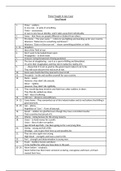
4 classifications of hypersensitivities
All involve the adaptive response
Summary:
2nd row-immune components that are recognised
Type 1
IgE mediated
IgE normal function: remoce extracellular parasites particularly multicellular ones
(helminths) as cannot be phagocytosed due to size
Binds to receptors (FcεRI (Fc receptors) on mast cells, eosinophils and basophils
DOES NOT CARRY OUT THE RESPONE- BUT RECOGNITION
Cells involved in the type 1 response
Mast cells
Tissue resident (mucosal tissues) near body surfaces
Connective tissues near blood vessels
Has surface pre-bound IgE antibodies with a range of specificities
Once cross-linked=release histamine,leukotrienes,cytokines and
enzymes
, Eosinophils:
Present small numbers in the blood
Resident in connective tissues under mucosal surfaces
Receptors on surface
Once cross linked-release toxic mediators (MBP,cytokines and ECP)
Th2- regulate eosinophil arm:
Secrete cytokines (IL-5)- promotion of development and survival of eosinophils
Promote recruitment of eosinophils to sites of inflammation by stimulating release of
chemokines by activated endothelial and epithelial cells
Basophils:
Minor population in the peripheral blood and peripheral tissues
Recruited to sites of inflammation
Activated by PAMPs,cytokines and lipid mediators
Receptors on surface-cross linked- release of histamine and other mediators
Secrete: IL-4 and IL-13- initiate Th2 responses
Response:
First exposure: sensitisation
Allergen is picked up by APC
Presented to T cells
Activation of B cells
Production of IgE
Binds to mast cells receptors
Immune response=allergen gone
Second exposure:
Immediate Mast cell reaction
Pre-bound IgE= release of granule contents:
Vasodilation and increased vascular permeability
The dose and route of allergen (exposure) can alter reaction
IV- release of histamine=systemic increase in blood vessel permeability anaphylactic
shock
Subcutaneous- local release of histamine- oedema and reddening wheal and flare
reaction
Inhalation- Upper airways: nasal irritation and increased mucus production. Lower
airways- contraction of smooth muscle and increased mucus production runny nose
and bronchoconstriction
Ingestion- contraction of smooth muscle, increased fluid loss, antigen may enter
bloodstream urticaria,atopic,eczema,anaphylaxis
Hypersensitivity- overreaction to a harmless molecule= immune response=inflammation and
tissue damage
4 classifications of hypersensitivities
All involve the adaptive response
Summary:
2nd row-immune components that are recognised
Type 1
IgE mediated
IgE normal function: remoce extracellular parasites particularly multicellular ones
(helminths) as cannot be phagocytosed due to size
Binds to receptors (FcεRI (Fc receptors) on mast cells, eosinophils and basophils
DOES NOT CARRY OUT THE RESPONE- BUT RECOGNITION
Cells involved in the type 1 response
Mast cells
Tissue resident (mucosal tissues) near body surfaces
Connective tissues near blood vessels
Has surface pre-bound IgE antibodies with a range of specificities
Once cross-linked=release histamine,leukotrienes,cytokines and
enzymes
, Eosinophils:
Present small numbers in the blood
Resident in connective tissues under mucosal surfaces
Receptors on surface
Once cross linked-release toxic mediators (MBP,cytokines and ECP)
Th2- regulate eosinophil arm:
Secrete cytokines (IL-5)- promotion of development and survival of eosinophils
Promote recruitment of eosinophils to sites of inflammation by stimulating release of
chemokines by activated endothelial and epithelial cells
Basophils:
Minor population in the peripheral blood and peripheral tissues
Recruited to sites of inflammation
Activated by PAMPs,cytokines and lipid mediators
Receptors on surface-cross linked- release of histamine and other mediators
Secrete: IL-4 and IL-13- initiate Th2 responses
Response:
First exposure: sensitisation
Allergen is picked up by APC
Presented to T cells
Activation of B cells
Production of IgE
Binds to mast cells receptors
Immune response=allergen gone
Second exposure:
Immediate Mast cell reaction
Pre-bound IgE= release of granule contents:
Vasodilation and increased vascular permeability
The dose and route of allergen (exposure) can alter reaction
IV- release of histamine=systemic increase in blood vessel permeability anaphylactic
shock
Subcutaneous- local release of histamine- oedema and reddening wheal and flare
reaction
Inhalation- Upper airways: nasal irritation and increased mucus production. Lower
airways- contraction of smooth muscle and increased mucus production runny nose
and bronchoconstriction
Ingestion- contraction of smooth muscle, increased fluid loss, antigen may enter
bloodstream urticaria,atopic,eczema,anaphylaxis