Diseases of the immune system
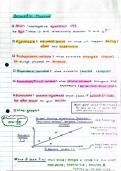
Immunodeficiency-no response to pathogens
Hypersensitivity-hyper response- inappropriate response to foreign antigens
Autoimmunity-inappropriate response to self
Lymphocytes develop from precursors- diversity achieved through somatic recombination
Somatic recombination: enzymes act on particular loci where variable parts of the antigen
receptors are encoded
Cut into gene segments and joined back together to produce a different combination of
gene segments
=final combination=gene that can be expressed
Primary immune deficiency: Severe combined immunodeficiency- loss of mutations of RAG
Recombinating activating gene
=unable to undergo somatic recombination
=lack of production of T and B cells
Central and peripheral tolerance
High diversity of lymphocytes= affinity for self
Occurs where lymphocytes develop-central- antigen receptors are tested for their reactivity
to self and this determines their fate
Develops in the periphery-peripheral tolerance-prevention of inappropriate responses to
self
Stem cells-common lymphoid progenitor
Thymocytes undergo proliferation in the thymus- large store
Double negative 1: double negative thymocyte
Double negative 2: start to rearrange B cell
Double negative 3: further B cell rearrangement bringing of an pre TCR alpha surrogate- if
this unsuccessful=death
Double negative 4: stop rearrangement and then proliferation
Double positive thymocyte- start rearrangement of the alpha chain
Positive selection:
MCHI- CD8
MCH II- CD4
NO=Apoptosis
Negative selection:
Immunodeficiency-no response to pathogens
Hypersensitivity-hyper response- inappropriate response to foreign antigens
Autoimmunity-inappropriate response to self
Lymphocytes develop from precursors- diversity achieved through somatic recombination
Somatic recombination: enzymes act on particular loci where variable parts of the antigen
receptors are encoded
Cut into gene segments and joined back together to produce a different combination of
gene segments
=final combination=gene that can be expressed
Primary immune deficiency: Severe combined immunodeficiency- loss of mutations of RAG
Recombinating activating gene
=unable to undergo somatic recombination
=lack of production of T and B cells
Central and peripheral tolerance
High diversity of lymphocytes= affinity for self
Occurs where lymphocytes develop-central- antigen receptors are tested for their reactivity
to self and this determines their fate
Develops in the periphery-peripheral tolerance-prevention of inappropriate responses to
self
Stem cells-common lymphoid progenitor
Thymocytes undergo proliferation in the thymus- large store
Double negative 1: double negative thymocyte
Double negative 2: start to rearrange B cell
Double negative 3: further B cell rearrangement bringing of an pre TCR alpha surrogate- if
this unsuccessful=death
Double negative 4: stop rearrangement and then proliferation
Double positive thymocyte- start rearrangement of the alpha chain
Positive selection:
MCHI- CD8
MCH II- CD4
NO=Apoptosis
Negative selection: