Enzymes (Continue d) 09/22/2011
Enzyme Inhibition- reduction in enzyme activity due t o action of non-
substrate molecule
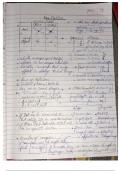
Competitive- inhibitor bind s to active site because it looks like substrate; reversible and can be r emoved by excess substrate. Raises Km value, but same Vmax
Noncompetitive- inhibitor binds to allosteric site (not a ctive site); is not reversible, removes fixed amount of enzyme. Lowers Vmax. Same Km, but lower Vmax
Feedback inhibition- an end product inhibit s a pathway by altering efficiency through Enzyme C ooperativity and Allo steric Regulation
oIf the feedback is positive , the allosteric activator stabilizes the active state. If negative , the allosteric inhibitor stabilize s inactive form
oWe can stabilize an enzyme by a dding substrate Enzymes 09/22/2011
Feedback inhibition- an end product inhibit s a pathway by altering efficiency through Enzyme C ooperativity and Allo steric Regulation
If the feedback is positive , the allosteric activator stabilizes the active state. If negative, the al losteric inhibitor stabilizes ina ctive form
We can stabilize an enzyme by a dding substrate
Naming enzymes requires 4 digit s
First digit- classify into one of 6 classes
Second digit- subclass (t ype of bond acted upon)
Third digit- subclass (grou p acted upon, cofactor require d, etc.)
Fourth digit- serial number (sequence order)
Major classes
Oxidoreductases (dehydroge nases) (1)- catalyze oxidation/reduction, ofte n with coe NAD+/FAD
Transferases (2)- catalyze the tra nsfer of functional grou ps
Hydrolases (3)- catalase hydroly sis, adds water across bonds a s C-
C
Lyases (4)- add or remove fun ctional groups to C=C bon ds
Isomerases (mutase) (5)- catalyze is omerizations, change from one
to another
Ligases (6)- condensation of 2 substrates, often with splitt ing of ATP
“Kinases”- transfers ATP to anothe r molecule
Cell Organization
Membrane (selectively permeable)
DNA region (nucleoid or nuc leus)
Cytoplasm & subcell parts (organ elles) Prokaryote
Archaea, blue-green algae, bacte ria
Unicellular, most versatile and successful (make everything from simple inorganic elements)
Characteristics
o0.1-10um
oOuter, protective shell (ce ll wall) made of peptidoglycans an d lipopolysaccharides
oPlasma, cell membrane
oCytoplasm
oRibosome (only organelle of bacteria)
oFlagella
oBacterial chromosome (DNA)- the re are NO proteins complexed with bacterial DNA, unlike eukaryotes. Bacterial is circular, eukaryotic is line ar
oSome bacteria have respiratory membranes and can do aerobic metabolism outside of the mitochondria. Others have thylakoid membranes for ph otosynthesis.
Archaea Bacteria
Extreme Life on Earth
o10 Grays of radiation kills a human , but some can have a lot of radiation. This is ev idence for panspermia because the se are bacteria that could survive th e UV in space
Acidophiles, Alkaliphiles, Halop hiles, Methanogens, Psychro philes, Thermophiles
Eubacteria
We have over 300,000 species of bacteria on Earth (only 1 70 cause
human disease)
Identification
oShape of bacteria
Spherica, (cocci), Rod-shaped ( bacilli), Spiral oGram-Staining- crystal violet, iodine , safranin O
Gram-positive are purple and have peptidoglycans (protein+carb) in walls
Gram-negative are pink with lipo polysaccharides (thinner walls, more membrane-lik e)
Pelicillin- Alexander Fleming wa s researching flu in 19 28 and realized that a mold killed the Sta phylococcus bacteria growing ne ar
the mold on his petri dish
Cyanobacteria- photosynthe tic eubacteria with cytoplasmic membranes (can live in ex treme environments, fix N for AA 2
creation
Eukaryotes
Multi cellular organisms wit h nucleus, flexible cell “walls”, ge nes in chromosomes, extensive intern al membranes, cytoskeleton, organelles, sexual reprodu ction, and larger than ba cteria
Types
oAnimal- metazoan cell (heterotrophi c feeder)
oPlant- metaphytian cell (au totrophic producer, contains chloroplasts, large vacuole s, cellulosic cell wall)
oSimilarities and Differences , underlined is what is neede d to be known
Enzyme Inhibition- reduction in enzyme activity due t o action of non-
substrate molecule
Competitive- inhibitor bind s to active site because it looks like substrate; reversible and can be r emoved by excess substrate. Raises Km value, but same Vmax
Noncompetitive- inhibitor binds to allosteric site (not a ctive site); is not reversible, removes fixed amount of enzyme. Lowers Vmax. Same Km, but lower Vmax
Feedback inhibition- an end product inhibit s a pathway by altering efficiency through Enzyme C ooperativity and Allo steric Regulation
oIf the feedback is positive , the allosteric activator stabilizes the active state. If negative , the allosteric inhibitor stabilize s inactive form
oWe can stabilize an enzyme by a dding substrate Enzymes 09/22/2011
Feedback inhibition- an end product inhibit s a pathway by altering efficiency through Enzyme C ooperativity and Allo steric Regulation
If the feedback is positive , the allosteric activator stabilizes the active state. If negative, the al losteric inhibitor stabilizes ina ctive form
We can stabilize an enzyme by a dding substrate
Naming enzymes requires 4 digit s
First digit- classify into one of 6 classes
Second digit- subclass (t ype of bond acted upon)
Third digit- subclass (grou p acted upon, cofactor require d, etc.)
Fourth digit- serial number (sequence order)
Major classes
Oxidoreductases (dehydroge nases) (1)- catalyze oxidation/reduction, ofte n with coe NAD+/FAD
Transferases (2)- catalyze the tra nsfer of functional grou ps
Hydrolases (3)- catalase hydroly sis, adds water across bonds a s C-
C
Lyases (4)- add or remove fun ctional groups to C=C bon ds
Isomerases (mutase) (5)- catalyze is omerizations, change from one
to another
Ligases (6)- condensation of 2 substrates, often with splitt ing of ATP
“Kinases”- transfers ATP to anothe r molecule
Cell Organization
Membrane (selectively permeable)
DNA region (nucleoid or nuc leus)
Cytoplasm & subcell parts (organ elles) Prokaryote
Archaea, blue-green algae, bacte ria
Unicellular, most versatile and successful (make everything from simple inorganic elements)
Characteristics
o0.1-10um
oOuter, protective shell (ce ll wall) made of peptidoglycans an d lipopolysaccharides
oPlasma, cell membrane
oCytoplasm
oRibosome (only organelle of bacteria)
oFlagella
oBacterial chromosome (DNA)- the re are NO proteins complexed with bacterial DNA, unlike eukaryotes. Bacterial is circular, eukaryotic is line ar
oSome bacteria have respiratory membranes and can do aerobic metabolism outside of the mitochondria. Others have thylakoid membranes for ph otosynthesis.
Archaea Bacteria
Extreme Life on Earth
o10 Grays of radiation kills a human , but some can have a lot of radiation. This is ev idence for panspermia because the se are bacteria that could survive th e UV in space
Acidophiles, Alkaliphiles, Halop hiles, Methanogens, Psychro philes, Thermophiles
Eubacteria
We have over 300,000 species of bacteria on Earth (only 1 70 cause
human disease)
Identification
oShape of bacteria
Spherica, (cocci), Rod-shaped ( bacilli), Spiral oGram-Staining- crystal violet, iodine , safranin O
Gram-positive are purple and have peptidoglycans (protein+carb) in walls
Gram-negative are pink with lipo polysaccharides (thinner walls, more membrane-lik e)
Pelicillin- Alexander Fleming wa s researching flu in 19 28 and realized that a mold killed the Sta phylococcus bacteria growing ne ar
the mold on his petri dish
Cyanobacteria- photosynthe tic eubacteria with cytoplasmic membranes (can live in ex treme environments, fix N for AA 2
creation
Eukaryotes
Multi cellular organisms wit h nucleus, flexible cell “walls”, ge nes in chromosomes, extensive intern al membranes, cytoskeleton, organelles, sexual reprodu ction, and larger than ba cteria
Types
oAnimal- metazoan cell (heterotrophi c feeder)
oPlant- metaphytian cell (au totrophic producer, contains chloroplasts, large vacuole s, cellulosic cell wall)
oSimilarities and Differences , underlined is what is neede d to be known