A1 : Properties of materials
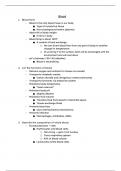
Mass & Density
Strong & Can hold its shape.
Mass – Measurement of the amount of matter in an object or substance.
Density – How much space an object or substance takes up (its volume) in relation to the amount of
matter in that object or substance (its mass)
Density is measured in kg/m3
Which materials will have mass and density in their properties?
Solid concrete, stone, steel, iron, brick.
Tensile
Strength
Has to resist : Shear, Tension, Compression, Bending
Strength = The resistance of materials before it deforms (fails)
I.e. Concrete : Good in compression but not in tension – therefore needs reinforcement (usually steel
bars / meshes) to prevent cracking.
Timber: Strong parallel to grain: weaker against and can split.
Hardness
Hardness is a measure of a materials resistance to localised permanent deformation.
Permanent deformation – Called plastic deformation
Elastic deformation – material changes its shape only during the application of force, a resulting
plastic deformation means that the material will not return to original shape. Ranges from super
hard materials such as diamond, boron-carbide to other ceramics and hard metals to soft metals,
down to plastics and soft tissues.
Which materials will have a lot of hardness in their properties?
Stone, concrete, ceramics
Hardness is just one mechanical measurement and properties such as toughness and strength need
to be considered, as hard materials tend to have low toughness and can be easily fractured.
Toughness
The ability of a material to absorb energy before ultimate failure.
Material which as absorb more energy before failure is considered more tough than another material
which can absorb less.
Unit of toughness is Joules per cubic meter
Mass & Density
Strong & Can hold its shape.
Mass – Measurement of the amount of matter in an object or substance.
Density – How much space an object or substance takes up (its volume) in relation to the amount of
matter in that object or substance (its mass)
Density is measured in kg/m3
Which materials will have mass and density in their properties?
Solid concrete, stone, steel, iron, brick.
Tensile
Strength
Has to resist : Shear, Tension, Compression, Bending
Strength = The resistance of materials before it deforms (fails)
I.e. Concrete : Good in compression but not in tension – therefore needs reinforcement (usually steel
bars / meshes) to prevent cracking.
Timber: Strong parallel to grain: weaker against and can split.
Hardness
Hardness is a measure of a materials resistance to localised permanent deformation.
Permanent deformation – Called plastic deformation
Elastic deformation – material changes its shape only during the application of force, a resulting
plastic deformation means that the material will not return to original shape. Ranges from super
hard materials such as diamond, boron-carbide to other ceramics and hard metals to soft metals,
down to plastics and soft tissues.
Which materials will have a lot of hardness in their properties?
Stone, concrete, ceramics
Hardness is just one mechanical measurement and properties such as toughness and strength need
to be considered, as hard materials tend to have low toughness and can be easily fractured.
Toughness
The ability of a material to absorb energy before ultimate failure.
Material which as absorb more energy before failure is considered more tough than another material
which can absorb less.
Unit of toughness is Joules per cubic meter