OPERATIONS MANAGEMENT
Operations Management: Lecture 2 (11/10)
Chapter 4: Global Supply Chain Management
Supply chain structure
Supply chain = network of activities to deliver finished products to customers:
● Suppliers provide raw materials and components
● Manufacturers transform these materials into finished products
● Products are distributed to retailers via distribution centers and/or wholesalers
● Retailers sell the finished products to the end customer
Supply chain management (SCM) = coordination and management of all the activities of
the supply chain → prime example of OM
orchestration, management
Basic supply chain
important flow of goods OM manages:
information flow: have to know what the demand is
Example from Nike
All their factories are spread around the world, transported in a sufficient way:
consolidator, port of origin in China/Vietnam → container ship to the port of Antwerp →
Laakdal in antwerp → by car → retailers
,Supply chain components
BOOK:
Supply chain: A network of all the activities involved in delivering a finished product or
service to the customer.
A supply chain is the network of activities that delivers a finished product or service to the
customer. These include sourcing raw materials and parts, manufacturing and assembling
the products, warehousing, order entry and tracking, distribution through the channels, and
delivery to the customer. An organization’s supply chain is facilitated by an information
system that allows relevant information such as sales data, sales forecasts, and promotions
to be shared among members of the supply chain.
Supply chain management: Coordinates and manages all the activities of the supply chain.
Supply chain management is the vital business function that coordinates and manages all
the activities of the supply chain linking suppliers, transporters, internal departments,
third-party companies, and information systems. Supply chain management for
manufacturers entails
● Coordinatingthemovementofgoodsthroughthesupplychainfromsuppliersto
manufacturers to distributors to the final customers
● Sharing relevant information such as sales forecasts, sales data, and promotional
campaigns among members of the chain
A prime example of operations management (OM), supply chain management provides the
company with a sustainable, competitive advantage, such as quick response time, low cost,
state-of-the-art quality design, or operational flexibility.
Example: Dell computers Corporation, a company using its supply chain to achieve a
sustainable competitive advantage.
A customized Dell computer can be en route to the customer within 36 hours. This quick
response allows Dell to reduce its inventory level to approximately 13 days of supply
compared to Compaq’s 25 days of supply. Dell achieves this in part through its warehousing
plan. Most of the components Dell uses are warehoused within 15 minutes travel time to an
assembly plant. Dell does not order components at its Austin, Texas, facility; instead,
,suppliers restock warehouses as needed, and Dell is billed for items only after they are
shipped. The result is better value for the customer. A company’s supply chain structure has
three components: external suppliers, internal functions of the company and external
distributors.
External suppliers
= might be structured into multiple tiers
Eg; suppliers of dairy products manufacturer
suppliers of our suppliers: tier 2 suppliers
BOOK
Tier one supplier Supplies materials or services directly to the processing facility.
Tier two supplier Directly supplies materials or services to a tier one supplier in the supply
chain.
Tier three supplier Directly supplies materials or services to a tier two supplier in the supply
chain.
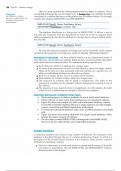
Dairy products manufacturing involves several companies, as shown in figure above. The
dairy products are packaged either in cardboard or plastic containers made by tier one
suppliers. Note that any supplier that provides materials directly to the processing facility is
designated as a tier one supplier
The paper mill and the chemical processing plant are tier two suppliers because they directly
supply tier one suppliers but do not directly supply the packaging opera- tion. The lumber
company that provides wood to the paper mill is a tier three sup- plier, as is the chemical
extraction plant that supplies raw materials to the chemical processing plant.
Companies put substantial effort into developing the external supplier portion of the supply
chain because the cost of materials might represent 50–60 percent or even more of the cost
of goods sold. A company is typically involved in a number of sup- ply chains and often in
different roles. In the supply chain for the plastics container manufacturer shown in Figure
4-2, for example, the chemical plant is now a tier one supplier and the chemical extraction
facility is a tier two supplier. Even though the plastics container manufacturer was a tier one
, supplier to the milk processing facility, the plastic container manufacturer still has its own
unique supply chain.
Internal functions
● Processing: transforming raw materials into finished products, packaging
● Purchasing: selecting suppliers, monitoring performance, developing and maintaining
relationships
● Production: planning and controlling
● Quality assurance: overseeing quality
● Shipping: selecting carriers/fleet
External distributors
● Logistics function:
○ Logistics: Activities involved in obtaining, producing, and distributing
materials and products in the proper place and in proper quantities.
○ Traffic management: selecting and monitoring of carriers/fleet
■ Responsible for arranging the method of shipment for both incoming
and outgoing products or materials
○ Distribution management: packaging, labeling, storing and handling at
warehouses and at stores
■ Responsible for movement of material from the manufacturer to the
customer.
The bullwhip effect
= Inaccurate or distorted demand information created in the supply chain
Excessive inventory investments due to inaccurate/distorted information flow:
● Upstream levels do not know the final customer demand
● Upstream levels do not know when orders will be received
Eg; our game, set up to fail, in Covid: toiletpaper: local distributor gets suddenly high
orders: so they order those numbers and even more to be sure → the manufacturer
Operations Management: Lecture 2 (11/10)
Chapter 4: Global Supply Chain Management
Supply chain structure
Supply chain = network of activities to deliver finished products to customers:
● Suppliers provide raw materials and components
● Manufacturers transform these materials into finished products
● Products are distributed to retailers via distribution centers and/or wholesalers
● Retailers sell the finished products to the end customer
Supply chain management (SCM) = coordination and management of all the activities of
the supply chain → prime example of OM
orchestration, management
Basic supply chain
important flow of goods OM manages:
information flow: have to know what the demand is
Example from Nike
All their factories are spread around the world, transported in a sufficient way:
consolidator, port of origin in China/Vietnam → container ship to the port of Antwerp →
Laakdal in antwerp → by car → retailers
,Supply chain components
BOOK:
Supply chain: A network of all the activities involved in delivering a finished product or
service to the customer.
A supply chain is the network of activities that delivers a finished product or service to the
customer. These include sourcing raw materials and parts, manufacturing and assembling
the products, warehousing, order entry and tracking, distribution through the channels, and
delivery to the customer. An organization’s supply chain is facilitated by an information
system that allows relevant information such as sales data, sales forecasts, and promotions
to be shared among members of the supply chain.
Supply chain management: Coordinates and manages all the activities of the supply chain.
Supply chain management is the vital business function that coordinates and manages all
the activities of the supply chain linking suppliers, transporters, internal departments,
third-party companies, and information systems. Supply chain management for
manufacturers entails
● Coordinatingthemovementofgoodsthroughthesupplychainfromsuppliersto
manufacturers to distributors to the final customers
● Sharing relevant information such as sales forecasts, sales data, and promotional
campaigns among members of the chain
A prime example of operations management (OM), supply chain management provides the
company with a sustainable, competitive advantage, such as quick response time, low cost,
state-of-the-art quality design, or operational flexibility.
Example: Dell computers Corporation, a company using its supply chain to achieve a
sustainable competitive advantage.
A customized Dell computer can be en route to the customer within 36 hours. This quick
response allows Dell to reduce its inventory level to approximately 13 days of supply
compared to Compaq’s 25 days of supply. Dell achieves this in part through its warehousing
plan. Most of the components Dell uses are warehoused within 15 minutes travel time to an
assembly plant. Dell does not order components at its Austin, Texas, facility; instead,
,suppliers restock warehouses as needed, and Dell is billed for items only after they are
shipped. The result is better value for the customer. A company’s supply chain structure has
three components: external suppliers, internal functions of the company and external
distributors.
External suppliers
= might be structured into multiple tiers
Eg; suppliers of dairy products manufacturer
suppliers of our suppliers: tier 2 suppliers
BOOK
Tier one supplier Supplies materials or services directly to the processing facility.
Tier two supplier Directly supplies materials or services to a tier one supplier in the supply
chain.
Tier three supplier Directly supplies materials or services to a tier two supplier in the supply
chain.
Dairy products manufacturing involves several companies, as shown in figure above. The
dairy products are packaged either in cardboard or plastic containers made by tier one
suppliers. Note that any supplier that provides materials directly to the processing facility is
designated as a tier one supplier
The paper mill and the chemical processing plant are tier two suppliers because they directly
supply tier one suppliers but do not directly supply the packaging opera- tion. The lumber
company that provides wood to the paper mill is a tier three sup- plier, as is the chemical
extraction plant that supplies raw materials to the chemical processing plant.
Companies put substantial effort into developing the external supplier portion of the supply
chain because the cost of materials might represent 50–60 percent or even more of the cost
of goods sold. A company is typically involved in a number of sup- ply chains and often in
different roles. In the supply chain for the plastics container manufacturer shown in Figure
4-2, for example, the chemical plant is now a tier one supplier and the chemical extraction
facility is a tier two supplier. Even though the plastics container manufacturer was a tier one
, supplier to the milk processing facility, the plastic container manufacturer still has its own
unique supply chain.
Internal functions
● Processing: transforming raw materials into finished products, packaging
● Purchasing: selecting suppliers, monitoring performance, developing and maintaining
relationships
● Production: planning and controlling
● Quality assurance: overseeing quality
● Shipping: selecting carriers/fleet
External distributors
● Logistics function:
○ Logistics: Activities involved in obtaining, producing, and distributing
materials and products in the proper place and in proper quantities.
○ Traffic management: selecting and monitoring of carriers/fleet
■ Responsible for arranging the method of shipment for both incoming
and outgoing products or materials
○ Distribution management: packaging, labeling, storing and handling at
warehouses and at stores
■ Responsible for movement of material from the manufacturer to the
customer.
The bullwhip effect
= Inaccurate or distorted demand information created in the supply chain
Excessive inventory investments due to inaccurate/distorted information flow:
● Upstream levels do not know the final customer demand
● Upstream levels do not know when orders will be received
Eg; our game, set up to fail, in Covid: toiletpaper: local distributor gets suddenly high
orders: so they order those numbers and even more to be sure → the manufacturer