TNCC (TRAUMA NURSE CORE COURSE) STUDY QUESTIONS WITH CORRECT ANSWERS
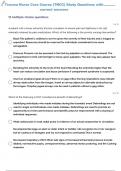
A patient with a lower extremity fracture complains of severe pain and tightness in his calf, minimally relieved by pain medications. Which of the following is the priority nursing intervention? Black This patient is unlikely to survive given the severity of their injuries and is triaged as expectant. Resources should be reserved for individuals considered to be more salvageable. Pressure Pressure can be assessed in the limb by palpation or direct measurement. The compartment or limb will feel tight or tense upon palpation. The skin may also appear taut and shiny. Elevating the extremity to the level of the heart Elevating the extremity higher than the heart can reduce circulation and tissue perfusion if compartment syndrome is suspected. Insert an oropharyngeal airway if there is no gag reflex Snoring respirations may indicate airway obstruction from the tongue. Insert an airway adjunct to alleviate obstruction by the tongue. Oropharyngeal airways can be used in patients without a gag reflex. 1 of 12 Which of the following is NOT considered a benefit of debriefings? Identifying individuals who made mistakes during the traumatic event Debriefings are not used to single out individuals who made mistakes. Debriefings are used to provide an opportunity to review performance and identify areas for improvement with a sharing of individual responses. Weak radial pulse A weak radial pulse is evidence of an actual compromise in circulation. Developmental stage An alert or older infant or toddler will recognize his or her caregiver but be cautious of strangers and my not respond to commands This is normal. Decreased respiratory effort Other late signs of increased intracranial pressure include dilated, nonreactive pupils, unresponsiveness, abnormal motor posturing, and the Cushing response. 2 of 12 EXAM What physiologic change in the elderly population increases the risk of traumatic injury? Decreased subcutaneous fat Decreased subcutaneous fat and thinning of the skin increases the risk of injuries from soft tissue trauma and increases the risk of hypothermia Elevating the extremity to the level of the heart Elevating the extremity higher than the heart can reduce circulation and tissue perfusion if compartment syndrome is suspected. Decreased respiratory effort Other late signs of increased intracranial pressure include dilated, nonreactive pupils, unresponsiveness, abnormal motor posturing, and the Cushing response. Defusings A defusing is part of critical incident stress management but is not considered a critical communication point in trauma care. 3 of 12 Which of the following is a late sign of increased intracranial pressure? Advanced age Older patients are more likely to have pulmonary comorbidities and decreased pulmonary reserve. Decreased respiratory effort Other late signs of increased intracranial pressure include dilated, nonreactive pupils, unresponsiveness, abnormal motor posturing, and the Cushing response. Decreased subcutaneous fat Decreased subcutaneous fat and thinning of the skin increases the risk of injuries from soft tissue trauma and increases the risk of hypothermia Within 24 hours of the trauma The tertiary survey consists of a complete examination performed following the primary and secondary surveys and within 24 hours after trauma to identify any injuries missed during the initial assessment.
Written for
- Institution
- TNCC
- Course
- TNCC
Document information
- Uploaded on
- February 16, 2024
- Number of pages
- 18
- Written in
- 2023/2024
- Type
- Exam (elaborations)
- Contains
- Questions & answers
Subjects
- tncc
-
tncc trauma nurse core course study questions wi
-
a patient with a lower extremity fracture complain

Also available in package deal