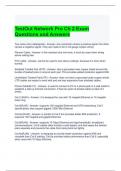
NR 565 Final Exam Questions and Answers 100% Pass
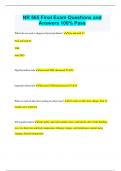
NR 565 Final Exam Questions and Answers 100% Pass What labs are used to diagnose thyroid problems? Free and total T3 Free and total T4 TSH Anti-TPO Hypothyroidism labs increased TSH, decreased T3 &T4 hyperthyroidism labs decreased TSH and increased T3 &T4 When to recheck labs after starting levothyroxine? 6-8 weeks or after dose change, then 12 months once stabilized S/S hypothyroidism pale, puffy, and expressionless face, cold and dry skin, brittle hair/hair loss, low heart rate and body temperature, lethargy, fatigue, cold intolerance, mental status changes, thyroid enlargement Think "hypo low and slow" S/S hyperthyroidism strong and rapid heart rate, dysrhythmias, angina, nervousness, insomnia, rapid thought flow and speech, muscle weakness/atrophy, increased metabolic rate (increased heat production, increased body temperature, heat intolerance), warm/moist skin, increased appetite, weight loss despite increased caloric intake think "hyper as in fast" result of not treating hypothyroidism during pregnancy permanent neuropsychological deficits in the child. First trimester: fetus unable to produce their own thyroid hormones. Fetal thyroid gland is fully functional in the second trimester. Medication to treat SYMPTOMS of hyperthyroidism beta blocker (decrease HR) non-radioactive iodine How to take levothyroxine with food? take on an empty stomach in the morning, 30-60 minutes before breakfast Supplement/drug interactions with levothyroxine antacids, iron, calcium Confirm diabetes diagnosis prior to treatment fasting plasma glucose greater than or equal to 126, A random plasma glucose of greater than or equal to 200 plus symptoms of diabetes, an oral glucose tolerance test of two hours, plasma glucose of greater than or equal to 200, or a hemoglobin A1c, a 6.5 or higher (on two occasions) A1c general goal <7% Older adult A1c goal <8% When should insulin be considered? For patients with an A1c >10%, a fasting blood glucose >300 or are markedly symptomatic At what interval should A1c be rechecked? 2-4 times a year (every 3 months) until A1c drops to 7% and at least every 6 months there after action of insulin regulation of glucose metabolism. Insulin promotes glucose and amino acid uptake into muscle and adipose tissues, and other tissues except brain and liver. It also has an anabolic role in stimulating glycogen, fatty acid, and protein synthesis First, it stimulates cellular transport (uptake) of glucose, amino acids, nucleotides, and potassium. Second, insulin promotes synthesis of complex organic molecules. Under the influence of insulin and other factors, glucose is converted into glycogen, amino acids are assembled into proteins, and fatty acids are incorporated into triglycerides Pioglitazone (TZD) contraindications do not give to patients with heart failure or history of bladder cancer GLP-1 glucagon-like peptide-1 receptor agonist ending in -glutide/tide ex. semaglutide TZD Thiazolidinedione's end in -ones ex. glitazones DPP4-1 Dipeptidyl Peptidase-4 inhibitors end in -gliptin ex. gliptins SGLT2i sodium-glucose contransporter 2 inhibitors end in-flozin Which drug class should be considered for diabetes prior to insulin metformin Ratio of basal insulin to rapid acting insulin in total daily dose of insulin? 50% Which diabetic medications come with concern to hypoglycemia? Amylin Analogues, Insulin, Meglitinides, Sulfonylureas (think these medications AIMS cause hypoglycemia) Treatment of thyroid storm? K iodine or strong iodine solution to suppress thyroid release and methimazole to suppress thyroid synthesis Preferred treatment is PTU
Written for
- Institution
- NR 565
- Course
- NR 565
Document information
- Uploaded on
- February 14, 2024
- Number of pages
- 25
- Written in
- 2023/2024
- Type
- Exam (elaborations)
- Contains
- Questions & answers
Subjects
-
nr 565 final exam questions and answers 100 pass

Also available in package deal