Assignment 3: FOCUS ON THE LEARNER (750-1000 words)
The aim of this assignment is for you to:
Investigate the learning context and assess learner needs with reference to a
specific group of students.
Identify sources for language development.
Suggest specific language-focused activities and an explanation / rationale for
their use with the same group of students.
Recommended books for this assignment (please list the ones you use in a
bibliography at the end of your assignment, giving the title, author, publisher and year
of publication):
“Learning Teaching", Jim Scrivener, Macmillan Heinemann.
“The Practice of English Language Teaching", Jeremy Harmer, Pearson.
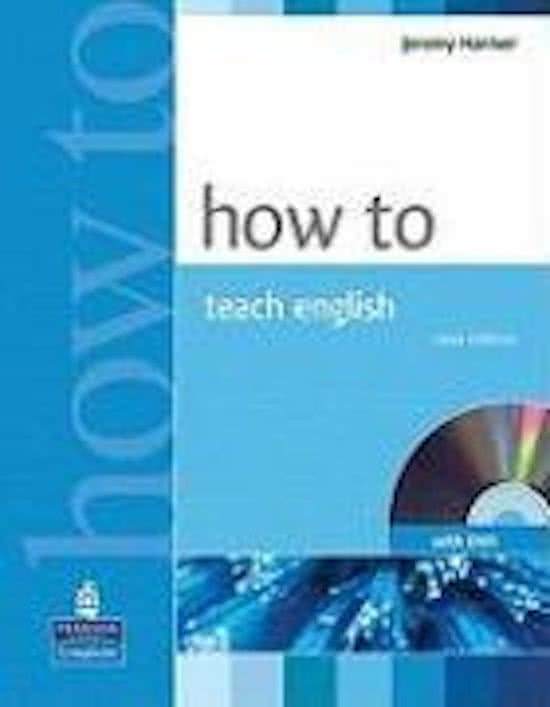
“How to Teach English", Jeremy Harmer, Pearson.
“Grammar for English Language Teachers", Martin Parrott, CUP.
“Practical English Usage", Michael Swan, OUP.
“How English Works", Michael Swan and Catherine Walter, OUP.
“Essential Grammar in Use", Raymond Murphy, CUP.
“English Grammar in Use", Raymond Murphy, CUP.
“Learner English”, M. Swan and B. Smith, CUP.
Assessment criteria (reproduced from the CELTA Syllabus and Assessment
Guidelines):
Candidates can demonstrate their learning by:
Showing awareness of how learners’ backgrounds, previous learning experiences
and learning style(s) affect learning.
Identifying the learners’ language / skills needs.
Correctly using terminology relating to the description of language systems and
language skills.
Selecting appropriate material and/or resources to aid the learners’ language
development.
Providing a rationale for using specific activities with a group of learners.
Finding, selecting and referencing information from one or more sources.
Using written language which is clear, accurate and appropriate to task.
Procedure
Interview: In the non-assessed TP on Friday of Week 2, your TP group will
collect information on your new group of students – you will already have an
overview of them from your observation of them in Week 2 and the TP Handover
Forms. You will be given activities to do which will help you in this task (see the
questionnaire at the end of this assignment and the input session which sets the
assignment up). After the lesson, you will exchange and collate information with
other members of your TP group; make sure you each get copies of their written
work.
Observe: Watch your new students carefully during lessons and make notes in
the following areas:
How often do individuals speak to the teacher and to other students?
Comment on body language. Do individual students look relaxed, nervous,
uncomfortable, etc?
, How well do they follow instructions? What would help them understand
better?
Do individual students seem willing to participate fully in activities? If so,
why do you think this is? If not, why not?
What types of learning activities seem to suit the students best, i.e. what
appear to be their learning style(s) and learning preferences?
Monitor them during open class and pair/group work – note good
sentences, errors, things they have problems with, areas they avoid,
strategies they use when they don’t understand something or when they
are not understood.
The contents of the assignment:
Part 1: Background (250 words): Using the information gained from your first
lesson with the group and your observations, write a profile of the class as a
whole (where relevant, you should make reference to individual students as well):
The general make-up of the group including their nationalities, first languages,
age range, gender mix, jobs / professions and hobbies / interests.
Their learning history / previous experience of learning English (or other
languages) – when, where and especially what methods were used and how
successfully? What effect has this history had on their current learning?
The reasons they are learning English now, i.e. their needs and motivation.
Their learning preferences, i.e. the kinds of classroom activities they seem to
like.
Their learning styles with some evidence to support your claims.
Part 2: Skills and Communication (150 words): Comment on the group’s
performance in two of the four skills:
2.1 Reading or Listening (please refer to sub-skills).
2.2 Writing or Speaking (please refer to how effective their communication is).
Exemplify all your points (strengths and/or weaknesses) referring to specific
students where possible. Do not focus on grammar, vocabulary or pronunciation
in this section.
Part 3: Strengths and Weaknesses (300 words):
This section covers the learners’ performance in language systems (Grammar,
Vocabulary and Pronunciation). In all of the following, take the students’ level into
consideration, i.e. do not list something as a strength if it is something introduced
much earlier in the students’ learning career and do not list as a weakness
something they have not yet studied. When discussing pronunciation, use the
phonemic script to exemplify your points.
List one example of successful language use which is appropriate for / beyond
the students’ level in each of Vocabulary, Grammar and Pronunciation.
Underline the part you think is a strength and very briefly say why you think
this is so. For example:
Anna (Elementary level Russian student) wrote “I usually go the cinema at the
weekend” – this sentence included the correct use and placement of the
adverb of frequency ‘usually’ and the correct use of the preposition ‘at’ (British
English), both of which students at higher levels often have problems with.
The aim of this assignment is for you to:
Investigate the learning context and assess learner needs with reference to a
specific group of students.
Identify sources for language development.
Suggest specific language-focused activities and an explanation / rationale for
their use with the same group of students.
Recommended books for this assignment (please list the ones you use in a
bibliography at the end of your assignment, giving the title, author, publisher and year
of publication):
“Learning Teaching", Jim Scrivener, Macmillan Heinemann.
“The Practice of English Language Teaching", Jeremy Harmer, Pearson.
“How to Teach English", Jeremy Harmer, Pearson.
“Grammar for English Language Teachers", Martin Parrott, CUP.
“Practical English Usage", Michael Swan, OUP.
“How English Works", Michael Swan and Catherine Walter, OUP.
“Essential Grammar in Use", Raymond Murphy, CUP.
“English Grammar in Use", Raymond Murphy, CUP.
“Learner English”, M. Swan and B. Smith, CUP.
Assessment criteria (reproduced from the CELTA Syllabus and Assessment
Guidelines):
Candidates can demonstrate their learning by:
Showing awareness of how learners’ backgrounds, previous learning experiences
and learning style(s) affect learning.
Identifying the learners’ language / skills needs.
Correctly using terminology relating to the description of language systems and
language skills.
Selecting appropriate material and/or resources to aid the learners’ language
development.
Providing a rationale for using specific activities with a group of learners.
Finding, selecting and referencing information from one or more sources.
Using written language which is clear, accurate and appropriate to task.
Procedure
Interview: In the non-assessed TP on Friday of Week 2, your TP group will
collect information on your new group of students – you will already have an
overview of them from your observation of them in Week 2 and the TP Handover
Forms. You will be given activities to do which will help you in this task (see the
questionnaire at the end of this assignment and the input session which sets the
assignment up). After the lesson, you will exchange and collate information with
other members of your TP group; make sure you each get copies of their written
work.
Observe: Watch your new students carefully during lessons and make notes in
the following areas:
How often do individuals speak to the teacher and to other students?
Comment on body language. Do individual students look relaxed, nervous,
uncomfortable, etc?
, How well do they follow instructions? What would help them understand
better?
Do individual students seem willing to participate fully in activities? If so,
why do you think this is? If not, why not?
What types of learning activities seem to suit the students best, i.e. what
appear to be their learning style(s) and learning preferences?
Monitor them during open class and pair/group work – note good
sentences, errors, things they have problems with, areas they avoid,
strategies they use when they don’t understand something or when they
are not understood.
The contents of the assignment:
Part 1: Background (250 words): Using the information gained from your first
lesson with the group and your observations, write a profile of the class as a
whole (where relevant, you should make reference to individual students as well):
The general make-up of the group including their nationalities, first languages,
age range, gender mix, jobs / professions and hobbies / interests.
Their learning history / previous experience of learning English (or other
languages) – when, where and especially what methods were used and how
successfully? What effect has this history had on their current learning?
The reasons they are learning English now, i.e. their needs and motivation.
Their learning preferences, i.e. the kinds of classroom activities they seem to
like.
Their learning styles with some evidence to support your claims.
Part 2: Skills and Communication (150 words): Comment on the group’s
performance in two of the four skills:
2.1 Reading or Listening (please refer to sub-skills).
2.2 Writing or Speaking (please refer to how effective their communication is).
Exemplify all your points (strengths and/or weaknesses) referring to specific
students where possible. Do not focus on grammar, vocabulary or pronunciation
in this section.
Part 3: Strengths and Weaknesses (300 words):
This section covers the learners’ performance in language systems (Grammar,
Vocabulary and Pronunciation). In all of the following, take the students’ level into
consideration, i.e. do not list something as a strength if it is something introduced
much earlier in the students’ learning career and do not list as a weakness
something they have not yet studied. When discussing pronunciation, use the
phonemic script to exemplify your points.
List one example of successful language use which is appropriate for / beyond
the students’ level in each of Vocabulary, Grammar and Pronunciation.
Underline the part you think is a strength and very briefly say why you think
this is so. For example:
Anna (Elementary level Russian student) wrote “I usually go the cinema at the
weekend” – this sentence included the correct use and placement of the
adverb of frequency ‘usually’ and the correct use of the preposition ‘at’ (British
English), both of which students at higher levels often have problems with.