Nutrition Part 2
Nutrition in humans
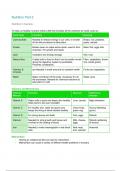
To keep us healthy, humans need a diet that includes all the nutrients we need, such as:
Food Type Function Sources
Carbohydrate Needed to release energy in our cells, to enable Bread, rice, potatoes,
all the life processes to take place pasta, cereals
Protein Broken down to make amino acids, used to form Meat, fish, eggs milk
enzymes. For growth and repair
Lipid Insulation and energy storage Oils, nuts
Dietary fibre It adds bulk to food so that it can be easily moved Fibre, vegetables, brown
along the digestive system by peristalsis. rice, whole grains
Prevents constipation.
Vitamins & are Needed in small amounts to maintain health Fruits and vegetables
minerals
Water Major constituent of the body, necessary for all Water, juice
life processes. Needed for chemical reactions to
take place in cells
Vitamins and Mineral Ions
Vitamin/ Function Sources Deficiency
Mineral disease
Vitamin A Helps cells to grow and keeps skin healthy Liver, carrots Night blindness
helps eyes to see poor eyesight
Vitamin C For healthy skin, teeth and gums and Citrus fruits, Scurvy (bleeding
keeps the lining of blood vessels healthy green veg gums)
Vitamin D For strong bones and teeth Fish, eggs Rickets
Calcium Needed for strong teeth and bones and Milk, cheese, Rickets (softening
involved in the clotting of blood. eggs of bones)
Iron Needed to make haemoglobin in red blood Red meat, Anaemia
cells liver, spinach
Malnutrition
- Having an unbalanced diet can lead to malnutrition
- Malnutrition can cause a variety of different health problems in humans
, → Dietary Needs of Individuals
The nutritional requirements will vary throughout their lifetime
Age
- Children need a higher proportion of protein than adults for growth
- Energy needs of adults decrease with age
Activity Levels
- More active, more energy required for movement
Pregnancy
- Energy requirements increase as energy is needed to support foetus
- A larger mass mother needs to carry around
- Extra calcium and iron needed to help build bones, teeth and blood
- Energy requirements increase, extra calcium for breastfeeding
Sex
- Male average energy requirements tend to exceed female
Questions - page 84
1. In a balanced diet, apart from water, which three groups of food molecules do we need
most of?
2. Looking at a diagram of a balanced diet plate:
a. Which two types of foods are needed in the greatest amounts in a healthy balanced
diet?
b. Which nutrients do these types of food provide
c. Which group is the smallest?
d. Suggest why you are recommended to eat less of this group
3. Explain why different groups of people need different amounts of nutrients. Give examples
in your answer.
4. Explain why a healthy diet needs to consider energy as well as nutrients.
Nutrition in humans
To keep us healthy, humans need a diet that includes all the nutrients we need, such as:
Food Type Function Sources
Carbohydrate Needed to release energy in our cells, to enable Bread, rice, potatoes,
all the life processes to take place pasta, cereals
Protein Broken down to make amino acids, used to form Meat, fish, eggs milk
enzymes. For growth and repair
Lipid Insulation and energy storage Oils, nuts
Dietary fibre It adds bulk to food so that it can be easily moved Fibre, vegetables, brown
along the digestive system by peristalsis. rice, whole grains
Prevents constipation.
Vitamins & are Needed in small amounts to maintain health Fruits and vegetables
minerals
Water Major constituent of the body, necessary for all Water, juice
life processes. Needed for chemical reactions to
take place in cells
Vitamins and Mineral Ions
Vitamin/ Function Sources Deficiency
Mineral disease
Vitamin A Helps cells to grow and keeps skin healthy Liver, carrots Night blindness
helps eyes to see poor eyesight
Vitamin C For healthy skin, teeth and gums and Citrus fruits, Scurvy (bleeding
keeps the lining of blood vessels healthy green veg gums)
Vitamin D For strong bones and teeth Fish, eggs Rickets
Calcium Needed for strong teeth and bones and Milk, cheese, Rickets (softening
involved in the clotting of blood. eggs of bones)
Iron Needed to make haemoglobin in red blood Red meat, Anaemia
cells liver, spinach
Malnutrition
- Having an unbalanced diet can lead to malnutrition
- Malnutrition can cause a variety of different health problems in humans
, → Dietary Needs of Individuals
The nutritional requirements will vary throughout their lifetime
Age
- Children need a higher proportion of protein than adults for growth
- Energy needs of adults decrease with age
Activity Levels
- More active, more energy required for movement
Pregnancy
- Energy requirements increase as energy is needed to support foetus
- A larger mass mother needs to carry around
- Extra calcium and iron needed to help build bones, teeth and blood
- Energy requirements increase, extra calcium for breastfeeding
Sex
- Male average energy requirements tend to exceed female
Questions - page 84
1. In a balanced diet, apart from water, which three groups of food molecules do we need
most of?
2. Looking at a diagram of a balanced diet plate:
a. Which two types of foods are needed in the greatest amounts in a healthy balanced
diet?
b. Which nutrients do these types of food provide
c. Which group is the smallest?
d. Suggest why you are recommended to eat less of this group
3. Explain why different groups of people need different amounts of nutrients. Give examples
in your answer.
4. Explain why a healthy diet needs to consider energy as well as nutrients.