Module 5 Exam: HESI VN TXGRP 1912COHORT(VNE 39)
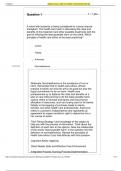
Question 1 1 / 1 pts A client with leukemia is being considered for a bone marrow transplant. The health care team is discussing the risks and benefits of this treatment and other possible treatments with the goal of inflicting the least possible harm on the client. Which principle of health care ethics is the team practicing? Justice Fidelity Autonomy Correct! Nonmaleficence Rationale: Nonmaleficence is the avoidance of hurt or harm. Remember that in health care ethics, ethical practice involves not only the will to do good but also the equal commitment to do no harm. Health care professionals try to balance the risks and benefits of a plan of care while striving to do the least possible harm. Justice refers to fairness and equity and ensuring fair allocation of resources, such as nursing care for all clients. Fidelity is the keeping of promises made to clients, families, and other health care professionals. Autonomy refers to a person’s independence and represents an agreement to respect another’s right to determine his or her course of action. Test-Taking Strategy: Use knowledge of the subject to help you with the process of elimination. Think about the definition of each item in the options. Note the relationship of the words “least possible harm” in the question and the definition of nonmaleficence. Review the principles of health care ethics if you had difficulty with this question. Cognitive Ability: Applying Client Needs: Safe and Effective Care Environment Integrated Process: Nursing Process/Implementation Content Area: Ethical/Legal Question 2 1 / 1 pts Which action by the nurse represents the ethical principle of beneficence? The nurse upholds a client’s decision to refuse chemotherapy for lung cancer. The nurse follows a plan of care designed to relieve pain in a client with cancer. Correct! The nurse administers an immunization to a child even though it may cause discomfort. The nurse provides equal amounts of care to all assigned clients on the basis of illness acuity. Rationale: Beneficence is taking action to help others. Although administration of a child’s immunization might cause discomfort, the benefits of protection from disease outweigh the temporary discomfort. Fidelity is keeping promises made to clients, families, and other health care professionals. Autonomy is a person’s independence. Respecting another’s autonomy means that you are agreeing to respect that person’s right to determine his or her course of action. Justice refers to fairness and equity, including fair allocation of resources, such as nursing care for all clients. Test-Taking Strategy: Focus on the subject, beneficence. Recalling that beneficence refers to taking action to help others will direct you to the correct option. Review the principles of health care ethics if you had difficulty with this question. Cognitive Ability: Applying Client Needs: Safe and Effective Care Environment Integrated Process: Nursing Process/Implementation Content Area: Ethical/Legal Rationale: When a client sustains a fall, the nurse must first assess the client. The nurse should check the client’s level of consciousness and vital signs and look for any bruises or injuries sustained in the fall. If the nurse determines that the client has not sustained any injuries and that it is safe to move the client, the nurse should ask the nursing assistant to assist in getting the client into bed. The nurse should then contact the health care provider and file an incident report. Test-Taking Strategy: Note the strategic word “first.” Use the steps of the nursing process to answer the question. The correct option is the only one that addresses assessment. Remember to always assess the client first if a client sustains a fall. Review client injuries and procedures for filing incident reports if you had difficulty with this question. Cognitive Ability: Applying Client Needs: Safe and Effective Care Environment Integrated Process: Nursing Process/Implementation Content Area: Delegating/Prioritizing
Document information
- Uploaded on
- February 8, 2024
- Number of pages
- 131
- Written in
- 2023/2024
- Type
- Exam (elaborations)
- Contains
- Questions & answers