Abeka Biology: God's Living Creation: Section Review 21.6 Already Passed
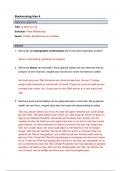
Abeka Biology: God's Living Creation: Section Review 21.6 Already Passed 1. What are the four main groups of protozoa? On what major characteristics is this classification based? The four main groups of protozoas are: Flagellates, sarcodines, ciliates, sporozoan. On methods of locomotion. 2. In what way(s) is the reproduction of amoebas different from that of paramecia? The amoeba exhibits reproduction by binary fission, paramecia exhibits sexual reproduction by a process called conjugation. Amoeba produces asexually by fission and paramecia reproduces both by fission and conjugation. 3. Name three diseases caused by protozoa African sleeping sickness Amoebic dysentery Malaria 4. How are foraminifera and radiolaria similar to diatoms (chapter 5)? How are they different? Both of them build silica shells around themselves. 5. Many scientists in the past classified Euglena as an animal, while others classified it as a plant. What characteristics of Euglena could contribute to his confusion? They contain chlorophyll and possess chloroplasts and can manufacture its own food. It can catch and ingest food like an animal and it moves freely by means of its flagellum. 6. Explain why the protozoa cannot be called "simple" creatures but are complex organisms that give evidence of the Creator's wisdom, power, and design. Protozoas can perform functions like digestion, excretion, respiration, movement, and responsiveness even though they are composed of only one cell. Identify: Protozoa Tiny animal-like creatures composed of a single cell. Identify: Pellicle A thickened membrane that acts as a cell wall that covers a euglena's somewhat cylindrical body. Identify: Flagellum A whiplike filament which is located on the anterior end of a euglena. Identify: Euglenoid Movement A method of movement that cannot be found on any other organism. The euglena's body shape itself changes performing this movement. Identify: Pseudpods Also known as "false feet", gives the amoeba an ever-changing, irregular body outline. Identify: Cilia Hair-like projections which covers all the sides of a paramecium. Identify: Macronucleus (Large nucleus) It controls the basic activities of he organism. Identify: Micronucleus (Small nucleus) Functions in reproduction. Identify: Trichocysts Dart-like structures which a paramecia shoots out when it is attacked or when it is feeding. Identify: Oral Groove The mouth cavity of a paramecium that resembles a funnel. Identify: Conjugation One of the two ways paramecia reproduce. Two paramecia exchange nuclear materials in this process.
Written for
- Institution
- Abeka Biology: God\'s Living Creation:
- Course
- Abeka Biology: God\'s Living Creation:
Document information
- Uploaded on
- February 7, 2024
- Number of pages
- 4
- Written in
- 2023/2024
- Type
- Exam (elaborations)
- Contains
- Questions & answers
Subjects
-
abeka biology gods living creation section revi

Also available in package deal