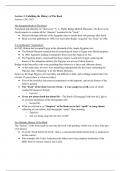
PYC 4805
Developmental
Psychology
CHAPTER FIVE
Entering the social world: Socioemotional
development in infancy and early childhood
Theme 1 – Erikson’s early stages of psychosocial
development
Theme 2 – Development of attachment from infancy to
preschool
Theme 3 – Gender roles and gender identity
• Departmental instructions
• Summaries of themes
• Exam style essays
• Multiple choice questions for studying
• Memorandum explaining correct answers
QUEEN KATHERINE’S HONOURS PSYCHOLOGY NOTES
, PYC4805–Developmental Psychology All rights reserved. P a g e |1
The Following Notes are Available in This Series –
only purchase the chapters you need!
✓ Chapter one – The study of human development
Theme 1 – Issues in human development
Theme 2 – Developmental theories
✓ Chapter two – Biological foundations: Heredity, prenatal
development and birth
Theme 1 – Evaluation of threats during a sensitive period and how development can be
harmed and possibly corrected
✓ Chapter Three – Tools for exploring the world: Physical,
perceptual and motor development
Theme 1 – Competency of newborns and infants
Theme 2 – Locomotor development and the toddler’s emerging sense of self
✓ Chapter four – The emergence of thought and language:
Cognitive development in infancy and early childhood
Theme 1 – Critical comparison of Piaget and Vygotsky’s views on the promotion of
cognitive development
Theme 2 – Information processing during infancy and early childhood and the
connections between emotional, cognitive and social development
✓ Chapter five – Entering the social world: Socioemotional
development in infancy and early childhood
Theme 1 – Erikson’s early stages of psychosocial development
Theme 2 – Development pf attachment from infancy to preschool
Theme 3 – Gender roles and gender identity
✓ Chapter six – Off to school: Cognitive and physical
development in middle school
Theme 1 – Cognitive development in middle school
Theme 2 – Intelligence in middle childhood
✓ Chapter seven – Expanding social horizons: Socioemotional
development in middle school
Theme 1 – The need for popularity and the advent of social media influence during
adolescence
Theme 2 – Dimensions and styles of parenting and its influence on adolescent
development
✓ Chapter eight – Rites of passage: Physical and cognitive
development in adolescence
Theme 1 – Physical and cognitive development in adolescence
Prepared by QUEEN KATHERINE for Psychology Honours Developmental Psychology
, PYC4805–Developmental Psychology All rights reserved. P a g e |2
✓ Chapter nine – Moving into the adult social world:
Socioecmotional development in adolescence
Theme 1 – Identity and self-esteem
✓ Chapter ten – Becoming an adult: Physical, cognitive and
personality development in young adulthood
Theme 1 – Evaluation of emerging adulthood
Theme 2 – Cognitive development: Intelligence in adults
Theme 3 – Personality in young adulthood
✓ Chapter Eleven – Being with others: Relationships in young
and middle childhood
Theme 1 – Relationships in young and middle adulthood
Theme 2 – Life styles and relationships
✓ Chapter twelve – Working and relaxing
Theme 1 – Work and family
Theme 2 – Leisure activities adulthood
✓ Chapter thirteen – Making it in midlife: The biopshological
challenges of middle adulthood
Theme 1 – Stress and coping in adulthood according to Richard Lazarus and Susan
Folkman’s paradigm
Theme 2 – Cognitive development
Theme 3 – Personality development
✓ Chapter fourteen – The personal context of later life:
Physical, cognitive, and mental health issues
Theme 1 – Genetic and environmental factors in average longevity
Theme 2 – Biological theories of ageing
Theme 3 – Changes in cognitive processes
✓ Chapter fifteen – Social aspects of later life: Psychosocial,
retirement, relationship, and societal issues
Theme 1 – Evaluation of emerging adulthood
Theme 2 – Integrity and well-being in late life
Theme 3 - Retirement
✓ Chapter Sixteen – Dying and bereavement
Theme 1 – Thinking about death
Theme 2 – The grieving process
Theme 3 – Dying and bereavement experiences across the life span
Prepared by QUEEN KATHERINE for Psychology Honours Developmental Psychology
, PYC4805–Developmental Psychology All rights reserved. P a g e |3
Chapter five
Entering the social world:
Socioemotional development in infancy
and early childhood.
Theme 1
Erikson’s early stages of psychosocial development
Guidelines
Discuss the first three stages of psychosocial development in infancy and
preschool years, namely basic trust vs mistrust, autonomy vs shame and
doubt, and initiative vs guilt. In the discussion, please note the
psychosocial strength that is achieved with the resolve of each crisis.
Hint: Your discussion must be substantiated by reference to relevant
research findings.
Some of our keenest insights into psychosocial development come from a
theory proposed by Erik Erikson (1982). He describes development as a
series of eight stages, each with a unique crisis for psychosocial growth.
When a crisis is resolved successfully, an area of psychosocial strength is
established. When the crisis is not resolved, that aspect of psychosocial
development is stunted, often limiting the individual’s ability to resolve
future crises. In Erikson’s theory, infancy and the preschool years are
represented by three stages, these being …
Hope: Trust vs. Mistrust (up to 2 years)
Will: Autonomy vs. Shame & Doubt (1-3 years)
Purpose: Initiative vs. Guilt (Preschool, 3-5 yrs)
In Erikson’s theory of psychosocial development, individuals face certain
psychosocial crises at different phases in development.
The crisis of infancy is to establish a balance between trust and
mistrust of the world, producing hope;
between one and three years of age, youngsters must blend
autonomy and shame to produce will; and
Prepared by QUEEN KATHERINE for Psychology Honours Developmental Psychology
Developmental
Psychology
CHAPTER FIVE
Entering the social world: Socioemotional
development in infancy and early childhood
Theme 1 – Erikson’s early stages of psychosocial
development
Theme 2 – Development of attachment from infancy to
preschool
Theme 3 – Gender roles and gender identity
• Departmental instructions
• Summaries of themes
• Exam style essays
• Multiple choice questions for studying
• Memorandum explaining correct answers
QUEEN KATHERINE’S HONOURS PSYCHOLOGY NOTES
, PYC4805–Developmental Psychology All rights reserved. P a g e |1
The Following Notes are Available in This Series –
only purchase the chapters you need!
✓ Chapter one – The study of human development
Theme 1 – Issues in human development
Theme 2 – Developmental theories
✓ Chapter two – Biological foundations: Heredity, prenatal
development and birth
Theme 1 – Evaluation of threats during a sensitive period and how development can be
harmed and possibly corrected
✓ Chapter Three – Tools for exploring the world: Physical,
perceptual and motor development
Theme 1 – Competency of newborns and infants
Theme 2 – Locomotor development and the toddler’s emerging sense of self
✓ Chapter four – The emergence of thought and language:
Cognitive development in infancy and early childhood
Theme 1 – Critical comparison of Piaget and Vygotsky’s views on the promotion of
cognitive development
Theme 2 – Information processing during infancy and early childhood and the
connections between emotional, cognitive and social development
✓ Chapter five – Entering the social world: Socioemotional
development in infancy and early childhood
Theme 1 – Erikson’s early stages of psychosocial development
Theme 2 – Development pf attachment from infancy to preschool
Theme 3 – Gender roles and gender identity
✓ Chapter six – Off to school: Cognitive and physical
development in middle school
Theme 1 – Cognitive development in middle school
Theme 2 – Intelligence in middle childhood
✓ Chapter seven – Expanding social horizons: Socioemotional
development in middle school
Theme 1 – The need for popularity and the advent of social media influence during
adolescence
Theme 2 – Dimensions and styles of parenting and its influence on adolescent
development
✓ Chapter eight – Rites of passage: Physical and cognitive
development in adolescence
Theme 1 – Physical and cognitive development in adolescence
Prepared by QUEEN KATHERINE for Psychology Honours Developmental Psychology
, PYC4805–Developmental Psychology All rights reserved. P a g e |2
✓ Chapter nine – Moving into the adult social world:
Socioecmotional development in adolescence
Theme 1 – Identity and self-esteem
✓ Chapter ten – Becoming an adult: Physical, cognitive and
personality development in young adulthood
Theme 1 – Evaluation of emerging adulthood
Theme 2 – Cognitive development: Intelligence in adults
Theme 3 – Personality in young adulthood
✓ Chapter Eleven – Being with others: Relationships in young
and middle childhood
Theme 1 – Relationships in young and middle adulthood
Theme 2 – Life styles and relationships
✓ Chapter twelve – Working and relaxing
Theme 1 – Work and family
Theme 2 – Leisure activities adulthood
✓ Chapter thirteen – Making it in midlife: The biopshological
challenges of middle adulthood
Theme 1 – Stress and coping in adulthood according to Richard Lazarus and Susan
Folkman’s paradigm
Theme 2 – Cognitive development
Theme 3 – Personality development
✓ Chapter fourteen – The personal context of later life:
Physical, cognitive, and mental health issues
Theme 1 – Genetic and environmental factors in average longevity
Theme 2 – Biological theories of ageing
Theme 3 – Changes in cognitive processes
✓ Chapter fifteen – Social aspects of later life: Psychosocial,
retirement, relationship, and societal issues
Theme 1 – Evaluation of emerging adulthood
Theme 2 – Integrity and well-being in late life
Theme 3 - Retirement
✓ Chapter Sixteen – Dying and bereavement
Theme 1 – Thinking about death
Theme 2 – The grieving process
Theme 3 – Dying and bereavement experiences across the life span
Prepared by QUEEN KATHERINE for Psychology Honours Developmental Psychology
, PYC4805–Developmental Psychology All rights reserved. P a g e |3
Chapter five
Entering the social world:
Socioemotional development in infancy
and early childhood.
Theme 1
Erikson’s early stages of psychosocial development
Guidelines
Discuss the first three stages of psychosocial development in infancy and
preschool years, namely basic trust vs mistrust, autonomy vs shame and
doubt, and initiative vs guilt. In the discussion, please note the
psychosocial strength that is achieved with the resolve of each crisis.
Hint: Your discussion must be substantiated by reference to relevant
research findings.
Some of our keenest insights into psychosocial development come from a
theory proposed by Erik Erikson (1982). He describes development as a
series of eight stages, each with a unique crisis for psychosocial growth.
When a crisis is resolved successfully, an area of psychosocial strength is
established. When the crisis is not resolved, that aspect of psychosocial
development is stunted, often limiting the individual’s ability to resolve
future crises. In Erikson’s theory, infancy and the preschool years are
represented by three stages, these being …
Hope: Trust vs. Mistrust (up to 2 years)
Will: Autonomy vs. Shame & Doubt (1-3 years)
Purpose: Initiative vs. Guilt (Preschool, 3-5 yrs)
In Erikson’s theory of psychosocial development, individuals face certain
psychosocial crises at different phases in development.
The crisis of infancy is to establish a balance between trust and
mistrust of the world, producing hope;
between one and three years of age, youngsters must blend
autonomy and shame to produce will; and
Prepared by QUEEN KATHERINE for Psychology Honours Developmental Psychology