

Cell Cycle - Grade 11 Questions with Complete Solutions
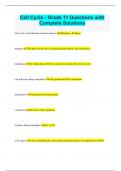
Cell Cycle - Grade 11 Questions with Complete Solutions Cell cycle is divided into two basic phases Interphase, M-Phase M phase The phase of the cell cycle that includes mitosis and cytokinesis. interphase the resting phase between successive mitotic divisions of a cell cell activities during interphase cell growth and DNA replication karyokinesis separation of chromosomes cytokinesis division of the cytoplasm 3 phases during interphase G1, S, G2 a) G1 phase cell is metabolically active and continuously grows; no replication of DNA b) S phase DNA synthesis or replication takes place-- amount of DNA doubles; centriole duplicates in cytoplasm of animal cells c) G2 phase protein synthesis d) Go phase cells Quiescent stage-exit from the cell cycle; metabolically active however no longer proliferate mitotic cell division in animals in diploid somatic cells mitosis cell division in which the nucleus divides into nuclei containing the same number of chromosomes (equational division) 4 stages of M phase PMAT = prophase, metaphase, anaphase, telophase prophase chromosomes become visible, nuclear envelop dissolves, spindle forms, cell organelles disappear metaphase alignment of chromosomes on the metaphasic plate; spindle fibers attach to kinetochores anaphase phase of mitosis in which the chromosomes separate and move to opposite poles of the cell telophase the chromosomes decondense, cell organelles reappear, nuclear envelope assembles cytokinesis in animal cells (centripetal) Cell membrane is drawn inward until the cytoplasm is pinched into two nearly equal parts (furrow formation) cytokinesis in plant cells (centrifugal) wall grows outward from a cell plate in middle of cell syncytium a multinucleate cell formed by karyokinesis in the absence of cytokinesis. meiotic cell division in gamete sex cell division - ovum, sperm meiosis a type of cell division that results in four daughter cells each with half the number of chromosomes of the parent cell. has 2 sequential cycles however DNA replication only once Subphases of prophase 1 leptotene, zygotene, pachytene, diplotene, diakinesis a) leptotene Threadlike chromosomes begin to condense and thicken towards nuclear envelope b)zygotene synapsis begins- pairing of chromosomes to form tetrad/bivalent synaptonemal complex formed c) pachytene crossing over occurs between nonsister chromatids at recombination nodules catalysed by recombinase enzyme crossing over exchange of genetic material b/w two homologous chromosomes d) diplotene dissolution of synaptonemal complex, homologous chromosomes separate; forming chiasmata diplotene can last for months or years in oocytes of vertebrates - female eggs arrested at 5th month of foetal development, begin cycle during puberty e) diakinesis terminalisation of chiasmata, nucleolus disappears, nuclear membrane breaks down metaphase 1 bivalent chromosomes align on equatorial plate anaphase 1 Homologous chromosomes separate telophase 1 dyad of cells formed interkinesis Period of time between meiosis I and meiosis II during which no DNA replication takes place. meisosis 2 resembles mitosis at the end of telophase cytokinesis of meiosis 4 haploid daughter cells formed
Document information
- Uploaded on
- February 1, 2024
- Number of pages
- 6
- Written in
- 2023/2024
- Type
- Exam (elaborations)
- Contains
- Questions & answers


