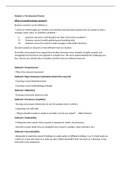
NR 601 Final Exam Study Guide Rated A+
NR 601 Final Exam Study Guide Rated A+ Types of Elder Abuse > emotional abuse > sexual abuse > neglect > exploitation > abandonment > self-neglect Risk Factors for Elder Abuse > age > gender > ethnicity > cultural beliefs > living arrangements > social isolation > loneliness Provider Responsibility in Cases of Suspected Abuse > always keep abuse as a differential > any patient who present with unexplained STDs > listen to your patients' responses to your social history questions or any reports of not having access to their funds > perform a physical exam and order any necessary tests > include a cognitive screen > You may need to interview your patient and caregiver separately to see if the stories are the same If your patient is living independently but not able to provide for his or her needs, this is an example of what type of abuse? self-neglect Exploitation definition > refers to taking the assets of the elder, either their funds or their property, when this is without the consent of the elder and not for the benefit of the elder > E.g. when a family member moves into grandma's house and uses her home and social security check or their income to provide for themselves, and they don't provide for grandma's needs. Neglect definition > failing to provide food, shelter, healthcare or protection to a vulnerable elder Abandonment definition > leaving the elder after assuming responsibility for the care of the elder Emotional abuse definition > includes verbal and nonverbal actions, can cause anguish distress or pain to the elder Sexual abuse definition any form of sexual contact without the consent of the elder Who is most likely to be abusers? > People between 60 and 70 y.o. > living with spouses or children Additional Risk Factors for abuse > Studies report that women are more at risk for physical and sexual abuse > There is a concern that abuse towards men may be under-reported > Culture and ethnicity also play a factor in abuse and abuse reporting > Consider the cultural beliefs about abuse which may include tolerance for abuse Signs of neglect > A lack of hygiene > Failure to meet the patient's needs (ex: missed medical appointments) > Does the patient have needed assistance like a cane or eyeglasses? > Is the patient losing weight? > Ask what he or she eats, is someone providing meals? > Does the patient have decubiti? Prediabetes Physiology Impaired glucose tolerance Type 1
Written for
- Institution
- NR 601
- Course
- NR 601
Document information
- Uploaded on
- January 30, 2024
- Number of pages
- 21
- Written in
- 2023/2024
- Type
- Exam (elaborations)
- Contains
- Questions & answers
Subjects
-
nr 601 final exam study guide rated a

Also available in package deal