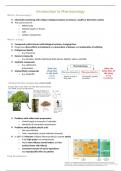
Introduction to Pharmacology
What is Pharmacology?
Chemically interfering with cellular/ biological systems to enhance, modify or block their activity
This can be level of:
o Whole body
o Isolated organs or tissues
o Cells
o Cellular components
What is a drug?
Compounds which interact with biological systems, changing them
Drugs have direct effects in treatments and prevention of disease and amelioration of suffering
Endogenous ligands
o E.g. Hormones
Natural compounds
o E.g. Atropine- deadly nightshade bella donna, digitalis, opium, penicillin
Synthetic compounds
o E.g. salbutamol,
propranolol…..
Semisynthetic compounds
o E.g. Ampicillin
Problems with willow bark preparation:
o Varied hugely in amounts of salicylate
o Hundreds of unwanted contaminants
Problems with purified salicylic acid:
o Not very effective
o Toxic, unpalatable, poorly-tolerated (nausea)
In 1897, F. Hofmann of Bayer Pharmaceuticals created aspirin
o It has high purity- no contaminants
o Much more efficacy (works better) and less
toxicity (fewer side effects)
o Consistent amount of active ingredients
and reproducible effect in patients
Drug development
, Over past 100 years or more, pharmacology has brought about a revoluti on in medicine and surgery
radically transforming the way humans experience diseases that have existed for centuries
General anaesthetics- make surgery humane
Antibiotics- eliminate lethal bacterial infections
Vaccines- conquered smallpox
Cyclosporin- makes organ transplantation possible
Lipid lowing statins- slash risk of heart attacks and strokes
Cytotoxic drugs- cure many cancers
Anti-retrovirals- provide hope for AIDS patients
Old drugs find new uses- aspirin in prevention of heart attacks
Immunobiological agents- fight against allergies and arthritis
Roles of pharmacological agents
Reversible blockade of physiological responses
o Muscle relaxants, oral contraceptives
Regulation of normal physiological responses
o Neurotransmitters and disease
Parkinson’s disease- low dopamine
Depression- low noradrenaline, low 5-HT
o Acid secretion- cimetidine- Tagamet
Supplementation of normal physiological processes
Elimination of non-self
o Antibacterials, antivirals, anticancer
Where do drugs act
Receptors
o Located in membranes or in cytoplasm
o Usually these are proteins, though they can be nucleic acids or lipids
Dose Responsive Curves
What is Pharmacology?
Chemically interfering with cellular/ biological systems to enhance, modify or block their activity
This can be level of:
o Whole body
o Isolated organs or tissues
o Cells
o Cellular components
What is a drug?
Compounds which interact with biological systems, changing them
Drugs have direct effects in treatments and prevention of disease and amelioration of suffering
Endogenous ligands
o E.g. Hormones
Natural compounds
o E.g. Atropine- deadly nightshade bella donna, digitalis, opium, penicillin
Synthetic compounds
o E.g. salbutamol,
propranolol…..
Semisynthetic compounds
o E.g. Ampicillin
Problems with willow bark preparation:
o Varied hugely in amounts of salicylate
o Hundreds of unwanted contaminants
Problems with purified salicylic acid:
o Not very effective
o Toxic, unpalatable, poorly-tolerated (nausea)
In 1897, F. Hofmann of Bayer Pharmaceuticals created aspirin
o It has high purity- no contaminants
o Much more efficacy (works better) and less
toxicity (fewer side effects)
o Consistent amount of active ingredients
and reproducible effect in patients
Drug development
, Over past 100 years or more, pharmacology has brought about a revoluti on in medicine and surgery
radically transforming the way humans experience diseases that have existed for centuries
General anaesthetics- make surgery humane
Antibiotics- eliminate lethal bacterial infections
Vaccines- conquered smallpox
Cyclosporin- makes organ transplantation possible
Lipid lowing statins- slash risk of heart attacks and strokes
Cytotoxic drugs- cure many cancers
Anti-retrovirals- provide hope for AIDS patients
Old drugs find new uses- aspirin in prevention of heart attacks
Immunobiological agents- fight against allergies and arthritis
Roles of pharmacological agents
Reversible blockade of physiological responses
o Muscle relaxants, oral contraceptives
Regulation of normal physiological responses
o Neurotransmitters and disease
Parkinson’s disease- low dopamine
Depression- low noradrenaline, low 5-HT
o Acid secretion- cimetidine- Tagamet
Supplementation of normal physiological processes
Elimination of non-self
o Antibacterials, antivirals, anticancer
Where do drugs act
Receptors
o Located in membranes or in cytoplasm
o Usually these are proteins, though they can be nucleic acids or lipids
Dose Responsive Curves