NSG 300: TOPIC 7 with latest solved test.
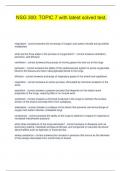
NSG 300: TOPIC 7 with latest solved test. respiration - correct exchange of oxygen and carbon dioxide during cellular metabolism what are the three steps in the process of oxygenation? - correct lation, perfusion, and diffusion ventilation - correct process of moving gases into and out of the lungs perfusion - correct ability of the cardiovascular system to pump oxygenates blood to the tissues and return deoxygenated blood to the lungs diffusion - correct nge of respiratory gases in the alveoli and capillaries inspiration - correct active process, stimulated by chemical receptors in the aorta. expiration - correct answers.a passive process that depends on the elastic recoil properties of the lungs, requiring little or no muscle work. surfactant - correct answers.a chemical produced in the lungs to maintain the surface tension of the alveoli and keep them from collapsing. atelectasis - correct answers.a collapse of the alveoli that prevents normal exchange of oxygen and carbon dioxide. (collapsed lung) compliance - correct ability of the lungs to distend or expand in response to increased interalveolar pressure. when does compliance of the lungs decrease? - correct diseases such as pulmonary edema, interstitial and pleural fibrosis, and congenital or traumatic structural abnormalities such as kyphosis or fractured ribs. airway resistance - correct increase in pressure that occurs as the diameter of the airways decreases from mouth/nose to alveoli. increased vs decreased airway resistance - correct ased: bronchoconstriction decreases: bronchdilation prolonged use of accessory muscles.... - correct not promote effective ventilation and causes fatigue. where do you see the use of accessory muscles in a patient - correct answers.During assessment observe for elevation of the patient's clavicles during inspiration, which can indicate ventilatory fatigue, air hunger, or decreased lung expansion. tidal volume - correct the amount of air exhaled following a normal inspiration. residual volume - correct the amount of air left in the alveoli after a full expiration. forced vital capacity - correct maximum amount of air that can be removed from the lungs during forced expiration blood moves to and from the ______ for gas exchange - correct oar capillary What affects the rate of diffusion? - correct ness of membrane (increased. thickness takes gases longer to transfer across the membrane) Three things influence the capacity of the blood to carry oxygen: - correct answers.-the amount of dissolved oxygen in the plasma, -the amount of hemoglobin, -the ability of hemoglobin to bind with oxygen. hemoglobin - correct is a carrier for oxygen and carbon dioxide, transports most oxygen (approximately 97%). neural regulation includes... - correct al nervous system control of respiratory rate, depth, and rhythm. what does the cerebral cortex regulate? - correct voluntary control of respiration by delivering impulses to the respiratory motor neurons by way of the spinal cord. chemical regulation maintains... - correct appropriate rate and depth of respirations based on changes in carbon dioxide (CO2), oxygen (O2), and hydrogen ion (H+) concentrations (pH) in the blood.
Written for
- Institution
- NSG 300: TOPIC 7
- Course
- NSG 300: TOPIC 7
Document information
- Uploaded on
- January 29, 2024
- Number of pages
- 8
- Written in
- 2023/2024
- Type
- Exam (elaborations)
- Contains
- Questions & answers
Subjects
-
nsg 300 topic 7 with latest solved test

Also available in package deal