NSG 300 Topic 5 questions and answers with real solutions.
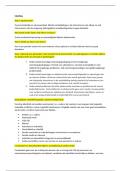
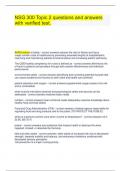
NSG 300 Topic 5 questions and answers with real solutions. critical thinking is: - correct answers.The ability to think in a systematic and logical manner with openness to question and reflect on the reasoning process critical thinking is more than just problem solving... - correct answers.It is a continuous attempt to improve how to apply yourself when faced with problems in patient care. What are the levels of critical thinking - correct answers.1. Basic 2. Complex 3. Commitment what are the components of critical thinking - correct fic knowledge base experience competencies attitudes standards basic level of critical thinking - correct answers.a learner trusts that experts have the right answers for every problem. Thinking is concrete and based on a set of rules or principles. complex critical thinkers - correct to separate themselves from experts and analyze the clinical situation and examine choices more independently. In complex critical thinking, each solution has benefits and risks that you weigh before making a final decision commitment level of critical thinking - correct s anticipate when to make choices without assistance from others and accept accountability for decisions made. scientific method - correct answers.a systematic, ordered approach to gathering data and solving problems. five steps of the scientific method - correct ify the problem collect data formulate a question or hypothesis test the question or hypothesis evaluate results of the test or study what are the two components of clinical decision making? - correct answers.-a nurse's understanding of a specific patient -a nurse's subsequent selection of interventions. what are some important aspects of knowing your patient - correct answers.-spend more time during initial patient assessment (determine what is important to them) -PERSONAL CONVO rather than task-oriented convo -listen to patients experience with illness -check on patients consistently -ask for the same patient over consecutive days reflective journaling - correct answers.o Define and express clinical experiences in your own words meeting with colleagues - correct answers.o Discuss and examine work experiences and validate decisions concept mapping - correct answers.o Visual representation of patient problems and interventions that shows their relationships to one another assess - correct answers.Gather information about the patient's condition diagnosis - correct ify the patients problem plan - correct goals of care and desires outcomes and identify appropriate nursing actions implement - correct rm the nursing actions identified in planning evaluate - correct mine if goals and expected outcomes are achieved and were effective Assessment involves collecting information from... - correct patient secondary sources interpreting and validating information to form a complete database when is a Patient-centered interview conducted - correct g a nursing history when are periodic assessments conducted - correct g ongoing contact with patients when are physical examinations conducted - correct g a nursing history and at any time a patient presents a symptom cue - correct information that you obtain through use of the senses inference - correct your judgment or interpretation of these cues comprehensive assessment - correct from the general to the specific -Typically certain aspects of a situation stand out as most important. You then ask more focused questions on the basis of the patient's responses and physical signs. problem oriented - correct answers.You focus on a patient's presenting situation and begin with problematic areas. You ask the patient follow-up questions to clarify and expand your assessment so you can understand the full nature of the problem. what are the assessment data resources - correct answers.-Patient -Family caregivers and significant others -Health care team -Medical records -Other records and the scientific literature -Nurse's experience foundation for creating nurse-patient relationships - correct t building presence rounding patient centered interview - correct ionship based and is an organized conversation focused on learning about the well and the sick as they seek care. motivational interviewing - correct answers.a collaborative, person-centered form of guiding to elicit and strengthen motivation for change what are the phases of an interview - correct answers.-orientation and setting an agenda -working phase -terminating the interview Orientation and setting an agenda - correct answers.-Begin by introducing yourself, your position, explaining the purpose of the interview. -Explain why you are collecting data and assure patients that all of the information will be confidential. -Ask the patient for his or her list of concerns or problems. working phase - correct answers.-ask open-ended questions. -Use attentive listening and other therapeutic communication techniques that encourage a patient to tell his or her story.
Written for
- Institution
- NSG 300 Topic 5
- Course
- NSG 300 Topic 5
Document information
- Uploaded on
- January 29, 2024
- Number of pages
- 12
- Written in
- 2023/2024
- Type
- Exam (elaborations)
- Contains
- Questions & answers
Subjects
-
nsg 300 topic 5 questions and answers

Also available in package deal