SLP Praxis Fluency Practice Latest 2024 Already Passed
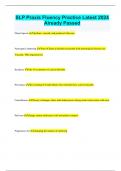
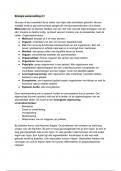
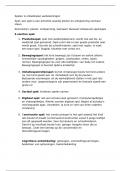
SLP Praxis Fluency Practice Latest 2024 Already Passed Fluent Speech rhythmic, smooth, and produced with ease. Neurogenic Stuttering form of fluency disorder associated with neurological diseases (ex. Vascular, TBI, degenerative) Incidence rate of occurrence of a given disorder Prevelance the counting # of individuals who currently have a given disorder Cancellations fluency technique where indiviudal pauses during stutter and restarts with ease Pull-outs Change stutter midcourse (soft articulatory contact) Preparatory Set changing the manner of stuttering Delayed Auditory Feedback technique that allows individual to hear speech with a fraction of a second delay = reduced disfluencies. Advantage -- induces slower speech rate Direct Stuttering Reduction Method reduce stuttering directly, without teaching specific fluency skills or modifying stuttering into less abnormal form. Techniques include: Time-out and recovery costs Time-Out (pause - and - talk): Used in Direct Stuttering Reduction, individual is taught to pause after each disfluency and then resumes talking. How is stuttering defined? Describe 3 definitions disorder of fluency with anticipatory, apprehensive, and hypertonic avoidance reactions. Not just disfluent moments in speech. 1) all types of disfluences that exceed a measure such as 5% of words spoken, 2) Production of part-word repetitions and speech-sound prolongations 3) Moments or events judged to be stuttering 4) Secondary behaviors. List three facts about the incidence and prevalence of stuttering. What does current research state about the familial and gender prevalence of stuttering? a) Incidence in US = 1% b) Lifetime expectancy = 5% c) 3:1 men vs. women Summarize the results of the research on the loci of stuttering. Loci of Stuttering: refers to locations in speech sequence where stuttering are typically observed. Most likely to occur: on consonants/ on 1st sound, syllable, word of phrase/ on longer words/ words used less frequently/ on context words rather than functional words Preschoolers: more likely on functional than on content/ more whole-word repetitions. Adaptation Effects systematic reduction in frequency of stuttering when short passages are read aloud o No one theory/ does not predict degree of improvement in treatment. Consistency Effects occurrence of stuttering on the same word (loci) when passage is read aloud o Opposite of adaptation = stimulus-response phenomenon Adjacency Effects occurrence of new stuttering on words that surround previously stuttered words o May be horizontal or vertical Neurophysiological Hypothesis of Stuttering Laryngeal Dysfunction - Delayed VOT, muscle tension, aberrant muscle behavior, excessive muscle activity Brain Dysfunction - No dominant hemisphere, EEG studies, cerebral blood flow, central auditory function, auditory feedback Types of Learning/Conditioning Hypothesis - Operant Behavior - Classically Negative Emotions - Avoidence - Approach Avoidence - Reaction of tension and fragmentation - Demands vs Capacities Brutten and Shoemaker Theorist who proposed that stuttering consists of fluency disruptions due to classically conditioned negative emotions. Johnson Theorist who hypothesized that stuttering is based on avoidance Sheehan Theorist who emphasized an approach-avoidance conflict. That is stuttering indicates a conflict between a desire to approach speaking situations and an equally strong desire to avoid them Bloodstein Theorist who proposed that stuttering is a response of tension and fragmentation in speech. Compare/Contrast the fluent stuttering method and the fluency shaping method. What are 3 key differences between the methods? Fluent Stuttering Model: Goal= manage disfluencies - Teach stuttering identification - Desensitizing - Modifications (cancellations, pullouts, prep. Sets) - Stabilizing tx gains - Counseling Limitations: not easy to generalize outside therapy Fluency Shaping Model: Goal = fluent speech - Airflow management - Easy onset - Reduced rate - Maintenance strategies "self-monitoring" Teach --> specific skills, increase complexity, more traditional therapy based, normal prosody Limitations: generates slow, deliberate "unnatural" speech. As rate increases - stuttering increases Define Cluttering fluency disorder that may accompany stuttering. Characterized by highly disfluent, rapid, unclear & disorganized manner = jerky. Client is usually unaware.
Written for
- Institution
- SLP Praxis Fluency Practice
- Course
- SLP Praxis Fluency Practice
Document information
- Uploaded on
- January 26, 2024
- Number of pages
- 6
- Written in
- 2023/2024
- Type
- Exam (elaborations)
- Contains
- Questions & answers
Subjects
-
slp praxis fluency practice latest 2024 already pa

Also available in package deal