

Paiget’s influence
Part 1
Piagetian concepts
Shemes – a mental operation that guides action or allows us to work through a
problem in a principled way
Assimilation – applying an existing scheme to a novel task
Accommodation – modifying a new scheme to adapt it to a new application
Coordination of schemes – coordinating schemes to carry out an elaborate task
Schemes (mental units)
Building blocks of thinking, at birth were equipped with a set of schemes that
develop and multiply to form intelligent thinking.
The schemes provided by our genetic inheritance are sets of reflexes to start with
e.g. grasping as a baby = original scheme
This then can develop to e.g. grasping a rattle or toy and so the context changing.
^^this process refers to the process of accommodation and assimilation as they work
together when a scheme’s activated.
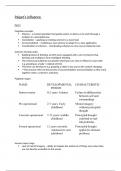
Piagetian stages
Sensori motor stage
Lack of mental imagery – ability to imagine the existence of things even when they
are not directly accessible to the senses
Part 1
Piagetian concepts
Shemes – a mental operation that guides action or allows us to work through a
problem in a principled way
Assimilation – applying an existing scheme to a novel task
Accommodation – modifying a new scheme to adapt it to a new application
Coordination of schemes – coordinating schemes to carry out an elaborate task
Schemes (mental units)
Building blocks of thinking, at birth were equipped with a set of schemes that
develop and multiply to form intelligent thinking.
The schemes provided by our genetic inheritance are sets of reflexes to start with
e.g. grasping as a baby = original scheme
This then can develop to e.g. grasping a rattle or toy and so the context changing.
^^this process refers to the process of accommodation and assimilation as they work
together when a scheme’s activated.
Piagetian stages
Sensori motor stage
Lack of mental imagery – ability to imagine the existence of things even when they
are not directly accessible to the senses


