Course objecties
- Know about theories of and empirical research into patterns of electoral
and protest/ radical/ extremist behaviour and non-participation
- Are able to relate these theories and empirical research to theories of
social structures and groups, the degree and patterns of political
participation in contemporary democracies and the differences between
societies thereof
- Are able to apply these insights in the analysis of contemporary
developments - such as globalization, migration, austerity policies and
democratic changes in societies - on the degree and contents of political
participation.
- Can critically reflect on contemporary debates over political (non)
participation, protest and radicalism
- Can critically reflect on the question of whether current democracies
experience a legitimacy crisis
,Lecture 1: Introducton
Voting turnout declining
Protests getting larger
Peak of demonstrations, revolts, riots and general strikes in 1969 and
2010
Why is PP important for democracy?
o Does elected government have consent of the people?
o Sufficient popular support for policies
Both are under pressure if people do not act (legitimacy
problem)
o Governments need to be scrutinized and monitored
o Only effective if citizens are engaged
Not only at elections, but in between (monitoring problem)
o Public authorities should make well informed decisions
o This requires communication of citizens (marginalized groups?)
Marginalized groups may be disregarded in policy-making
(pluralist problem)
o Political participation is beneficial and valuable for citizens
o People are empowered and learn valuable skills
Helps enrich lives of individuals/societies
o Citizens know what is in their best interest
o Decisions should thus be made with active citizens involved
What is political participation
o Individual or collective action at the national or local level that
supports or opposes… decisions regarding the allocation of public
goods
o Categorizations based on different rules:
Active vs. passive forms
Aggressive vs. nonaggressive behaviour
Structural vs. non-structural objects
Governmental vs. nongovernmental aims
Mobilized vs. voluntary actions
Intended vs. unintended outcomes
Types of political participation
o Critique by Van Deth
Too many definitions/categorizations political participation
These definitions too time period dependent (e.g.
what is non/conventional now and 30 years ago)
Actual conclusions about development political
participation over time difficult to draw
How to deal with the expansion of modes of
participation (e.g. internet activism)
, An operational definition
‘How to recognize a mode of participation if you
seen one?’
o Ask the following questions
Do we deal with behaviour?
Is the activity voluntary?
Is the activity done by citizens?
Is it located in the sphere of
government/state/politics?
o Minimalist definition
What is PP?
o Attempt to influence politics
o Voluntary (vs. obligatory) action (vs. attitudes/interest) by
ordinary citizens (vs. politicians) directed toward influencing
some political (vs. non-political) outcomes within the
governmental arena (Brady, Van Deth)
Types
o Van Deth notes that new modes participation continuously
emerging that take place outside the governmental area, suggest 3
additional questions
Is activity targete at sphere of government/state/politics?
Is activity aimed at solving collective/community
problems?
Is the activity used to express political aims and intentions
of participants?
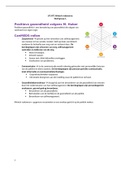
The Diamond Model
o
Theories of political participation
o Social capital (Putnam)
o Socialization/Sociological Theories
o Relative Deprivation Theory (Gurr)
o Contingency Theory (Shapiro and Bedi)
o Cultural Theories, Values and Norms (Inglehart)
o Resource Mobilization (McCarthy and Zald/Tilly and McAdam)
, o Rational Choice Theory (cost-benefits): Public Choice, Theory of
Collective Action (Olson)
o Cleavage theory (Kriesi)
o Institutionalism: How Institutions Matter (Lijphart)
o Political Opportunity Structures/Process Model (Kitschelt)
o Democratic Theory (Dahl, Verba, Schumpeter)
Theories applied to countries/time
o Goal of theories: explain variations in PP e.g.
Cultural differences (Inglehart)
Industrial vs. post industrial
Modernization vs postmaterialism
Institutional differences (Lijphart)
Federal vs. central
Consensus vs. majoritarian
Proportional vs. non-proportional electoral systems
Advanced (mature) and less advanced democracies
(e.g. post communist)
SUMMARY
Voter turnout trends have been declining globally but protests are increasing
and gaining traction. Political participation is important for democracy in regard
to legitimacy of the government, monitoring government and representing
citizens’ interests. Van Deth critiques the multitude of
definitions/categorizations of political participation and constructs an
operational definition. This consists of a minimal definition: behaviour,
voluntary, by citizens, in the sphere of government/state/politics. This is
expanded when looking at actions outside the sphere of government: activity
targeted at the sphere, activity aimed at solving collective/community problems,
used to express political aims/intentions. There are many theories of political
participation. These are applied to countries/time to explain variatons – cultural
differences (Ingelhart), institutional differences (Ljiphart).
- Know about theories of and empirical research into patterns of electoral
and protest/ radical/ extremist behaviour and non-participation
- Are able to relate these theories and empirical research to theories of
social structures and groups, the degree and patterns of political
participation in contemporary democracies and the differences between
societies thereof
- Are able to apply these insights in the analysis of contemporary
developments - such as globalization, migration, austerity policies and
democratic changes in societies - on the degree and contents of political
participation.
- Can critically reflect on contemporary debates over political (non)
participation, protest and radicalism
- Can critically reflect on the question of whether current democracies
experience a legitimacy crisis
,Lecture 1: Introducton
Voting turnout declining
Protests getting larger
Peak of demonstrations, revolts, riots and general strikes in 1969 and
2010
Why is PP important for democracy?
o Does elected government have consent of the people?
o Sufficient popular support for policies
Both are under pressure if people do not act (legitimacy
problem)
o Governments need to be scrutinized and monitored
o Only effective if citizens are engaged
Not only at elections, but in between (monitoring problem)
o Public authorities should make well informed decisions
o This requires communication of citizens (marginalized groups?)
Marginalized groups may be disregarded in policy-making
(pluralist problem)
o Political participation is beneficial and valuable for citizens
o People are empowered and learn valuable skills
Helps enrich lives of individuals/societies
o Citizens know what is in their best interest
o Decisions should thus be made with active citizens involved
What is political participation
o Individual or collective action at the national or local level that
supports or opposes… decisions regarding the allocation of public
goods
o Categorizations based on different rules:
Active vs. passive forms
Aggressive vs. nonaggressive behaviour
Structural vs. non-structural objects
Governmental vs. nongovernmental aims
Mobilized vs. voluntary actions
Intended vs. unintended outcomes
Types of political participation
o Critique by Van Deth
Too many definitions/categorizations political participation
These definitions too time period dependent (e.g.
what is non/conventional now and 30 years ago)
Actual conclusions about development political
participation over time difficult to draw
How to deal with the expansion of modes of
participation (e.g. internet activism)
, An operational definition
‘How to recognize a mode of participation if you
seen one?’
o Ask the following questions
Do we deal with behaviour?
Is the activity voluntary?
Is the activity done by citizens?
Is it located in the sphere of
government/state/politics?
o Minimalist definition
What is PP?
o Attempt to influence politics
o Voluntary (vs. obligatory) action (vs. attitudes/interest) by
ordinary citizens (vs. politicians) directed toward influencing
some political (vs. non-political) outcomes within the
governmental arena (Brady, Van Deth)
Types
o Van Deth notes that new modes participation continuously
emerging that take place outside the governmental area, suggest 3
additional questions
Is activity targete at sphere of government/state/politics?
Is activity aimed at solving collective/community
problems?
Is the activity used to express political aims and intentions
of participants?
The Diamond Model
o
Theories of political participation
o Social capital (Putnam)
o Socialization/Sociological Theories
o Relative Deprivation Theory (Gurr)
o Contingency Theory (Shapiro and Bedi)
o Cultural Theories, Values and Norms (Inglehart)
o Resource Mobilization (McCarthy and Zald/Tilly and McAdam)
, o Rational Choice Theory (cost-benefits): Public Choice, Theory of
Collective Action (Olson)
o Cleavage theory (Kriesi)
o Institutionalism: How Institutions Matter (Lijphart)
o Political Opportunity Structures/Process Model (Kitschelt)
o Democratic Theory (Dahl, Verba, Schumpeter)
Theories applied to countries/time
o Goal of theories: explain variations in PP e.g.
Cultural differences (Inglehart)
Industrial vs. post industrial
Modernization vs postmaterialism
Institutional differences (Lijphart)
Federal vs. central
Consensus vs. majoritarian
Proportional vs. non-proportional electoral systems
Advanced (mature) and less advanced democracies
(e.g. post communist)
SUMMARY
Voter turnout trends have been declining globally but protests are increasing
and gaining traction. Political participation is important for democracy in regard
to legitimacy of the government, monitoring government and representing
citizens’ interests. Van Deth critiques the multitude of
definitions/categorizations of political participation and constructs an
operational definition. This consists of a minimal definition: behaviour,
voluntary, by citizens, in the sphere of government/state/politics. This is
expanded when looking at actions outside the sphere of government: activity
targeted at the sphere, activity aimed at solving collective/community problems,
used to express political aims/intentions. There are many theories of political
participation. These are applied to countries/time to explain variatons – cultural
differences (Ingelhart), institutional differences (Ljiphart).