Risk Assessments
Sunday, 7 October 2018 15:51
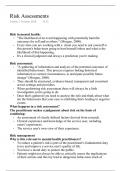
Risk in mental health:
- "The likelihood of an event happening with potentially harmful
outcomes for self and/or others." (Morgan, 2000).
- Every time you are working with a client you need to ask yourself is
this person's behaviours going to hurt himself/others and what is the
likelihood of that happening.
- It's a clinical judgment and always a prediction you're making.
Risk assessment:
- "A gathering of information and analysis of the potential outcomes of
identified behaviours. This process requires linking historical
information to current circumstances, to anticipate possible future
change" (Morgan, 2000).
- They should be structured, evidence-based, transparent and consistent
across settings and providers.
- When performing risk assessment there will always be a little
investigation you're going to do.
- Once that's gathered you need to analyse the info and think about what
are the behaviours that your case is exhibiting that's leading to negative
events.
What happens in a risk assessment?
The practitioner makes a judgement about risk on the basis of
combining:
- An assessment of clearly defined factors derived from research.
- Clinical experience and knowledge of the service user, including
carers' experiences.
- The service user's own view of their experience.
Risk management
Why is this relevant to mental health practitioners?
- To reduce a patient's risk is part of the practitioner's fundamental duty
to try and improve a service user's quality of life.
- You have a moral duty to protect the public.
- Patients might not always be able to critically assess the implications
of their actions and this my lead to dangerous behaviours (lack of
insight or non-adherence to treatment).
- Practitioners might need to take decisions on behalf of service users
(without their consent) with their best interest in mind.
Sunday, 7 October 2018 15:51
Risk in mental health:
- "The likelihood of an event happening with potentially harmful
outcomes for self and/or others." (Morgan, 2000).
- Every time you are working with a client you need to ask yourself is
this person's behaviours going to hurt himself/others and what is the
likelihood of that happening.
- It's a clinical judgment and always a prediction you're making.
Risk assessment:
- "A gathering of information and analysis of the potential outcomes of
identified behaviours. This process requires linking historical
information to current circumstances, to anticipate possible future
change" (Morgan, 2000).
- They should be structured, evidence-based, transparent and consistent
across settings and providers.
- When performing risk assessment there will always be a little
investigation you're going to do.
- Once that's gathered you need to analyse the info and think about what
are the behaviours that your case is exhibiting that's leading to negative
events.
What happens in a risk assessment?
The practitioner makes a judgement about risk on the basis of
combining:
- An assessment of clearly defined factors derived from research.
- Clinical experience and knowledge of the service user, including
carers' experiences.
- The service user's own view of their experience.
Risk management
Why is this relevant to mental health practitioners?
- To reduce a patient's risk is part of the practitioner's fundamental duty
to try and improve a service user's quality of life.
- You have a moral duty to protect the public.
- Patients might not always be able to critically assess the implications
of their actions and this my lead to dangerous behaviours (lack of
insight or non-adherence to treatment).
- Practitioners might need to take decisions on behalf of service users
(without their consent) with their best interest in mind.