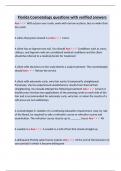
ACUTE RESPIRATORY DISTRESS SYNDROME (ARDS) latest 2023 solution A+ RATED
ACUTE RESPIRATORY DISTRESS SYNDROME (ARDS) latest 2023 so1.) You're providing care to a patient who is being treated for aspiration pneumonia. The patient is on a 100% non-rebreather mask. Which finding below is a HALLMARK sign and symptom that the patient is developing acute respiratory distress syndrome (ARDS)? A. The patient is experiencing bradypnea. B. The patient is tired and confused. C. The patient's PaO2 remains at 45 mmHg. D. The patient's blood pressure is 180/96. - The answer is C. A hallmark sign and symptom found in ARDS is refractory hypoxemia. This is where that although the patient is receiving a high amount of oxygen (here a 100% non-rebreather mask) the patient is STILL hypoxic. Option C is the answer because it states the patient's arterial oxygen level is remaining at 45 mmHg (a normal is 80 mmHg but when treating patients with ARDS a goal is at least 60 mmHg). 2. You're teaching a class on critical care concepts to a group of new nurses. You're discussing the topic of acute respiratory distress syndrome (ARDS). At the beginning of the lecture, you assess the new nurses understanding about this condition. Which statement by a new nurse demonstrates he understands the condition? A. "This condition develops because the exocrine glands start to work incorrectly leading to thick, copious mucous to collect in the alveoli sacs."lution A+ RATED
Written for
- Institution
- ARDS
- Course
- ARDS
Document information
- Uploaded on
- January 5, 2024
- Number of pages
- 5
- Written in
- 2023/2024
- Type
- Exam (elaborations)
- Contains
- Questions & answers
Subjects
-
acute respiratory distress syndrome ards latest