CPT-32306
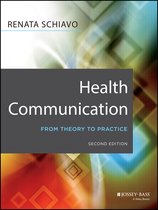
Literatuur: “What is Health Communication” – R. Schiavo
Health communication can play in influencing, supporting, and empowering individuals,
communities, health care professionals, policymakers, or special groups to adopt and sustain
a behaviour or a social, organizational, and policy change that will ultimately improve
individual, community, and public health outcomes.
Defining health communication
As with other forms of communication, health communication should be based on a two-way
exchange of information that uses a “common system of signs and behaviours.” It should be
accessible and create “mutual feelings of understanding and sympathy” among members of
the communication team and intended audiences or key groups (all groups the health
communication program is seeking to engage in the communication process).
Channels or communication channels (the means or path, such as mass media or new
media, used to reach out to and connect with key groups via health communication
messages and materials) and messages are the “connecting doors” that allow health
communication interventions to reach and engage intended groups.
The broader mandate of health communication is intrinsically related to its potential impact
on vulnerable and underserved populations. Vulnerable populations include groups who
have a higher risk for poor physical, psychological, or social health in the absence of
adequate conditions that are supportive of positive outcomes. Underserved populations
include geographical, ethnic, social, or community-specific groups who do not have adequate
access to health or community services and infrastructure or information.
In communication, understanding the context of the communication effort is interdependent
with becoming familiar with intended audiences. This increases the likelihood that all
meanings are shared and understood in the way communicators intended them.
As many authors have noted, health communication draws from numerous disciplines and
theoretical fields, including health education, social and behavioural sciences, community
development, mass and speech communication, marketing, social marketing, psychology,
anthropology, and sociology. It relies on different communication activities or action areas,
including interpersonal communication, mass media and new media communication,
strategic policy communication and public advocacy, community mobilization and citizen
engagement, professional medical communications, and constituency relations and strategic
partnerships.
Health communication in the twenty-first century: key
characteristics and defining features
Health communication is about improving health outcomes by encouraging behaviour
modification and social change. It is a comprehensive approach that relies on the full
understanding and participation of its intended audiences. Both the health communication
field and its theoretical basis have evolved and changed in the past fifty years. With
increasing frequency, it is considered “the avant-garde in suggesting and integrating new
theoretical approaches and practices”. Communication is no longer considered a skill but a
science-based discipline that requires training and passion, and relies on the use of different
communication vehicles (materials, activities, events, and other tools used to deliver a
Literatuur: “What is Health Communication” – R. Schiavo
Health communication can play in influencing, supporting, and empowering individuals,
communities, health care professionals, policymakers, or special groups to adopt and sustain
a behaviour or a social, organizational, and policy change that will ultimately improve
individual, community, and public health outcomes.
Defining health communication
As with other forms of communication, health communication should be based on a two-way
exchange of information that uses a “common system of signs and behaviours.” It should be
accessible and create “mutual feelings of understanding and sympathy” among members of
the communication team and intended audiences or key groups (all groups the health
communication program is seeking to engage in the communication process).
Channels or communication channels (the means or path, such as mass media or new
media, used to reach out to and connect with key groups via health communication
messages and materials) and messages are the “connecting doors” that allow health
communication interventions to reach and engage intended groups.
The broader mandate of health communication is intrinsically related to its potential impact
on vulnerable and underserved populations. Vulnerable populations include groups who
have a higher risk for poor physical, psychological, or social health in the absence of
adequate conditions that are supportive of positive outcomes. Underserved populations
include geographical, ethnic, social, or community-specific groups who do not have adequate
access to health or community services and infrastructure or information.
In communication, understanding the context of the communication effort is interdependent
with becoming familiar with intended audiences. This increases the likelihood that all
meanings are shared and understood in the way communicators intended them.
As many authors have noted, health communication draws from numerous disciplines and
theoretical fields, including health education, social and behavioural sciences, community
development, mass and speech communication, marketing, social marketing, psychology,
anthropology, and sociology. It relies on different communication activities or action areas,
including interpersonal communication, mass media and new media communication,
strategic policy communication and public advocacy, community mobilization and citizen
engagement, professional medical communications, and constituency relations and strategic
partnerships.
Health communication in the twenty-first century: key
characteristics and defining features
Health communication is about improving health outcomes by encouraging behaviour
modification and social change. It is a comprehensive approach that relies on the full
understanding and participation of its intended audiences. Both the health communication
field and its theoretical basis have evolved and changed in the past fifty years. With
increasing frequency, it is considered “the avant-garde in suggesting and integrating new
theoretical approaches and practices”. Communication is no longer considered a skill but a
science-based discipline that requires training and passion, and relies on the use of different
communication vehicles (materials, activities, events, and other tools used to deliver a