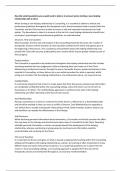
Describe what boundaries you would need to take in to account when starting a new helping
relationship with a client.
When starting a new helping relationship in Counselling, it is essential to adhere to ethical and
professional guidelines throughout the therapeutic work; these boundaries help to protect both the
Counsellor and the Client and are in place to ensure a safe and respectful environment for both
parties. The boundaries to take in to account at the start of a new helping relationship should focus
on physical, psychological and professional guidelines, as outlined below:
Structure, Time and Location:
Where possible, the time slot and location of the Counselling should be the same; the number of
therapeutic sessions and the duration of each should be outlined to the Client and agreed upon at
the beginning of the process. This consistency will positively impact the helping relationship and
provide the Client with security, predictability and a routine which may be greatly needed as part of
their progress.
Professionalism:
The Counsellor is expected to be professional throughout the helping relationship and this includes
remaining impartial and non-judgmental, without imposing their own views on to the Client.
Maintaining a professional manner through the way a Counsellor dresses, speaks and behaves is also
essential in Counselling, as these factors set a non-verbal precedent for what is expected, whilst
acting as a reminder that the helping relationship is of a professional nature, not a personal one.
Confidentiality:
It is extremely important that a Client is made aware that their discussions and personal information
are completely confidential within the Counselling setting, unless the Client is at risk of harm to
themselves or to others. The confidentiality agreement is outlined at the start of the helping
relationship and often reiterated at the start of each session.
Dual Relationships:
Having a connection to a Client or someone the Client knows is referred to as a 'Dual Relationship'
and should be avoided as they can cause a conflict of interest. Dual Relationships are regarded as
non-ethical due to usually involving the Client being a friend, family member, student, teacher, etc.
and therefore can impede the effectiveness of the therapy.
Self-Disclosure:
When disclosing personal information about themselves, a Counsellor must firstly consider the effect
this may have on the therapy and should only be done when it is beneficial to the Client. Revealing
relatable personal information or stories can greatly benefit the development of the helping
relationship, whereas oversharing or giving away too much personal information could be
uncomfortable and confusing for the Client.
The Use of Touching:
It is important to discuss and agree on what is classed as appropriate touching within the Counselling
setting and throughout the helping relationship as a whole. As touching is often interpreted in many
different ways and varies from person-to-person, it is crucial that guidelines are in place from the
outset. In most Counselling settings, a no-touching approach is adopted from the start of the
therapeutic process and maintained throughout, to avoid any misinterpretation.
relationship with a client.
When starting a new helping relationship in Counselling, it is essential to adhere to ethical and
professional guidelines throughout the therapeutic work; these boundaries help to protect both the
Counsellor and the Client and are in place to ensure a safe and respectful environment for both
parties. The boundaries to take in to account at the start of a new helping relationship should focus
on physical, psychological and professional guidelines, as outlined below:
Structure, Time and Location:
Where possible, the time slot and location of the Counselling should be the same; the number of
therapeutic sessions and the duration of each should be outlined to the Client and agreed upon at
the beginning of the process. This consistency will positively impact the helping relationship and
provide the Client with security, predictability and a routine which may be greatly needed as part of
their progress.
Professionalism:
The Counsellor is expected to be professional throughout the helping relationship and this includes
remaining impartial and non-judgmental, without imposing their own views on to the Client.
Maintaining a professional manner through the way a Counsellor dresses, speaks and behaves is also
essential in Counselling, as these factors set a non-verbal precedent for what is expected, whilst
acting as a reminder that the helping relationship is of a professional nature, not a personal one.
Confidentiality:
It is extremely important that a Client is made aware that their discussions and personal information
are completely confidential within the Counselling setting, unless the Client is at risk of harm to
themselves or to others. The confidentiality agreement is outlined at the start of the helping
relationship and often reiterated at the start of each session.
Dual Relationships:
Having a connection to a Client or someone the Client knows is referred to as a 'Dual Relationship'
and should be avoided as they can cause a conflict of interest. Dual Relationships are regarded as
non-ethical due to usually involving the Client being a friend, family member, student, teacher, etc.
and therefore can impede the effectiveness of the therapy.
Self-Disclosure:
When disclosing personal information about themselves, a Counsellor must firstly consider the effect
this may have on the therapy and should only be done when it is beneficial to the Client. Revealing
relatable personal information or stories can greatly benefit the development of the helping
relationship, whereas oversharing or giving away too much personal information could be
uncomfortable and confusing for the Client.
The Use of Touching:
It is important to discuss and agree on what is classed as appropriate touching within the Counselling
setting and throughout the helping relationship as a whole. As touching is often interpreted in many
different ways and varies from person-to-person, it is crucial that guidelines are in place from the
outset. In most Counselling settings, a no-touching approach is adopted from the start of the
therapeutic process and maintained throughout, to avoid any misinterpretation.