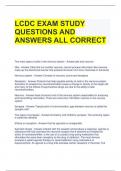
LCDC EXAM STUDY QUESTIONS AND ANSWERS ALL CORRECT
LCDC EXAM STUDY QUESTIONS AND ANSWERS ALL CORRECT Two main types of cells in the nervous system - Answer-glia and neurons Glia - Answer-Cells that out number neurons, cannot process information like neurons, make up the blood brain barrier that protects the brain from toxic chemicals in the blood Nervous system - Answer-Consists of neurons, axons and receptors Receptors - Answer-Proteins that help regulate activity of cells in the nervous system. Activation of receptors by neurotransmitters cause a change in activity of the target cell and many of the effects of psychoactive drugs are due to the ability to alter neurotransmitters. Neurons - Answer-basic structural unit of the nervous system responsible for analyzing and transmitting information. There are more than 100 billion neurons in the nervous system Synapse - Answer-Typical point of communication, gap between neurons is called the synaptic cleft. Two types of synapses - Answer-Excitatory and inhibitory synapse. The receiving region is called the dendrite Effects on receptors - Answer-Can be agonistic or antagonistic Agonistic drugst - Answer-interact with the receptor and produce a response, agonist (a substance that fully activates the neuronal receptor that it attaches to) Imitates the action of neurotransmitter, is the use of a (usually) long-acting medication that stimulates the same brain receptors as the drug of addiction. The most obvious example is opioid agonist therapy for opioid addiction using methadone or buprenorphine. An agonist is a drug that activates certain receptors in the brain. Full agonist opioids activate the opioid receptors in the brain fully resulting in the full opioid effect. Examples of full agonists are heroin, oxycodone, methadone, hydrocodone, morphine, opium and others. Buprenorphine is a partial agonist meaning, it activates the opioid receptors in the brain, but to a much lesser degree than a full agonist. A pure opioid antagonist used in medicine is naloxone (not to be confused with naltrexone). Antagonisitic - Answer-Drugs interact with the receptor but prevent a response, agonist drugs which bind to the neurotransmitters in the brain, antagonist drugs do the opposite: they block the brain's neurotransmitters. The action of neurotransmitter is obstructed. Buprenorphine also acts as an antagonist, meaning it blocks other opioids, while allowing for some opioid effect of its own to suppress withdrawal symptoms and cravings. Agonist-antagonist opioids - Answer-In pharmacology the term agonist-antagonist is used to refer to a drug which exhibits some properties of an agonist (a substance that fully activates the neuronal receptor that it attaches to) and some properties of an antagonist (a substance that attaches to a receptor but does not activate it or if it displaces an agonist at that receptor it seemingly deactivates it thereby reversing the effect of the agonist). Agonist-antagonist opioids[edit] The best known agonist-antagonists are opioids. Examples of such opioids are: buprenorphine[1] (Suboxone, Subutex) pentazocine butorphanol nalbuphine Naloxone (Narcan) - Answer-opioid antagonists that is a short acting drug which will bring a patient out of an opiate overdose by stripping the opiate from the opiate receptor and is a life saving drug. Naltrexone, - Answer-opioid antagonists that is a short acting opiate/alcohol blocking agent has been used for the last 30 years. Naltrexone blocks the pharmacological effects of 25 mg / in the introduction of heroin for 24 hours, a double dose (100 mg) acts within 48 hours, and 150 mg will affect during for 3 days. Long-term appointment does not cause tolerance and dependence. To cut the long story short, when comparing Naltrexone vs Naloxone it is obvious that Naltrexone is stronger for alcohol dependence but Naloxone acts faster and remains longer. Acetylcholine (ACH), epinephrine, dopamine, serotonin and endorphins - AnswerNeurotransmitters most likely altered by drug abuse Somatic Nervous System - Answer-Carries sensory information from outside the body into the CNS and motor information out.
Written for
- Institution
- LCDC
- Course
- LCDC
Document information
- Uploaded on
- December 29, 2023
- Number of pages
- 23
- Written in
- 2023/2024
- Type
- Exam (elaborations)
- Contains
- Questions & answers
Subjects
- lcdc
- lcdc exam
- lcdc exam study questions
-
lcdc exam study questions and answers
-
lcdc exam study questions and answers all correct

Also available in package deal