Opposition to government 1918-89
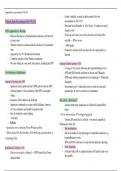
- Eisner’s inability to unite socialist parties led to his
Threats from the extreme left 1918-23 assassination in Feb 1919
- Bavarian Soviet Republic w/ ‘Red Army’ of workers set up by
KPD opposition to Weimar Eugen Leviné
- Believed that the est. of parliamentary democracy fell short of - Freikorps and army moved into bavaria and crushed the
its party aims republic → White terror
- Wanted a Marxist revolution and the creation of a Communist - >1000 deaths
state - Resulted in extreme shift from far left to far right politics in
- Inspired by the 1917 Bolshevik Revolution Bavaria
- Complete rejection of the Weimar constitution
- Was not willing to co-op with other parties, including the SPD German October Summer 1923
- L-wing rev’tary action following the hyperinflationary crisis
Revolutionary disturbances - KPD and SPD formed coalitions in Saxony and Thuringia
- KPD made military preparations for an uprising w/ ‘Proletarian
Spartacist Uprising Jan 1919 Hundreds’
- Spartacist faction split from the USPD split to form the KPD - Stresemann’s gov’t ordered the army to crush the units and
- Uprising began w/ the occupation of the SPD’s newspaper regional gov’ts were re-created w/o communists
offices
- Response: Ebert called in the freikorps Was there a Red threat?
- Spartacists continued to occupy public buildings, formed a - Actions made many suspicious of a Bolshevik-inspired Red
rev’tary committee and called for general strike threat
- Revolt crushed by street fighting → led to enforcement of R-wing propaganda
- >100 died - Extreme left posed less of a threat - was merely superficial
- Effects: Weaknesses of the left:
→ spartacists seen as detached from Weimar politics 1. Bad coordination
→ Ebert shocked by the brutality of the freikorps and powerless in - Still were unable to take advantage of vulnerable situations, e.g
restraining them hyperinflationary crisis
- SPD and KPD would never co-op after the Spartacist uprising
Red Bavaria Feb-May 1919 2. Poor leadership
- Bavarian monarchy collapsed → USPD leader Kurt Eisner - Freikorps killed off or captured extreme left leaders early on in
the republic
replaced them
, Opposition to government 1918-89
- Later leadership made up of internal division and disagreement - Existed before 1914 but the effects of the war attracted more
on tactics ppl
3. Concessions - 70 small splinter nat’list parties, e.g. Nazi Party
- Weimar gov’t played on differences and worked to split the left - Bavaria = hotspot for splinter groups after Red Bavaria
- E.g. Kapp putsch 1920 - German Workers’ Party
4. Repression
- Authorities systematically repressed the rebels w/ considerable Freikorps
brutality - Attracted the brutal elements of German militarism
- 200 paramilitary units demobilised by 1919
Threats from the extreme right 1918-23 - Employed by the gov’t to suppress the extreme left
- Committed to the restoration of authoritarian rule
Ideology - Prepared to use violence and murder to intimidate others
- Was not organised, apart from the shared sense of nationalism
- Anti-democracy - rejection the Weimar system and its Consul organisation
principles as it was weak - Political assassination group
- Anti-Marxism - communism threatened trad’tl values and - Carried out 354 political murders 1919-22
o/ship of property and wealth - Responsible for murdering Matthias Erxberger, Walther
- Authoritarianism - wanted to restore the dictatorial imperial Rathenau and Karl Gareis
regime
- Nationalism - the core of the right; Germany’s pride had been Uprisings
hurt after the ToV, thus the reinforcement of the ‘stab in the Kapp Putsch March 1920
back’ myth Events
- Kapp and Luttwitz concerned by the demobilisation of troops
Organisations being reinforced by the ToV
DNVP - Encouraged 12,000 troops to march on Berlin and seize main
- Coalition of nat’list-minded old imperial conservative parties buildings
- Contained extremist and racist elements - Installed a new gov’t
- Appealed to the m/class, landowners and industrialists - Germany army did not resist the putsch, despite orders from
- Largest party in the Reichstag for the extreme right - 15% in Erbert and Chancellor
1920 election - Putsch collapsed after the SPD called for a general strike
Aftermath
Racist nationalism - Putsch highlights the weaknesses of Weimar and the ease of
overthrowing the gov’t
- Eisner’s inability to unite socialist parties led to his
Threats from the extreme left 1918-23 assassination in Feb 1919
- Bavarian Soviet Republic w/ ‘Red Army’ of workers set up by
KPD opposition to Weimar Eugen Leviné
- Believed that the est. of parliamentary democracy fell short of - Freikorps and army moved into bavaria and crushed the
its party aims republic → White terror
- Wanted a Marxist revolution and the creation of a Communist - >1000 deaths
state - Resulted in extreme shift from far left to far right politics in
- Inspired by the 1917 Bolshevik Revolution Bavaria
- Complete rejection of the Weimar constitution
- Was not willing to co-op with other parties, including the SPD German October Summer 1923
- L-wing rev’tary action following the hyperinflationary crisis
Revolutionary disturbances - KPD and SPD formed coalitions in Saxony and Thuringia
- KPD made military preparations for an uprising w/ ‘Proletarian
Spartacist Uprising Jan 1919 Hundreds’
- Spartacist faction split from the USPD split to form the KPD - Stresemann’s gov’t ordered the army to crush the units and
- Uprising began w/ the occupation of the SPD’s newspaper regional gov’ts were re-created w/o communists
offices
- Response: Ebert called in the freikorps Was there a Red threat?
- Spartacists continued to occupy public buildings, formed a - Actions made many suspicious of a Bolshevik-inspired Red
rev’tary committee and called for general strike threat
- Revolt crushed by street fighting → led to enforcement of R-wing propaganda
- >100 died - Extreme left posed less of a threat - was merely superficial
- Effects: Weaknesses of the left:
→ spartacists seen as detached from Weimar politics 1. Bad coordination
→ Ebert shocked by the brutality of the freikorps and powerless in - Still were unable to take advantage of vulnerable situations, e.g
restraining them hyperinflationary crisis
- SPD and KPD would never co-op after the Spartacist uprising
Red Bavaria Feb-May 1919 2. Poor leadership
- Bavarian monarchy collapsed → USPD leader Kurt Eisner - Freikorps killed off or captured extreme left leaders early on in
the republic
replaced them
, Opposition to government 1918-89
- Later leadership made up of internal division and disagreement - Existed before 1914 but the effects of the war attracted more
on tactics ppl
3. Concessions - 70 small splinter nat’list parties, e.g. Nazi Party
- Weimar gov’t played on differences and worked to split the left - Bavaria = hotspot for splinter groups after Red Bavaria
- E.g. Kapp putsch 1920 - German Workers’ Party
4. Repression
- Authorities systematically repressed the rebels w/ considerable Freikorps
brutality - Attracted the brutal elements of German militarism
- 200 paramilitary units demobilised by 1919
Threats from the extreme right 1918-23 - Employed by the gov’t to suppress the extreme left
- Committed to the restoration of authoritarian rule
Ideology - Prepared to use violence and murder to intimidate others
- Was not organised, apart from the shared sense of nationalism
- Anti-democracy - rejection the Weimar system and its Consul organisation
principles as it was weak - Political assassination group
- Anti-Marxism - communism threatened trad’tl values and - Carried out 354 political murders 1919-22
o/ship of property and wealth - Responsible for murdering Matthias Erxberger, Walther
- Authoritarianism - wanted to restore the dictatorial imperial Rathenau and Karl Gareis
regime
- Nationalism - the core of the right; Germany’s pride had been Uprisings
hurt after the ToV, thus the reinforcement of the ‘stab in the Kapp Putsch March 1920
back’ myth Events
- Kapp and Luttwitz concerned by the demobilisation of troops
Organisations being reinforced by the ToV
DNVP - Encouraged 12,000 troops to march on Berlin and seize main
- Coalition of nat’list-minded old imperial conservative parties buildings
- Contained extremist and racist elements - Installed a new gov’t
- Appealed to the m/class, landowners and industrialists - Germany army did not resist the putsch, despite orders from
- Largest party in the Reichstag for the extreme right - 15% in Erbert and Chancellor
1920 election - Putsch collapsed after the SPD called for a general strike
Aftermath
Racist nationalism - Putsch highlights the weaknesses of Weimar and the ease of
overthrowing the gov’t