Shona Thomas
P5 – Describe how anti-discriminatory practice is promoted within a heath and social care
setting
M3 – Describe ways health and social care settings use national initiatives to promote anti-
discriminatory practice
Anti-discriminatory practice is not judging anyone on their “race, color, gender, age culture,
disability, social class, cognitive ability or health status.”1 So it is treating people fairly and
meeting individual needs in order to reassure acceptance and safety. Anti-discriminatory
practice means that if a person is limited in a certain area such as having a hearing or sight
impairment, they aren’t judged or treated badly for it. By promoting anti-discriminatory
practice, it boots people’s self-concept and tries to widen the variety of people who are
willing to accept others for who they are because it is seen as a positive aspect in life. There
are many forms of promoting anti-discriminatory practice such as;
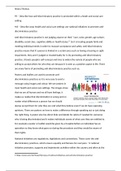
Posters and leaflets are used to promote anti-
discriminatory practices as it is very easy to send a
message using images and colour. We see posters in
most health and social care settings. The images show
that we are all human and we all have feelings, it
makes us realise that discrimination is wrong and no
matter what differences a person has we should
always accept them for who they are and what they believe even if we do have opposing
opinions. There are posters on how to make a difference through speaking out or just doing
the right thing. A poster also has direct links and details for advice if needed for someone
who is being discriminated and it makes individuals aware of what care they are entitled to.
For example a poster or leaflet would be given by a hospital before an individual has an
operation so they know what goes on during the procedure and they would be aware of
their rights.
National initiatives are regulations, legislations and conventions. These cover the anti-
discriminatory practices, which ensure equality and fairness for everyone. “A national
initiative promotes, supports and implements activities within the country and often at the
1 https://prezi.com/3e79exus9rkj/copy-of-national-initiatives-and-anti-discriminatory-practice/
P5 – Describe how anti-discriminatory practice is promoted within a heath and social care
setting
M3 – Describe ways health and social care settings use national initiatives to promote anti-
discriminatory practice
Anti-discriminatory practice is not judging anyone on their “race, color, gender, age culture,
disability, social class, cognitive ability or health status.”1 So it is treating people fairly and
meeting individual needs in order to reassure acceptance and safety. Anti-discriminatory
practice means that if a person is limited in a certain area such as having a hearing or sight
impairment, they aren’t judged or treated badly for it. By promoting anti-discriminatory
practice, it boots people’s self-concept and tries to widen the variety of people who are
willing to accept others for who they are because it is seen as a positive aspect in life. There
are many forms of promoting anti-discriminatory practice such as;
Posters and leaflets are used to promote anti-
discriminatory practices as it is very easy to send a
message using images and colour. We see posters in
most health and social care settings. The images show
that we are all human and we all have feelings, it
makes us realise that discrimination is wrong and no
matter what differences a person has we should
always accept them for who they are and what they believe even if we do have opposing
opinions. There are posters on how to make a difference through speaking out or just doing
the right thing. A poster also has direct links and details for advice if needed for someone
who is being discriminated and it makes individuals aware of what care they are entitled to.
For example a poster or leaflet would be given by a hospital before an individual has an
operation so they know what goes on during the procedure and they would be aware of
their rights.
National initiatives are regulations, legislations and conventions. These cover the anti-
discriminatory practices, which ensure equality and fairness for everyone. “A national
initiative promotes, supports and implements activities within the country and often at the
1 https://prezi.com/3e79exus9rkj/copy-of-national-initiatives-and-anti-discriminatory-practice/