QUESTION 1
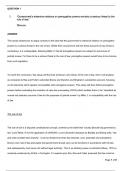
ANSWER
This essay endeavours to argue contrary to the idea that the government’s extensive reliance on prerogative
powers is a serious threat to the rule of law. Whilst their concurrence with the three accounts of rule of law is
contentious, it is undisputable, following Miller 2, that all prerogative powers are subject to some level of
judicial review. For there to be a serious threat to the rule of law, prerogative powers would have to be immune
from such regulation.
To reach this conclusion, this essay will first look at Dicey’s core theory of the rule of law, then it will analyse
as compared to Ras and Fuller’s extended theory and Dworkin and Bingham’s substantive account, focusing
on the elements which appear incompatible with prerogative powers. This essay will then define prerogative
powers before evaluating the evolution of case law succeeding GCHQ which enables them to be “classified as
normal sub statutory sources of law for the purposes of judicial review” by Miller 2, in compatibility with the rule
of law.
The rule of law
The rule of law is a disputed constitutional concept, centred by the belief that “society [should be] governed by
law” (Lord Reed, R (on the application of UNISON) v Lord Chancellor) because as Bradley and Ewing write, “law
and order is better than anarchy”. It can be divided into three key theories: core, extended and substantive.
Dicey’s core rule of law advocates that government should carry out its functions in accordance with the law
and subsequently must never act without legal authority. This is so arbitrary power is restricted (Dicey, 1915) a
necessity evidenced by Entick v Carrington. To expand upon this, Ras and Fuller proposed that law must be
Page 1 of 8
, sufficiently clear and precise to guide conduct (Sunday Times case). Furthermore, the right of access to courts
must be guaranteed (R (on the application of UNISON) v Lord Chancellor) and courts must have the power to
review other public authorities for compliance with the law (Evans v Attorney General). Finally, Bingham and
Dworkin’s substantive theory focuses on the need for a moral content in the law to respect the fundamental
rights of the people and not subject them to savage repression or persecution (Bingham, 2010).
Prerogative powers
Prerogative powers are legal residual powers of monarchy extended to and used by the government. Although
they do not derive from statutes or the common law, they are recognised by the courts as a separate source of
law (Colin Munro, 1999). Whilst they cannot be created or increase in scope (BBC v Johns), new examples
can be discovered and forgotten prerogatives can be rediscovered (ex parte Northumbria Police Authority).
However, it is significant to note that the will of parliament cannot be frustrated in the exercise of a prerogative
power if an existing statute exists from which parliamentary intention can be derived. This is because, as
demonstrated in De Keyser’s Royal Hotel, if the same statutory power as a prerogative power is enacted, it will
always prevail by putting the prerogative into abeyance. Such constraints on prerogative powers protect the
sovereignty of parliament (Craig, 2017).
The cases outlined above demonstrate how prerogative powers can create prima facie problems concerning
the rule of law by not conforming to the basic principles that government action must be authorised by clear
law. For example, although the courts possess the power to determine whether a prerogative exists or not
(Case of Proclamations), the case of ex parte Northumbria Police Authority demonstrates how a lack of
evidence can also itself be evidence of the existence of a prerogative. This is in direct contradiction to the
need for a legal authority outlined by Dicey’s core rule of law. Similarly, prerogative powers are not sufficiently
clear because they might not be written down anywhere. In fact, Minsters have “said that it would be
impossible to produce a precise list of these powers” which means that “at the heart of British Government
there is a kind of constitutional black hole” (Public Administration Select Committee). Arguably, it would be
Page 2 of 8
ANSWER
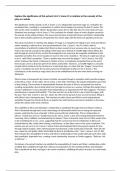
This essay endeavours to argue contrary to the idea that the government’s extensive reliance on prerogative
powers is a serious threat to the rule of law. Whilst their concurrence with the three accounts of rule of law is
contentious, it is undisputable, following Miller 2, that all prerogative powers are subject to some level of
judicial review. For there to be a serious threat to the rule of law, prerogative powers would have to be immune
from such regulation.
To reach this conclusion, this essay will first look at Dicey’s core theory of the rule of law, then it will analyse
as compared to Ras and Fuller’s extended theory and Dworkin and Bingham’s substantive account, focusing
on the elements which appear incompatible with prerogative powers. This essay will then define prerogative
powers before evaluating the evolution of case law succeeding GCHQ which enables them to be “classified as
normal sub statutory sources of law for the purposes of judicial review” by Miller 2, in compatibility with the rule
of law.
The rule of law
The rule of law is a disputed constitutional concept, centred by the belief that “society [should be] governed by
law” (Lord Reed, R (on the application of UNISON) v Lord Chancellor) because as Bradley and Ewing write, “law
and order is better than anarchy”. It can be divided into three key theories: core, extended and substantive.
Dicey’s core rule of law advocates that government should carry out its functions in accordance with the law
and subsequently must never act without legal authority. This is so arbitrary power is restricted (Dicey, 1915) a
necessity evidenced by Entick v Carrington. To expand upon this, Ras and Fuller proposed that law must be
Page 1 of 8
, sufficiently clear and precise to guide conduct (Sunday Times case). Furthermore, the right of access to courts
must be guaranteed (R (on the application of UNISON) v Lord Chancellor) and courts must have the power to
review other public authorities for compliance with the law (Evans v Attorney General). Finally, Bingham and
Dworkin’s substantive theory focuses on the need for a moral content in the law to respect the fundamental
rights of the people and not subject them to savage repression or persecution (Bingham, 2010).
Prerogative powers
Prerogative powers are legal residual powers of monarchy extended to and used by the government. Although
they do not derive from statutes or the common law, they are recognised by the courts as a separate source of
law (Colin Munro, 1999). Whilst they cannot be created or increase in scope (BBC v Johns), new examples
can be discovered and forgotten prerogatives can be rediscovered (ex parte Northumbria Police Authority).
However, it is significant to note that the will of parliament cannot be frustrated in the exercise of a prerogative
power if an existing statute exists from which parliamentary intention can be derived. This is because, as
demonstrated in De Keyser’s Royal Hotel, if the same statutory power as a prerogative power is enacted, it will
always prevail by putting the prerogative into abeyance. Such constraints on prerogative powers protect the
sovereignty of parliament (Craig, 2017).
The cases outlined above demonstrate how prerogative powers can create prima facie problems concerning
the rule of law by not conforming to the basic principles that government action must be authorised by clear
law. For example, although the courts possess the power to determine whether a prerogative exists or not
(Case of Proclamations), the case of ex parte Northumbria Police Authority demonstrates how a lack of
evidence can also itself be evidence of the existence of a prerogative. This is in direct contradiction to the
need for a legal authority outlined by Dicey’s core rule of law. Similarly, prerogative powers are not sufficiently
clear because they might not be written down anywhere. In fact, Minsters have “said that it would be
impossible to produce a precise list of these powers” which means that “at the heart of British Government
there is a kind of constitutional black hole” (Public Administration Select Committee). Arguably, it would be
Page 2 of 8