TASK 3 – SPECIFIC PHOBIAS
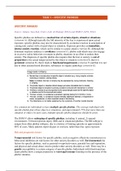
SPECIFIC PHOBIAS
Source: Adams, Sawchuk, Cisler, Lohr & Olatunji (2014) and DSM-V (APA, 2014)
Specific phobias are defined as a marked fear of certain objects, stimuli or situations
(criterion A). Although typically the full intensity of the fear is experienced upon actual
exposure, specific phobias may also be characterized by an intense reaction in anticipation of
coming into contact with a feared object or situation. Exposure provokes an immediate,
intense anxiety reaction, which can be similar to a panic attack (criterion B). Although the
dominant response tendency is avoidance (criterion C), phobic individuals may also engage
in excessive safety behaviors or remain in phobic situations in an effort to endure their
anxiety. The diagnosis of specific phobia also requires that the fear or anxiety is out of
proportion to the actual danger posed by the object or situation (criterion D), that it is
persistent (criterion E), that it leads to functional impairments (criterion F) and that it is not
due to other anxiety/mood disorders, substances or organic pathology (criterion G).
It is common for individuals to have multiple specific phobias. The average individual with
specific phobia fears three objects or situations, and approximately 75% fear more than one
situation or object. In such cases, multiple specific phobia diagnoses should be given.
The DSM-V allows subtyping of specific phobias, including 1) animal, 2) natural-
environment, 3) blood-injection-injury (BII) and 4) situational phobias. The BII subtype is
unique from other phobia subtypes, due to a history of fainting episodes in approximately
80% of cases. Many patients report disgust or aversion, rather than fear, upon exposure.
Risk and prognostic factors
Temperamental risk factors for specific phobia, such as negative affectivity (neuroticism) or
behavioral inhibition are risk factors for other anxiety disorders as well. Environmental risk
factors for specific phobias, such as parental overprotectiveness, parental loss and separation,
and physical and sexual abuse, tend to predict other anxiety disorders as well. There may be a
genetic susceptibility to certain category of specific phobia. Individuals with blood-injection-
injury phobia show a unique propensity to vasovagal syncope (fainting) in the presence of the
phobic stimulus.
, Epidemiology
Research suggests that 41% to 50% of the general population experience specific fears during
their lifetime. Specific phobia is one of the most prevalent psychological disorders. Studies
suggest an overall lifetime prevalence rate for specific phobia of 12%, and a 12-month
prevalence of 9%. The rates of specific phobias are higher among females compared to males.
Many phobias begin in childhood or adolescence. Animal and BII phobias tend to onset
earlier than natural environment and situational phobias.
Distinction from other anxiety disorders
Specific phobias are distinctive in their focal nature; the fear and anxiety are elicited by
object that are clearly identifiable in the physical environment. The intensity of the fear
reactions are usually proportional to temporal proximity, spatial proximity or both.
Borkovec (1976) identified three components of the process of anxiety; 1) motoric escape
and avoidance, 2) physiologic activation of the sympathetic branch of the autonomic nervous
system, and 3) cognitive appraisal of threat and harm. In specific phobia, physiological
activation is the response domain which serves to cue an motivate escape reactions. The
cognitive component is tertiary and addresses overestimation of threat and harm. It is this
component that the phobic individual appreciates as ‘irrational’ in terms of real threat and
harm. In common, the phobic knows explicitly what he is afraid of, but he also knows ‘how’
he is afraid of it. Besides, despite awareness of the low objective risk, the organization of
phobic concerns is represented as a well-organized propositional network.
Social phobia is also focal (focussed) in nature, but the content of the fear network is
interpersonal in nature. Avoidance of anticipated negative events rather than escape
from current ones, and pervasive dread of future interpersonal events predominate
over physiological activation.
Panic disorder with agoraphobia has focal features, such as specific social or
geographic content, and it involves physiologic reactivity. It is the panic response
itself rather than the triggers for it that distinguished panic disorder from specific
phobia.
PTSD also shares physiologic arousal, specific cues, and cognitive overestimation of
physical threat in the future environment, but its occurrence requires a direct
experience that elicited objective harm or the induction of terror when indirectly
experienced.
OCD has various anxious themes but, compared to specific phobic reaction, there is
less in the way of physiologic arousal or arousal reduction associated with repetitious
or ritualistic behavior. Obsessions are far more chronic and repetitive and, at times, are
much more bizarrely themed than more basis threat cognitions in specific phobias.
SPECIFIC PHOBIAS
Source: Adams, Sawchuk, Cisler, Lohr & Olatunji (2014) and DSM-V (APA, 2014)
Specific phobias are defined as a marked fear of certain objects, stimuli or situations
(criterion A). Although typically the full intensity of the fear is experienced upon actual
exposure, specific phobias may also be characterized by an intense reaction in anticipation of
coming into contact with a feared object or situation. Exposure provokes an immediate,
intense anxiety reaction, which can be similar to a panic attack (criterion B). Although the
dominant response tendency is avoidance (criterion C), phobic individuals may also engage
in excessive safety behaviors or remain in phobic situations in an effort to endure their
anxiety. The diagnosis of specific phobia also requires that the fear or anxiety is out of
proportion to the actual danger posed by the object or situation (criterion D), that it is
persistent (criterion E), that it leads to functional impairments (criterion F) and that it is not
due to other anxiety/mood disorders, substances or organic pathology (criterion G).
It is common for individuals to have multiple specific phobias. The average individual with
specific phobia fears three objects or situations, and approximately 75% fear more than one
situation or object. In such cases, multiple specific phobia diagnoses should be given.
The DSM-V allows subtyping of specific phobias, including 1) animal, 2) natural-
environment, 3) blood-injection-injury (BII) and 4) situational phobias. The BII subtype is
unique from other phobia subtypes, due to a history of fainting episodes in approximately
80% of cases. Many patients report disgust or aversion, rather than fear, upon exposure.
Risk and prognostic factors
Temperamental risk factors for specific phobia, such as negative affectivity (neuroticism) or
behavioral inhibition are risk factors for other anxiety disorders as well. Environmental risk
factors for specific phobias, such as parental overprotectiveness, parental loss and separation,
and physical and sexual abuse, tend to predict other anxiety disorders as well. There may be a
genetic susceptibility to certain category of specific phobia. Individuals with blood-injection-
injury phobia show a unique propensity to vasovagal syncope (fainting) in the presence of the
phobic stimulus.
, Epidemiology
Research suggests that 41% to 50% of the general population experience specific fears during
their lifetime. Specific phobia is one of the most prevalent psychological disorders. Studies
suggest an overall lifetime prevalence rate for specific phobia of 12%, and a 12-month
prevalence of 9%. The rates of specific phobias are higher among females compared to males.
Many phobias begin in childhood or adolescence. Animal and BII phobias tend to onset
earlier than natural environment and situational phobias.
Distinction from other anxiety disorders
Specific phobias are distinctive in their focal nature; the fear and anxiety are elicited by
object that are clearly identifiable in the physical environment. The intensity of the fear
reactions are usually proportional to temporal proximity, spatial proximity or both.
Borkovec (1976) identified three components of the process of anxiety; 1) motoric escape
and avoidance, 2) physiologic activation of the sympathetic branch of the autonomic nervous
system, and 3) cognitive appraisal of threat and harm. In specific phobia, physiological
activation is the response domain which serves to cue an motivate escape reactions. The
cognitive component is tertiary and addresses overestimation of threat and harm. It is this
component that the phobic individual appreciates as ‘irrational’ in terms of real threat and
harm. In common, the phobic knows explicitly what he is afraid of, but he also knows ‘how’
he is afraid of it. Besides, despite awareness of the low objective risk, the organization of
phobic concerns is represented as a well-organized propositional network.
Social phobia is also focal (focussed) in nature, but the content of the fear network is
interpersonal in nature. Avoidance of anticipated negative events rather than escape
from current ones, and pervasive dread of future interpersonal events predominate
over physiological activation.
Panic disorder with agoraphobia has focal features, such as specific social or
geographic content, and it involves physiologic reactivity. It is the panic response
itself rather than the triggers for it that distinguished panic disorder from specific
phobia.
PTSD also shares physiologic arousal, specific cues, and cognitive overestimation of
physical threat in the future environment, but its occurrence requires a direct
experience that elicited objective harm or the induction of terror when indirectly
experienced.
OCD has various anxious themes but, compared to specific phobic reaction, there is
less in the way of physiologic arousal or arousal reduction associated with repetitious
or ritualistic behavior. Obsessions are far more chronic and repetitive and, at times, are
much more bizarrely themed than more basis threat cognitions in specific phobias.