MASTER RESILIENCE TRAINING EXAM-65 QUESTIONS AND ANSWERS 2024.
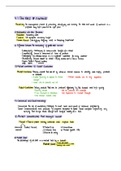
What is resiliency? Resiliency is the ability to grow and thrive in the face of challenges and bounce back from adversity and build core compentencies that enable mental toughness, optimal performance, strong leadership, and goal achievment. What are the resiliency compentencies? 1. Self-awareness 2. Self-regulation 3. Optimism 4. Mental Agility 5. Strength of Character 6. Connection Resiliency Training is broken into 4 modules, what are they? Resilience Building Mental Toughness Building Character Strengths Building Strong Relationships What are the 7 skills of Building Mental Toughness? 1. ATC Model 2. Avoid Thinking Traps 3. Detect Icebergs 4. Problem Solving 5. Put it in Perspective 6. Mental Games 7. Rel-Time Resilience What is the ATC Model? The ATC Model highlights the link between thoughts and emotions or reactions. The ATC Model is used to identify the Activating Event, your heat of the moment Thoughts, and Consequences of those thoughts. What is a Thinking Trap? A common pattern in thinking that, particularly when under stress, prevents a person from seeing the siuation accurately. What are the most common thinking traps? 1. Jumping to conclusions 2. Mind reading 3. Me, me, me 4. Them, them, them 5. Always, always, always 6. Everything, everything, everything What is Jumping to conclusions? Being certain about facts or situation despite having little to no evidence What is Mind reading? assuming you know what another person is thinking or expecting a person to know what you are thinking What is Me, me, me? believing that you are the sole cause of every situation What is Them, them, them? believing everyone but you or circumstances are sole cause of every problem What is Always, always, always? believing that negitive events or circumstances are unchangable and that you have little or no control over them What is Everything, everything, everything? believing that you can judge one's worth/ character based on a single event or that what caused the problem is going to negitively affect many areas of one's life What is the critical question for Jumping to conclusions? Slow down: What is the evidence for and against my thoughts? What is the critical question for Mind reading? Speak up: Did I express myself? Did I ask for information? What is the critical question for Me, me, me? Look outward: How did others and/or circumstances contribute? What is the critical question for Them, them, them? Look inward: How did I contribute? What is the critical question for Always, always, always? Grab control control: What is changeable? What can I control What is the critical question for Everything, everything, everything? Get specific: What is the specific behavior that explains the situation? What specific area of my life will be affected? What are the key principles of avoiding thinking traps? 1. They're common 2. They narrow our field of vision 3. Notice patterns 4. Use critical questions 5. Mental agility What is detecting icebergs? Detecting Icebergs is used to identify core beliefs and core values that fuel what we say to ourselves in the heat of the moment and, at times, lead to emotions and reactions that are out of proportion. What are heat of the moment thoughts? Our internal radio station, they are on the surface of our awareness and can easily be tuned into What is an iceberg belief? Our core values and core beliefs; what we believe to be true of ourselves, others, and the world How do we move beyond heat of the moment thoughts to what is beneath? by asking "WHAT" questions "WHAT" questions tend to work better than "WHY" questions, as "WHY" questions to tend lead to defensiveness and rationalizations What is the goal of the "WHAT" questions? to help you discover what is driving your emotions and reactions; once you have discovered what is driving your emotions and reactions you can decide wether the belief is useful/ accurate in this particular situation What are the key princples of Iceberg beliefs? 1. Choose the depth-stop when your beliefs help to explain your consequences 2. Icebergs can create thinking traps- Icebergs beliefs push us into 1 or more thinking traps 3. What not Why- "what" leads depth "why" leads to defensiveness 4. Self-awareness- a primary target to detect icebergs What is problem solving? a tool for identifying the factors that caused the problem through Critical Questions and evidence What are the elements of problem solving? 1. Effective problem solving 2. The Confirmation Bias or Velcro/ Teflon Effect 3. Fighting the Confirmation Bias or Velcro/ Teflon Effect What are the elements of effective problem solving? 1. Focus on thoughts about why the problem happened 2. Identify the contributing factors that caused the problem through Critical Questions and evidence 3. Evaluate which factors are controlable 4. Develope solution strategies that will bring about positive change What is the Confirmation Bias or Velcro/ Teflon Effect? An effect that causes us to notice the evidence that fits our thoughts and beliefs and to miss the evidence that contradicts our thoughts and beliefs. Why is the Confirmation Bias also called the Velcro/ Teflon Effect? -Velcro- for evidence that matches our thoughts and beliefs -Teflon- for evidence that contradicts our thoughts and beliefs How is the Confirmation Bias or Velcro/ Teflon Effect fought? -Distance yourself from your thought, write it down -Ask fair questions to gather evidence for or against your thoughts -Consult with others What are the key principles of Problem Solving? -Slow down: For problems that do not require quick solutions -Identify the causes: Use the Critical Questions to identify causes that you initially missed -Avoid the Confirmation Bias or Velcro/ Teflon Effect: Interferes w/ accuracy, so work around it -Mental Agility: primary target of Problem Solving What is accomplished by applying problem solving? Problem Solving enhances your Mental Agility so that you can think flexibly and accurately about what caused the problem. By increasing your ability to see problems accurately, you will improve your Problem Solving. What is Put it in Perspective (PIIP)? To lower anxiety so that you can accurately assess the situation and deal with it. It is not to pretend "all is well" to deny real problems, or take away axiety completely. What is catastrophizing? 1. when you waste critical energy ruminating about the irrational worst case outcomes of a situation 2. It's not the same as identifying the worst case and contingency planning. Contingency Planning is productive 3. It's a slippery slope, downward-spiral thinking 4. Creates high levels of axiety, decreases focus, and increases helplessness 5. Prvents you from taking purposeful action How do you Put It In Perspective? 1. Describe the Activating Event 2. Capture Worst Case thoughts 3. Generate Best Case thoughts 4. Identify Moset Likely outcomes 5. Develope a plan for dealing with Moset Likely outcomes What are the key principles of Put it in Perspective (PIIP)? Catastrophizing depletes energy: stops problem solving, and generates an unhealthy anxiety Order matters: Stop Catastrophizing by capturing the Worst, then generating the Best- both of which help you focus on the Most-Likely Develope a plan: Once focused on Most-Likely , create a plan for dealing with the situation Optimism: Primary taget of PIIP What are Mental Games? A quick distraction from, or to compartmentalize, counterproductive thoughts that are interfering with the ability to effectively engage with the task at hand. How are Mental Games used effectively? Must engage full attention, be hard and fun, and be done within a few minutes. What are some Mental Games? Math or counting games Alphabet games Category games Army alphabet Lyrics Positive imagery What are the key principles of Mental Games? Practice: must practice inorder to derive full benifit Double Up: use mental games in conjuction with other skills in the Resilience program Self-regulate: primary target of Mental Games
Written for
- Institution
- Master Resilience Training
- Course
- Master Resilience Training
Document information
- Uploaded on
- December 16, 2023
- Number of pages
- 11
- Written in
- 2023/2024
- Type
- Exam (elaborations)
- Contains
- Unknown
Subjects
-
master resilience training exam

Also available in package deal