Mental Health
Challenges
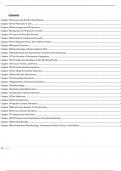
Clinical Psychology
,1. Young, fast, and wild ADHD and ASD
2. You are what you eat ED
3. Just scared? anxiety
4. Blue and beyond mood disorders
5. Let’s talk about sex paraphilic disorders and gender
dysphoria
6. A beautiful mind schizophrenia
7. Lost in the labyrinth neurocognitive disorders and DSM-V
, Problem 1: ADHD and ASD
ADHD: features, etiology, and treatment
Main features
o ADHD attention deficit hyperactivity disorder
o Persistent pattern of inattention and/or hyperactivity-impulsivity
significantly higher rate than would be expected for the child at that
developmental stage
o Behavioural indicators: lack of attention in academic, occupational, or social
situations; making careless mistakes in schoolwork or other tasks; difficulty
maintaining attention until task competition (sustained attention); appearing
to have their attention elsewhere; failing to respond to instructions; tendency
to shift from one task to another without completing any of them
o Dislike from tasks that require sustained self-application and mental effort,
distracted by irrelevant stimuli
o Hyperactivity excessive fidgetiness and not remaining seated when asked;
excessive running or climbing when inappropriate, excessive talk; difficulty in
engaging in sedentary activities (listening to a story)
o Impulsivity impatience, difficulty in delaying responses, interrupting
others before they have finished talking, desire for immediate rewards over
delayed rewards
o It is chronic not restricted to childhood years
Diagnosis
o Hyperactivity or inattention is significantly greater than normal for the child’s
developmental stage
o Generalized and persistent pattern, rather than one that is confined to a
single context
o DSM-5 impairment present before 12 years old, found in two or more
contexts
o Two subtypes of diagnosis: attention deficit hyperactivity disorder,
predominately inattentive presentation; and attention deficit hyperactivity
disorder, predominantly impulse/hyperactive presentation
when both are present, it is called combined
each subtype should be used if six or more of the dominant symptoms
are present with fewer than six of the less dominant symptoms
present
o Inattention
Not paying close attention to details, careless mistakes are made
Difficulty in maintaining attention in activities
Does not listen when spoken to directly
Ignores instructions
Difficulty organizing
Dislikes or avoids tasks which require sustained mental effort
, Easily distractible
Forgetful in daily activities
o Hyperactivity and impulsivity
High level of fidgeting
Not sitting still
Inappropriate running and climbing
Unable to engage in activities quietly
Excessive talking
Interrupts
Difficulty waiting for their turn
o in many cases, ADHD is associated with violation of social norms and the
basic rights of others
o anxiety and depression are comorbid in a minority of children with ADHD
o not all hyperactive toddlers go on to develop ADHD
o As the child develops into adolescence, symptoms usually attenuate
Prevalence
o DSM-5 5% of school age children worldwide are diagnosed with ADHD and
2.5% of adults
o Half of those diagnosed in childhood will carry the diagnosis into adulthood
o ADHD is more common in boys because they are more likely to be referred
for treatment symptoms are not sex-specific
Consequences
o Prone to temper outbursts, frustration, bossiness, stubbornness, changeable
moods, poor self-esteem
o Academic achievement is impaired conflict with teachers and parents
o Behaviour is often viewed as intentional and irresponsible
o Peer rejection, accidental injury
o Difficulty making friends and integration successfully into social groups
aggressive and disruptive behaviour
Etiology
o Biological factors
Genetic factors
Most heritable psychiatric disorders 76%
Region of chromosome 16 linked to ADHD
Abnormalities in neurotransmitter systems, particularly
dopamine, norepinephrine, and serotonin systems
Dopamine transporter gene, dopamine D4 and D5 receptors,
SNAP25 (controls the way dopamine is released in the brain)
Gene-environment interaction vulnerability to ADHD is
inherited, nut ADHD manifests only when certain
environmental influences are found
Neuroscience
Differences between ADHD and non-ADHD brain brain is
smaller by 3.2% (mainly frontal, parietal, temporal and
occipital lobes), develop more slowly, reduction of grey matter,
frontal cortex is smaller, basal ganglia is smaller, cerebellum is
smaller
Challenges
Clinical Psychology
,1. Young, fast, and wild ADHD and ASD
2. You are what you eat ED
3. Just scared? anxiety
4. Blue and beyond mood disorders
5. Let’s talk about sex paraphilic disorders and gender
dysphoria
6. A beautiful mind schizophrenia
7. Lost in the labyrinth neurocognitive disorders and DSM-V
, Problem 1: ADHD and ASD
ADHD: features, etiology, and treatment
Main features
o ADHD attention deficit hyperactivity disorder
o Persistent pattern of inattention and/or hyperactivity-impulsivity
significantly higher rate than would be expected for the child at that
developmental stage
o Behavioural indicators: lack of attention in academic, occupational, or social
situations; making careless mistakes in schoolwork or other tasks; difficulty
maintaining attention until task competition (sustained attention); appearing
to have their attention elsewhere; failing to respond to instructions; tendency
to shift from one task to another without completing any of them
o Dislike from tasks that require sustained self-application and mental effort,
distracted by irrelevant stimuli
o Hyperactivity excessive fidgetiness and not remaining seated when asked;
excessive running or climbing when inappropriate, excessive talk; difficulty in
engaging in sedentary activities (listening to a story)
o Impulsivity impatience, difficulty in delaying responses, interrupting
others before they have finished talking, desire for immediate rewards over
delayed rewards
o It is chronic not restricted to childhood years
Diagnosis
o Hyperactivity or inattention is significantly greater than normal for the child’s
developmental stage
o Generalized and persistent pattern, rather than one that is confined to a
single context
o DSM-5 impairment present before 12 years old, found in two or more
contexts
o Two subtypes of diagnosis: attention deficit hyperactivity disorder,
predominately inattentive presentation; and attention deficit hyperactivity
disorder, predominantly impulse/hyperactive presentation
when both are present, it is called combined
each subtype should be used if six or more of the dominant symptoms
are present with fewer than six of the less dominant symptoms
present
o Inattention
Not paying close attention to details, careless mistakes are made
Difficulty in maintaining attention in activities
Does not listen when spoken to directly
Ignores instructions
Difficulty organizing
Dislikes or avoids tasks which require sustained mental effort
, Easily distractible
Forgetful in daily activities
o Hyperactivity and impulsivity
High level of fidgeting
Not sitting still
Inappropriate running and climbing
Unable to engage in activities quietly
Excessive talking
Interrupts
Difficulty waiting for their turn
o in many cases, ADHD is associated with violation of social norms and the
basic rights of others
o anxiety and depression are comorbid in a minority of children with ADHD
o not all hyperactive toddlers go on to develop ADHD
o As the child develops into adolescence, symptoms usually attenuate
Prevalence
o DSM-5 5% of school age children worldwide are diagnosed with ADHD and
2.5% of adults
o Half of those diagnosed in childhood will carry the diagnosis into adulthood
o ADHD is more common in boys because they are more likely to be referred
for treatment symptoms are not sex-specific
Consequences
o Prone to temper outbursts, frustration, bossiness, stubbornness, changeable
moods, poor self-esteem
o Academic achievement is impaired conflict with teachers and parents
o Behaviour is often viewed as intentional and irresponsible
o Peer rejection, accidental injury
o Difficulty making friends and integration successfully into social groups
aggressive and disruptive behaviour
Etiology
o Biological factors
Genetic factors
Most heritable psychiatric disorders 76%
Region of chromosome 16 linked to ADHD
Abnormalities in neurotransmitter systems, particularly
dopamine, norepinephrine, and serotonin systems
Dopamine transporter gene, dopamine D4 and D5 receptors,
SNAP25 (controls the way dopamine is released in the brain)
Gene-environment interaction vulnerability to ADHD is
inherited, nut ADHD manifests only when certain
environmental influences are found
Neuroscience
Differences between ADHD and non-ADHD brain brain is
smaller by 3.2% (mainly frontal, parietal, temporal and
occipital lobes), develop more slowly, reduction of grey matter,
frontal cortex is smaller, basal ganglia is smaller, cerebellum is
smaller