Reproductive Justice and Queering Development
Gender, Nation, Biopolitics
Building Nations
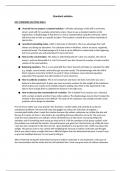
Looking at the establishment of borders and the consequent formation of nationalism and sovereignty.
Why care abut nationalism and sovereignty.
Looking today at how womens bodies are policed today through nations, state systems, nationalism
and sovereignty .
Nation-building relies on the construction of a shared national identity (nation states were established
after colonialism)
The state is the physical space, that has one ruling system over that space.
The nation is, however, constructed.
Argument is that nation and state coincides, people that live in the same state, have the same national
identity (share the same culture/experience characteristics), but this identity requires constructing
- especially in post colonial states where the drawing of physical borders ignored natural precolonial
divisions (colonial countries made/decided where the border was, not looking at the people living
there)
Think about who chose these lines that identified states, it wasn’t the people who then lived in them (at
least not democratically ALL the citizens)
Nations are social constructs (Gellner, 1983, Anderson, 1983)
- enforced through official education system, shared language and culture, centralised bureaucracy,
and a national workforce.
We might think about how nationalism has been gendered and racialised.
Patriarchy and the nation (understanding the relationship: though the language we use)
The homeland/country = feminine she/her
- the mother/ the motherland
- needs protecting and defending
The ruler = masculine
- the patriarch/father: even in UK where we had a matriarch, still in a partriarchal system (power
handed down to first born son)
- makes decisions and keeps family/nation safe
Direct link between the family and the state (Sayigh 1998)
Post colonial societies organised around families (rather than individuals), this s then reflected in the
, nation, view individualism as a threat to the state. Individualism, through not seeing each other as part
of family, threatens the idea that we are all sharing this identity, in turn also threatening the social
responsibility for each other. The family units on the other hand mirrors the nation, with idea that nation
is somehow stronger when people have those traditional patriarchal family views.
Seen in images of very masculine roles, like link this back topoland
authoritative Leaders, as reasoning
seen a lot in the military portrayal with children, meant to humanise
them whilst showing them in a protective role
women
1
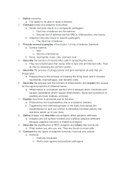
Publicsphere Privatesphere
Productive labour Reproductive labour literally
reproducing
Mother of the nations
leaded defended
and builders of the
nation
cares teachers nurses social torts'm
working producing Caring
Women as mothers of the nation
AR IMPORTANT
Women reproduce ‘biologically, culturally, and symbolically their ethnic and national collectives as well
as the workforce, their families, or the citizenry of their states’ (Yuval Davi’s 1996: 17) literally
reproducing biologically the citizens/the nation whilst their moral and ethical and patriotic views being
taugh to the next generation (reproducing them)
Reproductivity is seen as more than a (gender) role, it is a duty of the women to the nation.
Abortion politicised and discouraged or even criminalised in some contexts. (Abortion illegals from
1990 [revolution happened in 1989] and became stricter in 2020s)
Matka polka (polish mother) intended to encourage polish mothers to instil in children sense of
‘polishness, patriotism, love of national independence’ (Stachniak, 1995)
Who gets to be mothers? Biopolitical power
If we see women as mothers of the nation then who gets to be mothers? Who is celebrated as
mothers? Who ‘should’ be reproducing?
Biopolitical power is power enacted (often by the state) over physical bodies and lives (Foucault)
This is often violet (physically and/or structurally)
Physical live being shaped/impacted in physical/tangible ways (often physical and structural
violence)
Womens bodies become sites of social and Biopolitical control
Womens health and reproductive lives shaped through laws, policies, services
It’s not just about reproductive rights and abortions, but also reproductive health
How these laws and policies can be physically violent on bodies. (Think women dying due to not
getting abortions in Poland)
Gender, Nation, Biopolitics
Building Nations
Looking at the establishment of borders and the consequent formation of nationalism and sovereignty.
Why care abut nationalism and sovereignty.
Looking today at how womens bodies are policed today through nations, state systems, nationalism
and sovereignty .
Nation-building relies on the construction of a shared national identity (nation states were established
after colonialism)
The state is the physical space, that has one ruling system over that space.
The nation is, however, constructed.
Argument is that nation and state coincides, people that live in the same state, have the same national
identity (share the same culture/experience characteristics), but this identity requires constructing
- especially in post colonial states where the drawing of physical borders ignored natural precolonial
divisions (colonial countries made/decided where the border was, not looking at the people living
there)
Think about who chose these lines that identified states, it wasn’t the people who then lived in them (at
least not democratically ALL the citizens)
Nations are social constructs (Gellner, 1983, Anderson, 1983)
- enforced through official education system, shared language and culture, centralised bureaucracy,
and a national workforce.
We might think about how nationalism has been gendered and racialised.
Patriarchy and the nation (understanding the relationship: though the language we use)
The homeland/country = feminine she/her
- the mother/ the motherland
- needs protecting and defending
The ruler = masculine
- the patriarch/father: even in UK where we had a matriarch, still in a partriarchal system (power
handed down to first born son)
- makes decisions and keeps family/nation safe
Direct link between the family and the state (Sayigh 1998)
Post colonial societies organised around families (rather than individuals), this s then reflected in the
, nation, view individualism as a threat to the state. Individualism, through not seeing each other as part
of family, threatens the idea that we are all sharing this identity, in turn also threatening the social
responsibility for each other. The family units on the other hand mirrors the nation, with idea that nation
is somehow stronger when people have those traditional patriarchal family views.
Seen in images of very masculine roles, like link this back topoland
authoritative Leaders, as reasoning
seen a lot in the military portrayal with children, meant to humanise
them whilst showing them in a protective role
women
1
Publicsphere Privatesphere
Productive labour Reproductive labour literally
reproducing
Mother of the nations
leaded defended
and builders of the
nation
cares teachers nurses social torts'm
working producing Caring
Women as mothers of the nation
AR IMPORTANT
Women reproduce ‘biologically, culturally, and symbolically their ethnic and national collectives as well
as the workforce, their families, or the citizenry of their states’ (Yuval Davi’s 1996: 17) literally
reproducing biologically the citizens/the nation whilst their moral and ethical and patriotic views being
taugh to the next generation (reproducing them)
Reproductivity is seen as more than a (gender) role, it is a duty of the women to the nation.
Abortion politicised and discouraged or even criminalised in some contexts. (Abortion illegals from
1990 [revolution happened in 1989] and became stricter in 2020s)
Matka polka (polish mother) intended to encourage polish mothers to instil in children sense of
‘polishness, patriotism, love of national independence’ (Stachniak, 1995)
Who gets to be mothers? Biopolitical power
If we see women as mothers of the nation then who gets to be mothers? Who is celebrated as
mothers? Who ‘should’ be reproducing?
Biopolitical power is power enacted (often by the state) over physical bodies and lives (Foucault)
This is often violet (physically and/or structurally)
Physical live being shaped/impacted in physical/tangible ways (often physical and structural
violence)
Womens bodies become sites of social and Biopolitical control
Womens health and reproductive lives shaped through laws, policies, services
It’s not just about reproductive rights and abortions, but also reproductive health
How these laws and policies can be physically violent on bodies. (Think women dying due to not
getting abortions in Poland)