Ultimate Summary Lectures | European Public Policy
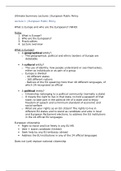
Lecture 1 | European Public Policy
What is Europe and who are the Europeans? (WHO)
Today
1. What is Europe?
2. Who are the Europeans?
3. Practicalities
4. Lecture overview
What is Europe?
A geographical entity?
o The geographical, political and ethnic borders of Europe are
debatable
A cultural entity?
o The use of identity: how people understand or see themselves,
either as individuals or as part of a group
o Europe is divided
- 44 different states
- 160 different nations
- Natives of the EU speaking more than 40 different languages, of
which 24 recognized as official
A political entity?
o Citizenship: belonging to a political community (normally a state)
o It means the right to live in that state, to hold a passport of that
state, to take part in the political life of a state and to enjoy
freedom of speech and a minimum standard of economic and
social welfare
o What are your rights as an EU citizen? The rights to live in
different EU states and to stand as candidate and vote in local
and European Parliament elections, to address the EU institutions
in the 24 official EU languages
European citizenship
Right to move and live freely in any EU MS
Vote + stand candidate (limited)
Seek help by any EU embassy abroad
Address the EU institutions in any of the 24 official languages
Does not (yet) replace national citizenship
,Who are the Europeans?
Europe’s populations in three “camps” (Fligstein, 2008)
o 10-15%: connected by deep economic and social ties, benefits
materially and culturally from Europe
o 40-50%: a more shallow relationship with Europe, aware of what
is going on across borders, but still wedded to national language,
culture and politics
o 40-50%: older, poorer and less educated, does not travel or
consume culture from other societies, is more wedded to home
and more fearful of European integration
Eurosceptic – Oppose the EU
o EU has undermined sovereignty of MS
o Too much power, but no accountability
o EU is one giant bureaucracy
In between
Europeanist – Support the EU
o EU brought lasting peace (no war)
o EU is world’s wealthiest market place
o EU has become a global power
What does it all mean?
Borders of Europe are debatable
The EU cannot offer an alternative to identity and citizenship (yet)
Both Europe and European are controversial concepts
This makes the study of the EU all the more complex
… but also all the more interesting!
Practicalities
Aim: to understand the politics and policies of the European Union
Four themes of EPP:
o Week 1
- What is Europe and who are the Europeans? (WHO)
o Week 2
- Towards a United States of Europe? How the EU has evolved and
what it has become (WHAT)
o Week 3 and 4
- The history of EU integration (HOW)
o Week 5 – 11
- The impact of European public policies in different policy fields
(HOW)
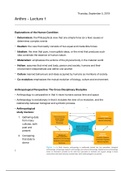
,Lecture 2 | European Public Policy
Understanding the EU
Today
1. How did the Eu evolve?
1. European Integration;
2. Theories of European Integration
1. Neofunctionalism
2. (Liberal) Intergovernmentalism
2. What has the EU become?
What is a state?
A state is a political association that establishes sovereign jurisdiction
within a defined territorial borders and exercises authority via a set of
permanent institutions (Heywood, PDoE).
Territory: state operates within fixed and populated territories marked out
by legal boundaries
Sovereignty: the institutions of the state have a monopoly over the
expression of legal and political power within its boundaries
Independence: states do not come under the jurisdiction or control of
other states or international organizations
Legitimacy: the authority of a state and its institutions is recognized by
the inhabitants of the territory and by the governments of other states
Core functions of the state
Security: borders (territory), internal security (justice), foreign policy
Public health/healthcare
Education
Social protection
Collects taxes to provide all of the above
, How did the EU evolve?
Why did states choose to collaborate?
- 1951 (European Coal and Steel Community)
How can we best understand the EU?
- A state?
- A IGO?
- In-between?
The EU develops from an IGO to a RIA (Regional Integration
Association)
Approach of the EU:
o International organization
o Regional Integration Association (RIA)
o Unique (sui generis)
o Political system in its own right now
o Hybrid
Not a linear process!
European integration is a process in which policies are
increasingly framed and determined at the European level and
impact more and more on the member states
Public policy can be defined as whatever governments do (or avoid
doing) to address their society’s needs. In the EU – what European
institutions do to address European society’s needs.
Theories of European Integration 1. Federalism
2. Neofunctionalism
3. (Liberal) Intergovernmentalism
Why does European Who drives European
integration happen? integration?
Neofunctionalism o Common interest o Independent
(economies) institutions
Key concepts: o Linear spill o Local
over organizations
- Political (businesses, civil
- Functional society, regional
governments)
Liberal o National interest o MS
Intergovernmentalis o Not an automatic
m process
o Institutional
Key concepts: preference
o Bargaining
Lecture 1 | European Public Policy
What is Europe and who are the Europeans? (WHO)
Today
1. What is Europe?
2. Who are the Europeans?
3. Practicalities
4. Lecture overview
What is Europe?
A geographical entity?
o The geographical, political and ethnic borders of Europe are
debatable
A cultural entity?
o The use of identity: how people understand or see themselves,
either as individuals or as part of a group
o Europe is divided
- 44 different states
- 160 different nations
- Natives of the EU speaking more than 40 different languages, of
which 24 recognized as official
A political entity?
o Citizenship: belonging to a political community (normally a state)
o It means the right to live in that state, to hold a passport of that
state, to take part in the political life of a state and to enjoy
freedom of speech and a minimum standard of economic and
social welfare
o What are your rights as an EU citizen? The rights to live in
different EU states and to stand as candidate and vote in local
and European Parliament elections, to address the EU institutions
in the 24 official EU languages
European citizenship
Right to move and live freely in any EU MS
Vote + stand candidate (limited)
Seek help by any EU embassy abroad
Address the EU institutions in any of the 24 official languages
Does not (yet) replace national citizenship
,Who are the Europeans?
Europe’s populations in three “camps” (Fligstein, 2008)
o 10-15%: connected by deep economic and social ties, benefits
materially and culturally from Europe
o 40-50%: a more shallow relationship with Europe, aware of what
is going on across borders, but still wedded to national language,
culture and politics
o 40-50%: older, poorer and less educated, does not travel or
consume culture from other societies, is more wedded to home
and more fearful of European integration
Eurosceptic – Oppose the EU
o EU has undermined sovereignty of MS
o Too much power, but no accountability
o EU is one giant bureaucracy
In between
Europeanist – Support the EU
o EU brought lasting peace (no war)
o EU is world’s wealthiest market place
o EU has become a global power
What does it all mean?
Borders of Europe are debatable
The EU cannot offer an alternative to identity and citizenship (yet)
Both Europe and European are controversial concepts
This makes the study of the EU all the more complex
… but also all the more interesting!
Practicalities
Aim: to understand the politics and policies of the European Union
Four themes of EPP:
o Week 1
- What is Europe and who are the Europeans? (WHO)
o Week 2
- Towards a United States of Europe? How the EU has evolved and
what it has become (WHAT)
o Week 3 and 4
- The history of EU integration (HOW)
o Week 5 – 11
- The impact of European public policies in different policy fields
(HOW)
,Lecture 2 | European Public Policy
Understanding the EU
Today
1. How did the Eu evolve?
1. European Integration;
2. Theories of European Integration
1. Neofunctionalism
2. (Liberal) Intergovernmentalism
2. What has the EU become?
What is a state?
A state is a political association that establishes sovereign jurisdiction
within a defined territorial borders and exercises authority via a set of
permanent institutions (Heywood, PDoE).
Territory: state operates within fixed and populated territories marked out
by legal boundaries
Sovereignty: the institutions of the state have a monopoly over the
expression of legal and political power within its boundaries
Independence: states do not come under the jurisdiction or control of
other states or international organizations
Legitimacy: the authority of a state and its institutions is recognized by
the inhabitants of the territory and by the governments of other states
Core functions of the state
Security: borders (territory), internal security (justice), foreign policy
Public health/healthcare
Education
Social protection
Collects taxes to provide all of the above
, How did the EU evolve?
Why did states choose to collaborate?
- 1951 (European Coal and Steel Community)
How can we best understand the EU?
- A state?
- A IGO?
- In-between?
The EU develops from an IGO to a RIA (Regional Integration
Association)
Approach of the EU:
o International organization
o Regional Integration Association (RIA)
o Unique (sui generis)
o Political system in its own right now
o Hybrid
Not a linear process!
European integration is a process in which policies are
increasingly framed and determined at the European level and
impact more and more on the member states
Public policy can be defined as whatever governments do (or avoid
doing) to address their society’s needs. In the EU – what European
institutions do to address European society’s needs.
Theories of European Integration 1. Federalism
2. Neofunctionalism
3. (Liberal) Intergovernmentalism
Why does European Who drives European
integration happen? integration?
Neofunctionalism o Common interest o Independent
(economies) institutions
Key concepts: o Linear spill o Local
over organizations
- Political (businesses, civil
- Functional society, regional
governments)
Liberal o National interest o MS
Intergovernmentalis o Not an automatic
m process
o Institutional
Key concepts: preference
o Bargaining